















ao link

Webinars

Webinar (29 Sept): How data and AI support better decisions to bolster city operations

Webinar (29 Sept): How data and AI support better decisions to bolster city operations

OnDemand Panel Discussion: Resilient infrastructure – planning, prioritising and protecting critical assets

OnDemand Panel Discussion: Resilient infrastructure – planning, prioritising and protecting critical assets

Special Reports

How Dublin is moving from AI curiosity to capability

How Dublin is moving from AI curiosity to capability

Cayala: Guatemala’s private 15-minute city

Cayala: Guatemala’s private 15-minute city

Smart Cities Reports

SmartCitiesWorld City Profile – Singapore

SmartCitiesWorld City Profile – Singapore

SmartCitiesWorld City Profile – Sunderland

SmartCitiesWorld City Profile – Sunderland

Podcasts

Podcast: Tracking the journey from smart cities to AI cities (part two)

Podcast: Tracking the journey from smart cities to AI cities (part two)

Podcast: Tracking the journey from smart cities to AI cities (part one)

Podcast: Tracking the journey from smart cities to AI cities (part one)

Opinions

What makes these the 27 smartest cities?
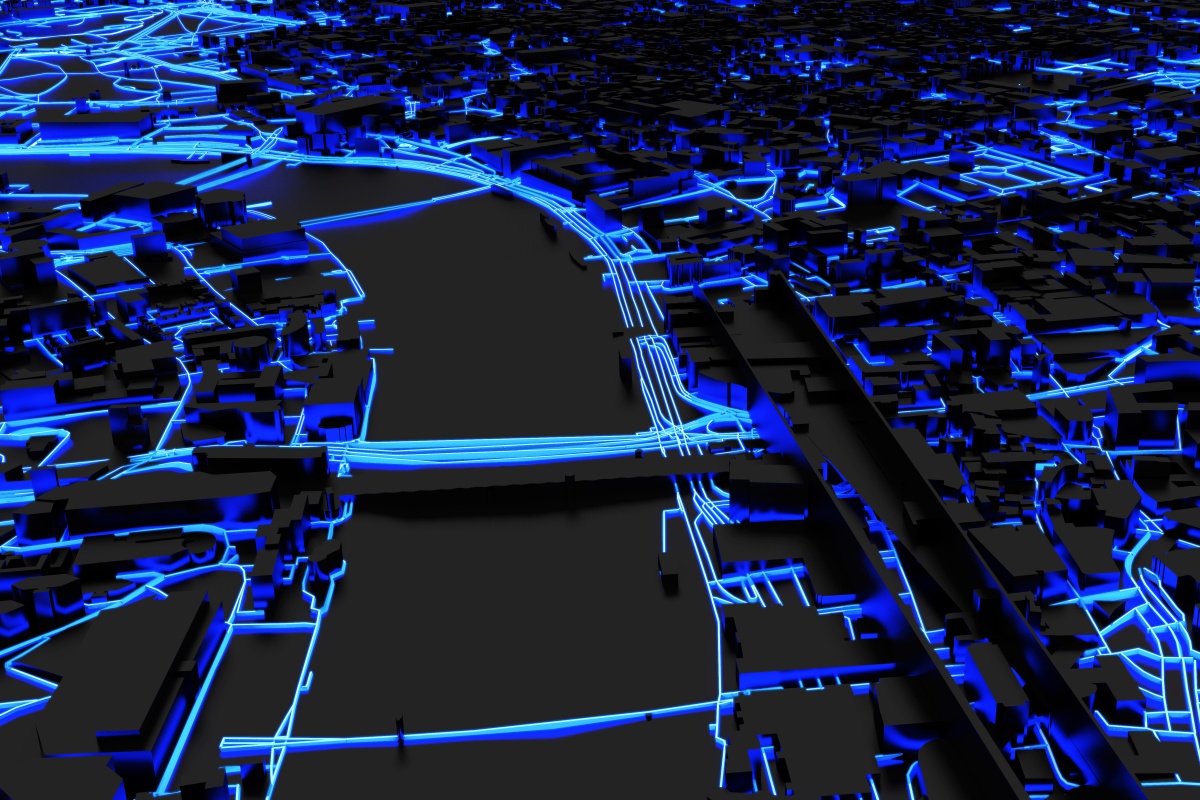
London, Singapore and Barcelona lead a ranking which finds that smart city development is closely linked to a city’s “global outreach and engagement”

LinkedInTwitterFacebook
London leads the ranking and is one of a number of capital cities adjudged to be smart

The vast majority of 27 cities ranked as the world’s leading smart cities in a new study were found to be predominantly capital or cities listed as “world cities”.


As such, the findings from the multi-centre study, Smart Eco-Cities for a Green Economy, reveal that smart city development is closely linked to a city’s “global outreach and engagement”.


In addition, cities which had made the rankings had already garnered a global reputation as “standard bearers of smart city innovation”.


Webometric study


Based on a comprehensive webometric study, in total 27 cities made it onto the list of the world’s leading smart cities, led by London, Singapore and Barcelona. Completing the rest of the top 10 cities were Amsterdam, Boston, New York City, Hong Kong, Chicago, Delhi and Paris.


The group of 27 were whittled down from a full list of more than 5,550 worldwide cities with 100,000 inhabitants or more. The 27 smart cities were then selected for in-depth analysis, based on 346 documents, and characterised in terms of their smart city dimensions.


The main findings of the research, which focused, in particular, on the governance aspects of smart cities, was led by the University of Glasgow and published in the Journal of Urban Technology.


“A smart city uses new technologies and data as a way of addressing the city’s economic, social and environmental challenges,” said Simon Joss, professor of urban futures at the University of Glasgow, who led the study.


“Our multi-centre study found a strong presence of world leading or capital cities, revealing a close connection between cities’ ambition to become ‘smart’ and their global presence and positioning. However, this creates a tension insofar as smart cities concurrently have to define themselves in relation to their local settings.”

“If towns and cities globally are all seemingly on the path to becoming ‘smart’ then we need to open up discussions now on the best way forward for future research, policy and practice”

The findings also revealed that the smart city boom of the last decade is linked to improving the running of a city to create a more joined-up approach rather than just being all about technological innovation and data.


“Our research reveals several key themes and critical aspects – such as the contribution to sustainable development, and the role public engagement – which together define current smart city development and highlight the potentially profound socio-political transformations that go with it,” added professor Joss.


“As a consequence, if towns and cities globally are all seemingly on the path to becoming ‘smart’ then we need to open up discussions now on the best way forward for future research, policy and practice.”


Making up the rest of the multi-centre team were: Dr Frans Sengers, Copernicus Institute of Sustainable Development, Utrecht University, Netherlands; assistant professor Dr Dan Schraven, Department of Infrastructure Design & Management, Delft University of Technology, Netherlands; associate professor Federico Caprotti, Department of Geography, University of Exeter; and Youri Dayot, Grenoble Institute of Political Science, University of Grenoble Alpes.


The study was funded by the UK’s Economic and Social Research Council (ESRC) as part of the project Smart Eco-Cities for a Green Economy: A Comparative Study of Europe and China.


To see the full report, go to The Smart City as Global Discourse: Storylines and Critical Junctures Across 27 Cities.


You might also like:

Why not try these links to see what our SmartCitiesWorld AI can tell you.

(Please note this is an experimental service) 

How does global outreach influence smart city development and innovation?What governance models best support sustainable smart city growth?How can data and technology improve urban mobility and connectivity?In what ways do public-private partnerships enhance smart city projects?How do smart cities balance local needs with global positioning strategies?
LinkedInTwitterFacebook
Add New Comment
You must be a member if you wish to add a comment - why not join for free - it takes just 60 seconds!

Latest City Profile

SmartCitiesWorld City Profile – Singapore

SmartCitiesWorld City Profile – Singapore

Latest Summit Speakers
(22-26 June)

SmartCitiesWorld Newsletters (Daily/Weekly)

Our editorial newsletter pulls together our latest news items into one email, direct to your inbox. We also feature our latest city interviews, Special Reports and Guest Opinions.