



24 - 25 June 2025
Online & In-Person (London)
Bringing Cities Together to Inspire Climate Action
Cities Climate Action Summit

60
Speakers

2000+
Delegates

Inspiring
Keynotes

Fireside
Chats

Roundtable
Discussions

Networking
Roundtables at Cities Climate Action Summit
The Cities Climate Action roundtables bring together key stakeholders from local authorities, technology providers and investors to generate innovative ideas and practical strategies for unlocking the challenges we face about climate action.
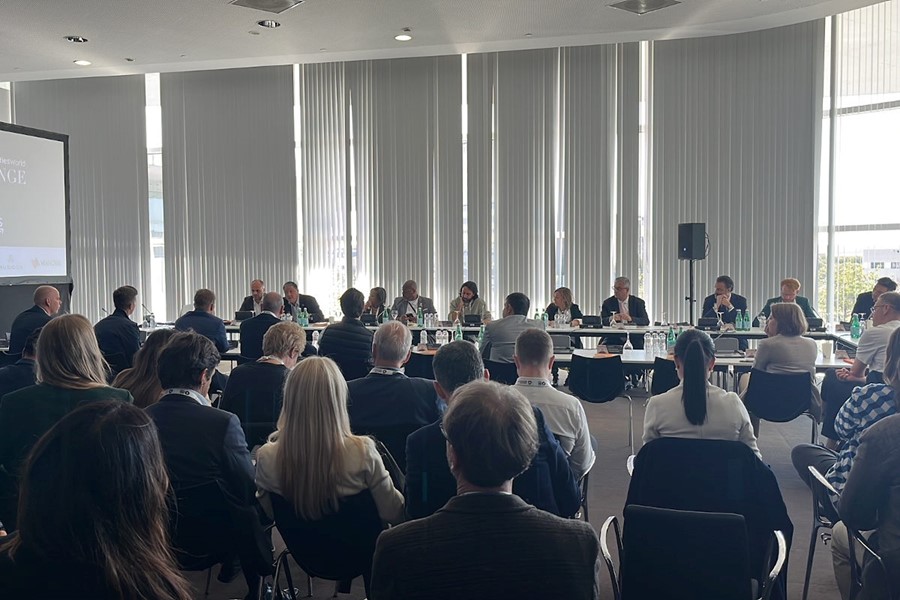
The roundtables run in a closed room format. Each session will allow up to 15 delegates to discuss the topics in question and will be moderated by one of the SmartCitiesWorld team. They may run on a virtual day or the in-person day - or both.
If you are interested in any of the roundtables below, please let us know during the registration process. We will also reach out to registered delegates with specific information. All registrations are reviewed by our event curator to ensure the perfect mix for the conversation.
Roundtable 1: Decarbonising the built environment - rethinking urban development for a climate-resilient future (Tue 24 June - 1pm)

Urban buildings are responsible for over 40 per cent of global carbon emissions. Cities must rapidly scale up net-zero retrofitting, rethink construction materials, and integrate nature-based solutions into urban planning – all while navigating funding gaps, policy inertia, and conflicting development priorities. This roundtable is designed to focus on how to take action in these areas, including:
- Scaling up net-zero retrofits and high-efficiency buildings – what financial and regulatory incentives are needed?
- Nature-based solutions in urban design – integrating green roofs, permeable infrastructure, and urban biodiversity into planning regulations.
- Financing the decarbonisation of buildings – unlocking green finance, sustainable construction incentives, and public-private partnerships.
- Addressing the embodied carbon challenge – shifting towards low-carbon materials and circular economy approaches in construction.
Roundtable 2: Climate financing - unlocking capital for local climate action (Tue 24 June - 3.30pm)

The biggest barrier to city-led climate action is access to funding. Only a fraction of global climate finance directly reaches cities due to restrictive funding structures, while private capital remains hesitant to invest at scale in urban climate projects due to perceived risks. This roundtable will focus on breaking down barriers and exploring new funding pathways for cities, with talking points to include:
- Expanding direct access to international climate finance – how can cities unlock more funding from global climate finance institutions?
- CHAMP and the role of multilevel climate finance at COP30 – what commitments should cities push for?
- Innovative urban finance models – leveraging green bonds, resilience bonds, and impact investment funds to accelerate local climate projects
- Ensuring accountability in climate finance – addressing transparency gaps, avoiding greenwashing, and ensuring that funds reach vulnerable communities.
Roundtable 3: Energy transition & efficiency - preparing urban energy systems for a net-zero future (Wed 25 June - 12.30pm)

Cities are experiencing an unprecedented shift in energy demand, driven by electrification, AI-powered infrastructure, and digital economies. With growing pressures to decarbonise grids, integrate renewables, and improve energy efficiency, cities must urgently rethink how they generate, distribute, and consume energy. Here, we will explore how cities can accelerate the transition to clean energy and efficient usage, covering:
- Decentralising energy grids with distributed energy networks – scaling up microgrids, energy storage, and local renewables to reduce dependency on centralised power
- Leveraging smart grids and AI for energy efficiency – reducing waste, balancing loads, and optimising city-wide consumption
- Ensuring equitable energy transitions – preventing energy poverty and ensuring affordable, community-led solutions.
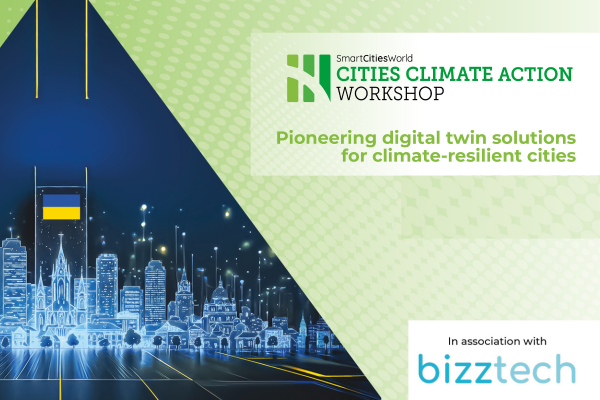
Workshop 1: Pioneering digital twin solutions for climate-resilient cities (Wed 25 June - 1pm)

As climate risks intensify and urban infrastructure ages, government leaders face mounting pressure to drive sustainable, tech-forward transformation. This workshop - hosted by SmartCitiesWorld in partnership with BizzTech at the Cities Climate Action Summit 2025 - offers practical insights into how digital twin technologies and the metaverse can enable smarter, faster, and more resilient urban development - especially in underdeveloped or post-conflict regions.
- Learn from UkraineVerse: Discover how Ukraine is setting a new standard with a scalable, digital-first model for post-crisis urban reconstruction—designed for speed, transparency, and sustainability.
-
Harness Predictive Technologies: Explore how AI-powered digital twins can drive smarter urban planning, infrastructure resilience, and real-time climate risk management.
-
Forge Public-Private Alliances: Understand how to build effective partnerships with technology providers, investors, and civic institutions to accelerate climate action and funding.
-
Adapt the Model Globally: Gain insights on how UkraineVerse’s framework can be customised and applied to cities across Latin America, Africa, and Southeast Asia.
-
Build Smarter, Greener Cities: See how immersive, metaverse-driven infrastructure planning can reduce emissions, optimise energy use, and improve overall urban efficiency
Register to attend Find out more
Roundtable 4: Climate technology - scaling digital solutions for smarter, more resilient cities (Wed 25 June - 2.30pm)

Climate technology is transforming how cities plan, manage, and respond to environmental challenges. Yet, gaps in funding, interoperability, and digital equity are slowing the adoption of these solutions. This roundtable will explore how cities can integrate AI, IoT, and advanced analytics into their climate action strategies while ensuring technological accessibility, public trust, and long-term scalability. Key themes include:
- AI and data-driven climate action – how predictive analytics and AI-powered modelling can enhance urban climate resilience
- Digital twins for climate-aware urban development – integrating virtual simulations with real-world infrastructure planning
- Scaling environmental monitoring networks – deploying real-time air quality sensors, climate risk modelling, and predictive weather analytics
- Overcoming digital inequity – ensuring that technological solutions benefit all communities, rather than widening the digital divide.
Workshop 2: Using data for equity-led, high-utilisation EV charging planning (Wed 25 June 3.40pm)

Effectively planning expansion of the charging network can be a core challenge for cities looking to accelerate EV uptake. With competing priorities for street space, equity considerations and varied utilisation rates, knowing where to focus limited resources can be difficult. In this workshop session, we will learn more about how to use data from various sources, including from Uber, to map potential charging locations, and explore how cities are using analysis for both planning directly and for internal and external communications and community engagement.
This session will not be suitable for all event attendees as the tools demo-ed during the session are not available in all geographies. Due to this and the commercial sensitivity of some materials shared, please note that all requests to join this session may not be accepted.
Roundtable 5: Policy development - local climate leadership in a national and global framework (Wed 25 June - 4pm)

As climate ambitions ramp up globally, sub-national governments must play a stronger role in shaping national and international policy frameworks – ensuring that cities are key architects of climate strategy. The urgency of this discussion is amplified by COP30’s focus on strengthening multilevel governance through initiatives like the Coalition of High Ambition Multilevel Partnerships (CHAMP). This roundtable will examine how cities can push for greater autonomy, influence global decision-making, and develop climate policies that are legally enforceable, equitable, and aligned with broader sustainability goals, including:
- Breaking silos between national and local climate policies – ensuring sub-national governments have the authority and resources to act independently while aligning with national climate targets
- Building enforceable climate action frameworks – overcoming policy inertia, implementing emissions reduction targets, and integrating climate action into urban planning laws
- Bridging climate policy and social equity – ensuring that local policies address climate justice and benefit the most vulnerable urban populations.
- Register to attend Want to sponsor this roundtable?
Roundtable 6: Sustainable mobility - scaling equitable, low-carbon transport systems (Tues 24 June)

The transition to sustainable urban mobility is accelerating, driven by the expansion of 15-minute cities, rapid electrification, and the integration of digital mobility solutions. This roundtable will bring together city leaders, mobility providers, and sustainability experts to explore how cities can move beyond pilot projects to fully integrated, resilient, and scalable sustainable mobility systems that work for all communities. Talking points include:
- Scaling 15-minute city models – ensuring infrastructure investment prioritises walkability, cycling networks, and public transport integration
- Addressing the urban EV transition gap – tackling charging infrastructure rollouts, grid resilience, and affordability concerns
- Optimising public transport and shared mobility – using AI and digital twins to enhance service efficiency and demand-based transit
- Ensuring an equitable mobility transition – preventing transit deserts, balancing private investment with public good, and making low-carbon transport accessible to all communities.
Why not try these links to see what our SmartCitiesWorld AI can tell you.
(Please note this is an experimental service)
How can cities effectively scale net-zero retrofitting in urban buildings?What innovative finance models unlock capital for local climate projects?How do AI and digital twins improve urban energy efficiency and resilience?Which policy frameworks best empower cities in national climate governance?What strategies ensure equitable access to sustainable urban mobility systems?

Climate Action Stories
from SmartCitiesWorld
Cities Climate Action News and Summit
Latest City Profile

© 2025 SmartCitiesWorld
Smart Cities World Ltd, 27 Clements Lane, London, EC4N 7AE