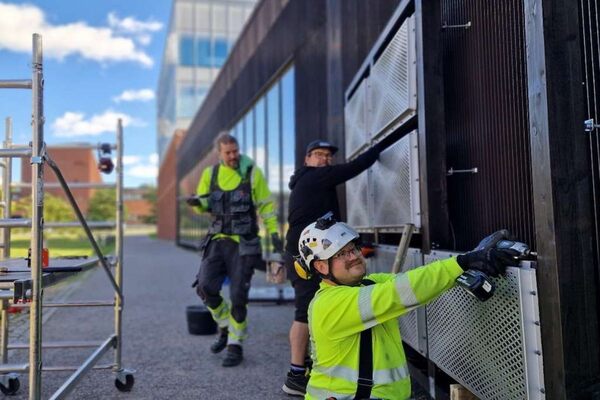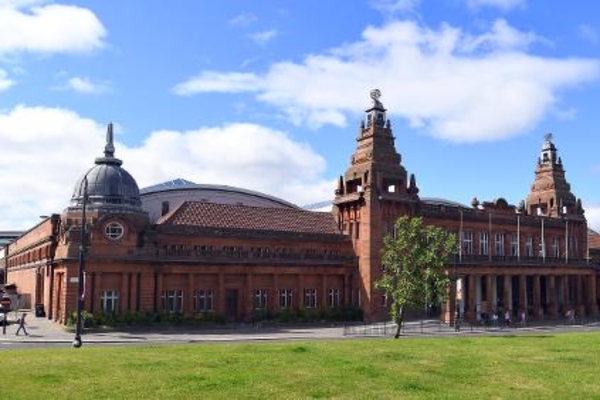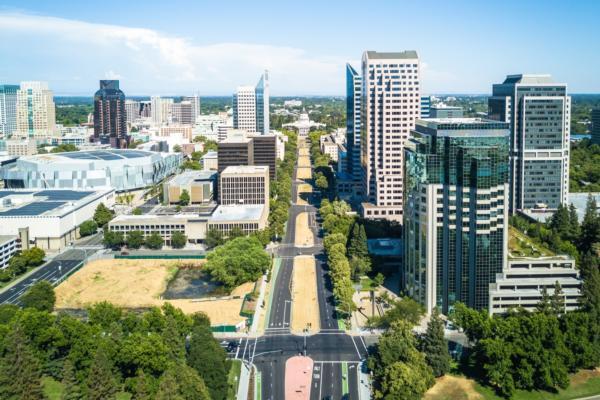



The ‘Twin cities’ will work together on local climate action as part of the Twinning Learning Programme, a peer-learning initiative of the EU Cities Mission.

At a glance
Who: Twenty-two cities across Europe; EU Cities Mission; and NetZeroCities.
What: The cities form the latest cohort to take part in the Twinning Learning Programme, a peer learning programme held under the EU Cities Mission and managed by NetZeroCities. They will work with their twin cities on local climate action, based on their Climate City Contracts, through a mutual knowledge exchange.
Why: The programme aims to help European cities to become climate neutral by 2050. Since climate mitigation is heavily dependent on urban action, the programme aims to support cities in accelerating their green and digital transformation.
When: Between September 2023 and January 2025, the first three rounds of the programme brought together more than 180 cities to engage in structured learning and collaboration. Starting in December 2025, the programme enters a new phase with this latest group of 22 cities. They will collaborate with 18 Mission cities over a 12-month period.
A further 22 cities have been welcomed as ‘Twin cities’ in the fourth cohort of the Twinning Learning Programme, a peer-learning initiative of the EU Cities Mission, facilitated by the Mission Platform, currently managed by NetZeroCities.
Over the next 12 months, 40 cities from 24 countries will work together on local climate action. Through mutual knowledge exchange, the new Twin cities will work directly with 18 participating Mission Cities – the 112 cities aiming to reach climate neutrality by 2030 as part of the EU Cities Mission – to learn from their experience.
They will focus on the actions outlined in their Climate City Contracts and the priorities identified in their associated action plans. The interactions will help twin cities design replication activities tailored to their needs, while Mission Cities will gain fresh perspectives and innovations to strengthen their own actions.
As a peer-learning opportunity funded under the EU Cities Mission, the programme directly contributes to the Mission’s second objective – ensuring that Mission Cities act as hubs of experimentation and innovation, enabling all European cities to become climate neutral by 2050.
Since climate mitigation is heavily dependent on urban action, the programme aims to support cities in accelerating their green and digital transformation
Informed by previous Twinning activities developed as part of the EU Cities Mission, this refreshed programme provides targeted feedback, structured partnerships, and access to practical tools. Through tailored and flexible knowledge exchange, workshops and site visits, cities can refine their strategies, accelerate progress toward key climate milestones, and strengthen their leadership role in driving urban climate action.
Since its launch in 2023, the Twinning Learning Programme has already connected more than 180 cities through three cohorts and received consistently positive feedback. Cities highlight the value of learning from peers facing similar challenges and gaining practical insights that have informed their own climate strategies.
The latest 22 new cities, listed below with their twins, will bring the total number engaged through peer-learning programmes in the Mission to more than 200.
|
Twin cities |
Paired with Mission cities |
|
Baerum (Norway) |
Reykjavik (Iceland) |
|
Cambridge (United Kingdom) |
2nd district of Bucharest (Romania) |
|
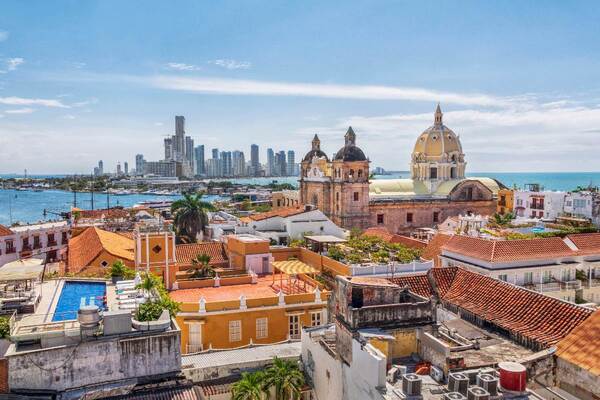
Cartagena (Spain) |
Gabrovo (Bulgaria) |
|
Cascais (Portugal) and Alytus (Lithuania) |
Torino (Italy) |
|
Cesena (Italy) |
Ioannina (Greece) |
|
Brno (Czechia) and Kumanovo (North Macedonia) |
Sarajevo (Bosnia and Herzegovina) |
|
Bydgoszcz (Poland) |
Liberec (Czechia) |
|
Győr (Hungary) and Mersin Yenisehir (Turkey) |
Sofia (Bulgaria) |
|
Hamburg (Germany) |
Guimaraes (Portugal) |
|
Lille (France) |
Bristol (United Kingdom) |
|
Paredes (Portugal) |
Elbasan (Albania) |
|
Ploiesti (Romania) |
Padova (Italy) |
|
Prague (Czechia) |
Umea (Sweden) |
|
Salzburg (Austria) |
Stockholm (Sweden) |
|
Samsun (Turkey) |
Kozani (Greece) |
|
Strasbourg (France) |
Aachen (Germany) |
|
Vantaa (Finland) and Lviv (Ukraine) |
Warsaw (Poland) |
|
Wolfsburg (Germany) |
Eindhoven-Helmond (The Netherlands) |
EU Missions are a way to bring concrete solutions to some of our greatest challenges. They have ambitious goals and will deliver tangible results by 2030, by putting research and innovation into a new role, combined with new forms of governance and collaboration, as well as by engaging citizens.
The missions are part of the Horizon Europe research and innovation programme for the years 2021-2027. Since climate mitigation is heavily dependent on urban action, the programme aims to support cities in accelerating their green and digital transformation. The EU Cities Mission involves local authorities, citizens, businesses, investors as well as regional and national authorities to deliver 100 climate-neutral and smart cities by 2030 and ensure that these cities act as experimentation and innovation hubs to enable all European cities to follow suit by 2050.
NetZeroCities is a consortium of 34 partners from 13 European countries managing the EU Cities Mission Platform in support of the EU’s Mission “100 Climate-Neutral and Smart Cities by 2030”.
It works as a service-oriented platform supported by world-class practitioners to help cities overcome the current structural, institutional, and cultural barriers they face in order to achieve climate neutrality by 2030. NetZeroCities aims to enable European cities and citizens to show the way forward towards an inclusive, thriving, climate resilient and sustainable future.