
































BUILD YOUR OWN
RESOURCE LIBRARY



eVTOL specialist leads project to develop charging tech
Vertical Aerospace is working with University of Bath and InnCat to develop charging and liquid-cooling technologies to support next-gen zero-emission aviation.


 At a glance
Who: Vertical Aviation; UK Government; University of Bath; InnCat.
What: Vertical will lead the development of next-generation charging and thermal management technology through the UK Government-backed Electrified Charging & Liquid-cooling Provision for Support of E-flights (ECLiPSE) programme.
Why: Charging infrastructure is emerging as one of the critical technologies needed to make high-frequency electric flight commercially and financially viable.
When: The announcement was made at Farnborough Air Show, which runs 20-24 July 2026.
Global electric aviation specialist Vertical Aerospace has announced it will lead the development of next-generation high-power charging and thermal management technology through the UK Government-backed Electrified Charging & Liquid-cooling Provision for Support of E-flights (ECLiPSE) programme.
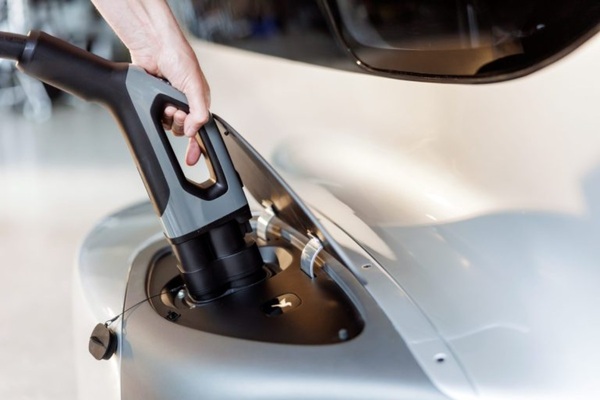
As the electric aviation industry moves toward commercial operations, charging infrastructure is emerging as one of the critical technologies needed to make high-frequency electric flight commercially and financially viable.
Led by Vertical in partnership with the University of Bath along with engineering technology and consulting firm InnCat, the ECLiPSE project will develop charging and liquid-cooling technologies designed to reduce infrastructure costs, accelerate site integration and enable faster aircraft turnaround, helping unlock the next generation of zero-emission aviation.
“To unlock commercial electric aviation, the industry needs the infrastructure that allows aircraft to recharge quickly, operate efficiently and scale economically”
Announced at the Farnborough International Airshow this week, during which Vertical conducted public demonstration flights of its electric vertical take-off and landing (eVTOL) vehicle, the project has been selected for funding through the UK Department for Transport’s Zero Emission Flight Demonstrator programme.
It represents a total investment of approximately £3.4m, including up to £1.75m in government funding, subject to completion of the grant agreement and the funding forms part of a wider UK Government £43m package for next-generation aviation technology.
Read More
“To unlock commercial electric aviation, the industry needs the infrastructure that allows aircraft to recharge quickly, operate efficiently and scale economically,” said Stuart Simpson, CEO of Vertical Aerospace.
“Through ECLiPSE, we’re making electric flight operational and commercially viable, while strengthening the UK’s leadership in next-generation aerospace innovation.”
The ECLiPSE project will integrate advanced high-power charging and thermal management technologies that are expected to improve charging performance while reducing system size, installation complexity and long-term operating costs. By increasing charging power and improving thermal management, the programme aims to make electric aircraft operations more commercially attractive for operators while accelerating deployment of charging infrastructure.
The technologies developed through the programme are also expected to have applications across the wider transport sector as electrification continues to expand.
The announcement builds on longstanding UK Government support for Vertical through programmes including the Aerospace Technology Institute (ATI), the Future Flight Challenge and now the Department for Transport’s Zero Emission Flight Demonstrator programme. In addition, Vertical announced this week that they are in advanced discussions with the UK Government on a broad package to anchor the first of Vertical’s planned global full-production sites in the UK.
Vertical is developing not only its Valo electric aircraft but also helping build the broader ecosystem required to support commercial electric flight.
Why not try these links to see what our SmartCitiesWorld AI can tell you.
(Please note this is an experimental service)
How will high-power charging reduce aircraft turnaround times?How could integrated thermal management lower long-term operating costs?How will ECLiPSE improve charging site integration and installation?How might higher charging power impact grid stability and solutions?How can these technologies be adapted across wider transport sectors?Latest City Profile
Latest Summit Speakers
(22-26 June)
SmartCitiesWorld Newsletters (Daily/Weekly)
You may also like these related articles...
BECOME A MEMBER
© 2026 SmartCitiesWorld
Smart Cities World Ltd, 37 Lombard Street, London, EC3V 9BQ