


























BUILD YOUR OWN
RESOURCE LIBRARY



Interview: Pathways to creating more cognitive cities
27 Jan 2026
Honeywell’s global director for smart cities, Mohamed Moselhy, talks us through the role of artificial intelligence and digital twins in moving from smart cities to cognitive cities.


In this interview, Mohamed Moselhy, Global Smart Cities Director at Honeywell, explains how cities are evolving from connected and smart to truly cognitive cities.
He outlines the journey from basic connectivity and resilience to a new era where cities can think, plan, act, and learn. Cognitive cities, he explains, are powered by the convergence of AI, IoT, and digital twin technologies, enabling a far more proactive, predictive, and self-sustaining approach to urban management.
Moselhy highlights how agentic AI moves city operations beyond generic use cases. These agents can collaborate across domains to better detect patterns, correlate events, and respond more intelligently to incidents and changing conditions across the urban environment.
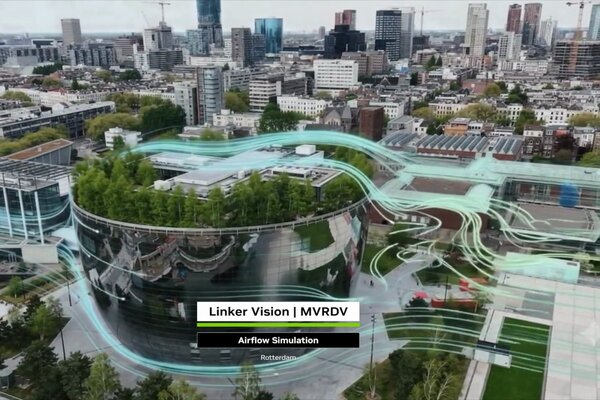
A key focus of the discussion is the transformation of the digital twin from a static visualisation into a live, immersive operational environment. By integrating real-time IoT data and AI, digital twins can now be used for continuous simulations, planning, incident response testing, and predictive modelling, giving operators and decision makers a powerful tool to understand what is happening in the city and what is likely to happen next.
Throughout the interview, Moselhy stresses that the ultimate goal of cognitive cities is to improve human experience. By providing a shared digital infrastructure for citizens, visitors, operators, and decision makers, cognitive cities aim to enhance well-being, engagement, and satisfaction, creating urban environments where people living, working, or visiting experience a higher quality of life and deeper interaction with the city around them.
Sponsored by:

Why not try these links to see what our SmartCitiesWorld AI can tell you.
(Please note this is an experimental service)
How does agentic AI improve incident response across urban environments?In what ways do digital twins enable predictive modeling for city planning?How can AI and IoT integration enhance real-time urban management?What role does cognitive city infrastructure play in improving citizen engagement?How do cognitive cities use data to create self-sustaining urban systems?Latest City Profile
Latest Summit Speakers
(22-26 June)
SmartCitiesWorld Newsletters (Daily/Weekly)
You may also like these related articles...
BECOME A MEMBER
© 2026 SmartCitiesWorld
Smart Cities World Ltd, 37 Lombard Street, London, EC3V 9BQ