






 22 - 26 June 2026: Find out more









BUILD YOUR OWN
RESOURCE LIBRARY



Opinions
Securing lighting: protecting the backbone of connected cities Sponsored by Paradox Engineering
AI’s next stop: transforming urban transportation responsiblySponsored by Microsoft
Auckland ushers in a new era of rapid transit
The twin-tunnels underground and new stations aim to transform Auckland’s network, improving cross-city connections and unlocking new opportunities for growth.


 At a glance
Who: Auckland Council; City Rail Link (CRL).
What: Aucklanders are marking the beginning of a new rapid transit era, with the opening of the City Rail Link, built for a fully electric train fleet.
Why: To improve cross-city connections and unlock new opportunities for growth.
When: CRL opened on 13 September 2026.
Aucklanders are marking the beginning of a new rapid transit era, with the opening of the City Rail Link (CRL), built for a fully electric train fleet.
The opening of the City Rail Link ushers in a more connected, productive, sustainable and accessible future for New Zealand’s largest city. It is the country’s largest transport infrastructure project ever.
Transforming Auckland’s rail network
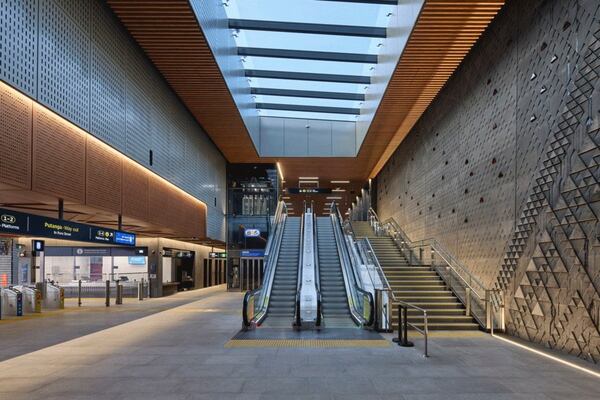
The 3.45km twin-tunnels underground and new stations – Te Waihorotiu, Karanga-a-Hape and Maungawhau – aim to transform Auckland’s rail network, improving cross-city connections and unlocking new opportunities for growth. CRL gives provision for nine-car electric trains.
As a 50 per cent funding partner in the project, Auckland Council will continue to measure the benefits realised by the new network, including improved journey times, better connectivity, economic growth and environmental outcomes.
“Aucklanders can look forward to more travel options and a better-connected rail network, making it easier to move across the city”
As part of the project pedestrian spaces and cycleways encouraging active modes like walking and cycling, trees, public art and te ao Māori narratives have been created in the purpose-designed station precincts.
“The City Rail Link is a transformational investment for Auckland. It’s a game changer for our city that will benefit generations to come,” said Wayne Brown.
“Aucklanders can look forward to more travel options and a better-connected rail network, making it easier to move across the city. Public transport will be simpler, more convenient and more accessible for more people.
Read More
“The value of this project will be felt every day. Whether you’re heading to work, school, Eden Park or K’ Road for a meal, the new network will make getting around Auckland faster and easier. It will also provide tangible economic benefits.
“I encourage Aucklanders to get on board, literally, and make the most of this significant investment in our city’s future.”
Deputy mayor Desley Simpson said the project is a lot more than a public transport project; it’s a celebration of the public space that the Auckland Council group and CRL Limited have unlocked in the new station precincts around the rail corridor. She explained the three big urban regeneration projects – downtown, midtown and Karangahape Road – reflect years of collaboration between the council, mana whenua, artists, urban designers, delivery partners and many others.
“We have created beautiful places where te ao Māori narratives are visible and embedded, where history is acknowledged and carried forward, and where people feel a sense of belonging.
“We are building a city that tells its stories with confidence,” she said.
For councillor Richard Hills, chair of the Policy, Planning and Development Committee, the opening represents a significant step forward in the city’s sustainability journey, too: “With our all-electric trains arriving more often, more than 400 electric buses, ever-expanding frequent bus network, new cycleways and pedestrian friendly spaces, Aucklanders will be travelling in great numbers in a far more connected environmentally friendly way.”
He added: “This all means the air we breathe will continue to improve, emissions will reduce and Auckland will continue to pick up the pace as we strive to become a more sustainable city.
“The City Rail Link has also become an international example of embedding indigenous knowledge, cultural identity and public art into major infrastructure delivery, with mana whenua being lead partners throughout.
“Every station and its neighbourhood tells a unique cultural story reflecting the history, identity and significance of its location within Tāmaki Makaurau.”
Why not try these links to see what our SmartCitiesWorld AI can tell you.
(Please note this is an experimental service)
When did Auckland’s City Rail Link officially open?Which new stations are included in Auckland’s underground rail link?What train length can the City Rail Link accommodate?What walking and cycling features were added around the new stations?How are Māori cultural stories represented across the station precincts?
Latest City Profile
Latest Summit Speakers
(22-26 June)
Latest Urban Exchange Podcast
Latest Special Report
SmartCitiesWorld Newsletters (Daily/Weekly)
You may also like these related articles...
BECOME A MEMBER
© 2026 SmartCitiesWorld
Smart Cities World Ltd, 37 Lombard Street, London, EC3V 9BQ