












 22 - 26 June 2026: Find out more















BUILD YOUR OWN
RESOURCE LIBRARY



Opinions

Securing lighting: protecting the backbone of connected cities Sponsored by Paradox Engineering

AI’s next stop: transforming urban transportation responsiblySponsored by Microsoft
Regent completes first crewed flight of Viceroy Seaglider
Seaglider prototype has completed its first human-crewed flight, making it the largest-ever all-electric wing-in-ground effect craft to fly with people on board.


 At a glance
Who: Regent Craft.
What: Regent has successfully completed its first human-crewed flight, making it the largest-ever all-electric wing-in-ground (Wig) effect craft to fly with people on board.
Why: The Seaglider Viceroy prototype flight test provides critical validation of the innovative technology and marks the start of the programme’s final stage of sea trials, before moving into full-rate production.
When: Flight took place on 2 September at Regent’s headquarters on Narragansett Bay, Rhode Island.
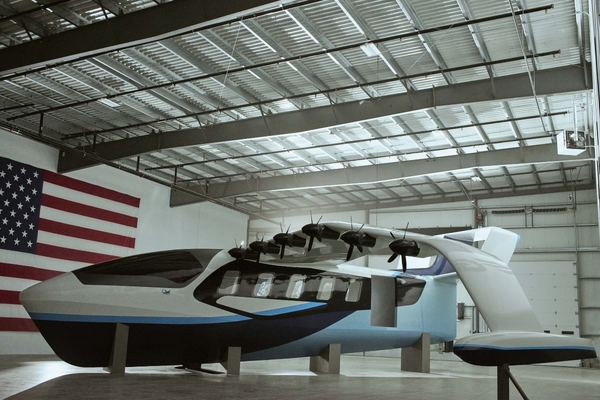
Maritime mobility specialist, Regent, has successfully completed its first human-crewed flight, making it the largest-ever all-electric wing-in-ground (Wig) effect craft to fly with people on board.
The flight took place at Regent’s headquarters on Narragansett Bay, Rhode Island, with a crew of two captains aboard. The Seaglider flew a distance of 1,956 feet (596 metres) at a height of 33 ft (10m) above the water for 30 seconds.
Critical validation
According to Regent, the Seaglider Viceroy prototype flight test provides critical validation of the innovative technology and marks the start of the programme’s final stage of sea trials.
The Regent team spent the summer increasing the vessel’s hydrofoiling speed in preparation for the flight, part of a comprehensive testing effort throughout 2026 spanning both on-water operations and simulation-based development. These efforts continue to refine vehicle performance, de-risk operations, and accelerate Regent’s readiness for commercial service and defence applications.
“We showed today that flying a Seaglider is every bit as smooth and safe as we designed it to be”
“Completing this flight test validates years of rigorous engineering and operational work and gives us the confidence to move into full-rate production,” said Mike Klinker, co-founder and CTO at Regent.
“We showed today that flying a Seaglider is every bit as smooth and safe as we designed it to be. I can’t wait to get onboard and to share the experience with others as we make our vision for the future of maritime mobility a reality.”
Read More
Seaglider vessels are high-speed, hydrofoiling wing-in-ground effect craft that combine the speed of an aircraft with the convenience of a boat. The vessel operates in three modes – float, foil, and fly – starting on its hull at low speed, transitioning to hydrofoils once clear of the dock, and then taking flight within one wingspan of the water’s surface.
Hydrofoiling gives Seaglider wave tolerance and manoeuverability in harbours and near coastlines. A triple-redundant digital control system manages stability autonomously, so even in flight, the captain drives the Seaglider like a boat: left, right, fast, and slow. Regent claims the digital control system offers a level of safety and control that no Wig craft has achieved before it.
“Completing this flight test validates years of rigorous engineering and operational work and gives us the confidence to move into full-rate production”
The Viceroy vessel will be able to fly at speeds up to 180mph for up to 180 miles, and seat 12 passengers and two crew. Onboard, Regent reports that passengers can expect ample legroom, large windows, and a quiet ride – all while travelling faster than a ferry and skipping the delays of airport-style check-in.
Regent’s Seaglider vessels are captained by certified mariners and regulated in the US by the US Coast Guard and by maritime authorities in countries around the world.
In June, Regent completed construction of the world’s first Seaglider manufacturing facility, a 255,000-square-foot site at its Quonset, Rhode Island headquarters that is coming online this year as the global production hub for the company’s order book.
The facility will house structural assembly, wing and hydrofoil integration, battery and systems installation, and water-based testing, with direct waterfront access for sea trials and proximity to Rhode Island’s maritime manufacturing workforce.
Why not try these links to see what our SmartCitiesWorld AI can tell you.
(Please note this is an experimental service)
What did Regent’s first crewed Seaglider flight demonstrate?How does the Seaglider transition between floating, hydrofoiling, and flying?How far and how high did the Viceroy fly during testing?What technology helps captains control the Seaglider during flight?How many passengers will Viceroy carry, and how fast can it travel?
Latest City Profile
Latest Summit Speakers
(22-26 June)
Latest Urban Exchange Podcast
Latest Special Report
SmartCitiesWorld Newsletters (Daily/Weekly)
You may also like these related articles...
BECOME A MEMBER
© 2026 SmartCitiesWorld
Smart Cities World Ltd, 37 Lombard Street, London, EC3V 9BQ