











 22 - 26 June 2026: Find out more












BUILD YOUR OWN
RESOURCE LIBRARY



CReDo: how digital twins can support climate resilience
CReDo’s Sarah Hayes tells SmartCitiesWorld how the digital twin project is creating and demonstrating value across sectors, as well as for the environment.


What is the Climate Resilience Demonstrator (CReDo) and how did the project begin?
CReDo is short for Climate Resilience Demonstrator – a climate change adaptation digital twin project designed to demonstrate how connected data can improve climate adaptation and resilience across a ‘system of systems’. The project was originally launched by the Centre for Digital Built Britain to showcase the possibilities of sharing data across organisations and sectors, emphasising the benefits of such collaboration. The initiative aimed to overcome barriers to data sharing by advocating for a systematic approach and establishing a framework for secure cross-sectoral data exchange.
CReDo initially served as a proof of concept, demonstrating the potential of sharing data across various domains. When the Centre for Digital Built Britain concluded its mission and closed down in March 2022, CReDo continued under the stewardship of the Connected Places Catapult in April 2022. Connected Places Catapult had been involved since the project’s inception, contributing to the proposal and securing funding from Innovate UK.
CReDo’s primary objectives revolve around two key aspects. Firstly, it seeks to highlight the advantages of data sharing in enhancing resilience, particularly in addressing climate change. The project gathers data from energy, water, and telecoms providers to present a comprehensive view of the infrastructure system, which enables understanding of the potential impact of extreme weather events on the entire infrastructure, aiding in climate resilience efforts.
CReDo also aims to explore and establish best practices for overcoming barriers to data sharing. The project looks to emphasise transparency in its methodologies, with a focus on data architectures. Moving from a centralised database approach to a distributed architecture in its second phase, CReDo is experimenting with bespoke and experimental solutions. An important acknowledgement in the project is the need for a broader ecosystem to adopt a distributed architecture for effective data sharing across sectors.
We’re also also delving into the challenges of bringing together data from diverse organisations and sectors. The project applies a common data structure, incorporating relevant ontologies for different sectors, to facilitate a cohesive understanding of the overall picture. This approach helps identify errors in the data and ensures an accurate system view of assets and their behaviour.
On the data sharing and information management front, CReDo actively engages in developing data sharing agreements, recognising their role in facilitating collaboration. Building trust among organisations is obviously crucial, and the focus is on addressing specific use cases, such as climate resilience, to encourage participation.
What is the process like to get the infrastructure owners, who are typically privately owned, on board – especially given that they are and have basically always have been working in siloes?
From a pragmatic standpoint, the challenge lies in the diverse formats in which each organisation holds its data. Each asset owner undergoes a process of consolidating and formatting their data to make it compatible for sharing. They then willingly provide this prepared data to the software developer – in our case, CMCL Innovation. The data is then hosted on DAFNI, the Data Analytics Facility for National Infrastructure, within a secure environment. CMCL’s role is crucial as they apply a common data structure across these datasets to unify the information seamlessly.
Another approach, and one that aligns with the long-term vision of the National Digital Twin Programme and the Information Management Framework, involves having data in a standardised format at its source. It may be an aspirational goal but the reality is that organisations are on a challenging journey to align their data standards and formats internally. This is a gradual process and not something that can happen overnight. The aim is to encourage organisations to share best practices in developing common industry data models, fostering collaboration and agreement on data standards.
In the energy industry, for instance, the common information model serves as an example of a common data model. These models need to be developed collaboratively across organisations because they are not readily formatted for seamless sharing. The challenge lies in balancing the ideal vision for the future with the pragmatic steps we must take in the interim. While the long-term goal is to have standardised data formats at the source, it is equally important to showcase the immediate benefits of sharing data. Demonstrating these advantages encourages organisations to invest in their information management and work towards a common goal. Ultimately, the willingness of organisations to collaborate and agree on common standards will play a crucial role in realising the ideal vision for data sharing. If they do not see the benefits, they are likely to retain their data within their individual siloes.
"The objective is to empower asset owners to leverage this tool, allowing them to prioritise critical assets for future considerations"
With the partners currently involved in the project, can you provide insights into the tangible benefits of data sharing between different sectors and the anticipated future need for such collaboration?
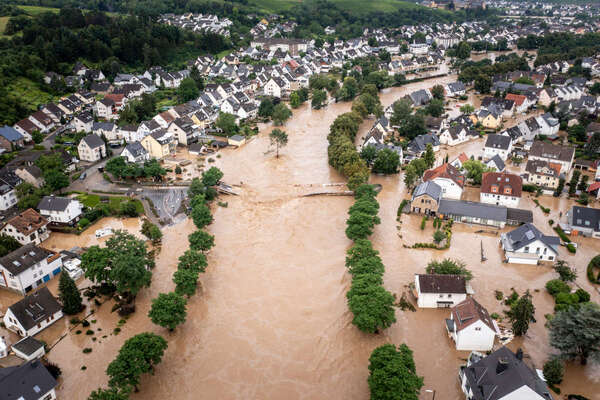
With CReDo, we first focused on demonstrating this with synthetic data, however, our more recent focus has been on ensuring that asset owners have access to real data through secure dashboards. For example, by simulating future flood scenarios, they can visualise how their assets would be impacted. This has been particularly insightful for water networks, as they wouldn’t traditionally have information on which substations might be affected by a storm and the subsequent ramifications of their failure. Our emphasis has been on exploring interdependencies, revealing dependencies on other networks and understanding the intricate relationships between them.
It’s an ongoing process, evolving into a tool that we aim to refine further. The objective is to empower asset owners to leverage this tool, allowing them to prioritise critical assets for future considerations. For instance, decisions on whether to relocate assets to enhance flood defences can be informed by the insights gained from the tool. We have also expanded our scope to include extreme heat, because the understanding of extreme heat impacts in the UK is limited, and we need to be able to predict how assets might fail under extreme heat scenarios. Given the scarcity of experience in this domain, forecasting becomes critical in identifying assets that need protection and to guide decisions on where to construct new assets.
Read More
How will digital twins support infrastructure owners in determining the optimal locations for building and installing new assets as they aim to enhance capacity?
Historically, the challenge faced by electricity infrastructure owners when it comes to innovation is the high cost, both in environmental and financial terms – if you’re building a new transmission line or substation, it’s expensive. This is why various funds and initiatives have been established to encourage innovation and experimentation in different areas, creating sandboxes for testing ideas. However, with digital twins, we have the capability to simulate and visualise the potential outcomes of different scenarios.
"Understanding the scope of uncertainty surrounding an investment and its potential impacts is crucial"
With digital twins, infrastructure owners can explore the impacts of increasing transmission in a specific area, assessing the repercussions on the environment, transportation, quality of life, or any other factors deemed important. The richness of the simulation increases with the amount of data available. When making investments, there are expected benefits, but there are also unintended consequences. Involving multiple parties with diverse datasets in the digital twin process helps uncover these unintended consequences, which have historically been a challenge.
Think of it almost like playing a computer game. You can simulate different scenarios, explore permutations, and evaluate likelihoods. It provides a way to play out potential outcomes before making actual investments. This is particularly valuable in dealing with uncertainty, as investments are inherently accompanied by a range of uncertainties. Understanding the scope of uncertainty surrounding an investment and its potential impacts is crucial.
Given the urgency of decarbonising the electricity system, there’s a limited timeframe, and mistakes have to be minimised. We don’t have the luxury of time for trial and error, so the goal is to leverage digital twins to make informed decisions, minimising errors and ensuring that the investments made between now and the decarbonisation deadlines are strategic and impactful.
How are you actively engaging new organisations to bring more partners into CReDo?
We have to illustrate what can be achieved and how it directly benefits asset owners. It needs a concrete example that reflects the advantages and illustrates that it is worth the investment of finance, time and resource.
We’re now in a position where we have something tangible that we can share with other organisations, showing the potential benefits for their own operations. While CReDo has received funding from UK Research and Innovation (UKRI) and the Strategic Innovation Fund from Ofgem and Offshore Wind Accelerator (OWA), ongoing funding is necessary for the project’s continuity.
When we talk about funding, it encompasses the development of software, the digital twin, and its presentation. Those interested in joining the collaboration need to allocate people’s time to be part of the process. It’s not just about sharing data; it involves conversations to determine user experience preferences, desired outcomes, and how to effectively integrate their data. In-depth discussions, particularly with asset owners, are ongoing to understand the impacts of elements such as heat on their assets or responses to flooding. CReDo essentially captures this expertise and turns it into a digital format that can be scaled and replicated across different regions.
While maintaining confidentiality around asset data, CReDo aims to foster openness in sharing knowledge. Beyond technical development, successful collaboration hinges on organisations’ commitment, enthusiasm, and dedication of resources. Champions within participating organisations play an important part in driving the project forward. Having advocates within both asset owners and government regulators is essential for navigating the complexities of working across diverse areas. Their positive engagement and commitment contribute significantly to the success and advancement of the project.
Why not try these links to see what our SmartCitiesWorld AI can tell you.
(Please note this is an experimental service)
How does CReDo facilitate secure cross-sectoral data sharing for resilience?What role do digital twins play in simulating climate impact on infrastructure?How can standardised data models improve collaboration among infrastructure owners?In what ways does CReDo help prioritise critical assets against extreme weather?How do digital twins assist in optimising locations for new infrastructure assets?
Latest City Profile
Latest Summit Speakers
(22-26 June)
Latest Urban Exchange Podcast
Latest Special Report
SmartCitiesWorld Newsletters (Daily/Weekly)
You may also like these related articles...
BECOME A MEMBER
© 2026 SmartCitiesWorld
Smart Cities World Ltd, 37 Lombard Street, London, EC3V 9BQ