

























BUILD YOUR OWN
RESOURCE LIBRARY



Guadalajara announces Mexico’s first low-emission zone
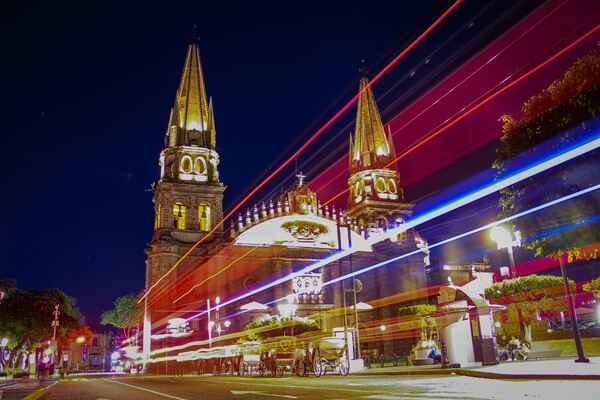
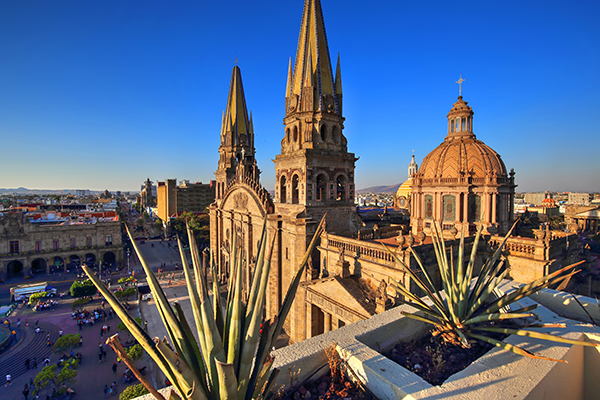
Centred around the historic city centre’s busy Ramón Corona intersection, the move is part of Guadalajara’s broader efforts to reduce road injuries and deaths.


Guadalajara has announced what the city claims is Mexico’s first low-emission zone (Lez), joining the global movement for cleaner air.
Centred around the historic city centre’s busy Ramón Corona intersection, the implementation is part of Guadalajara’s broader efforts to reduce road injuries and deaths while reducing greenhouse gas emissions and combat the climate crisis.
Accessibility and security
Both the city and the State of Jalisco are committed to improving accessibility and security where a high number of people converge. The Ramón Corona intersection, for example, sees more than 170,000 trips daily.
C40 Cities closely collaborated with Guadalajara’s Mobility and Transport, and Environment Directorates, conducting thorough technical work alongside the city’s Institute of Planning and Development Management of the Metropolitan Area of Guadalajara (IMEPLAN).
Working together, the historic centre of Guadalajara was chosen as the designated area for the city’s first Lez intervention. This decision marks a significant step toward achieving the city’s climate goals.
“The low emission zone in Guadalajara stands as a remarkable strategy that contributes to health, better urban spaces, road safety and emissions reduction”
The Metropolitan Area of Guadalajara’s climate action plan (PACmetro), released in 2020, received the United Nations Global Climate Action Award in the Climate Leader category during the UN Climate Change Conference (Cop26). The plan was the first instrument built on a metropolitan scale in Mexico and within the C40 network.
“The heart of the city has experienced one of the most important transformation processes in its history. Just look at what has happened with the pedestrianisation of Avenida Fray Antonio Alcalde or with Line 3 of our Light Train,” said Juan Francisco Ramírez Salcido, interim mayor of Guadalajara.
“These two works contributed to this space changing from being an avenue with high levels of noise and pollution to becoming, as you all here can see, in a wooded, accessible and safer space, where we can enjoy with all our families.”
Read More
Guadalajara’s Lez covers an area of 2 square kilometres in the city’s historic centre where, over the past decade, various measures were implemented to improve mobility, pedestrian and cycling infrastructure, and urban nature. It also has designated spaces and schedules for loading and unloading goods, speed limits of 30 km/h, all in an effort to prioritise road safety while creating dynamic, healthy and enjoyable public spaces. The Lez reflects a consolidated vision of a healthy, resilient, inclusive and sustainable city.
Technical studies conducted for the project revealed that cars are the main source of emissions in the historic centre of Guadalajara, followed by motorcycles and light cargo vehicles. Furthermore, it is estimated that the interventions carried out in Paseo Alcalde (between 2008 and 2023) have mitigated 90 per cent of greenhouse gases in this corridor and reduced road crashes by 53.3 per cent.
“Among its notable benefits is the improvement of air quality, thus contributing to a cleaner and healthier environment, which is especially urgent to address the climate crisis”
According to C40 Cities, based on these actions and planned actions, it is estimated that by 2030, CO₂ will be reduced by 90 per cent and black carbon 92 per cent, increasing life expectancy by 0.46 years for users of the intersection, due to the reduction of risks associated with emissions. Additionally, it is expected to attract 141,962 new pedestrians and 4,912 new cyclists annually.
Ilan Cuperstein, C40’s regional director for Latin America, said: “The low emission zone in Guadalajara stands as a remarkable strategy that contributes to health, better urban spaces, road safety and emissions reduction.
“Among its notable benefits is the improvement of air quality, thus contributing to a cleaner and healthier environment, which is especially urgent to address the climate crisis while also improving the quality of life of tapatíos [someone from downtown Guadalajara].”
Why not try these links to see what our SmartCitiesWorld AI can tell you.
(Please note this is an experimental service)
How does Guadalajara's low-emission zone reduce greenhouse gas emissions?What measures improve road safety within Guadalajara’s historic centre Lez?How will the Lez impact pedestrian and cyclist numbers by 2030?What role did C40 Cities play in Guadalajara’s low-emission zone planning?How has Paseo Alcalde’s transformation affected air quality and road crashes?Latest City Profile
Latest Summit Speakers
(22-26 June)
SmartCitiesWorld Newsletters (Daily/Weekly)
You may also like these related articles...
BECOME A MEMBER
© 2026 SmartCitiesWorld
Smart Cities World Ltd, 37 Lombard Street, London, EC3V 9BQ