











BUILD YOUR OWN
RESOURCE LIBRARY



Podcasts
Cities Thriving on Lighting, Episode 2 – Simplicity by design in smart lightingSponsored by Paradox Engineering
Cities Thriving on Lighting, Episode 1 – Lighting as the backbone of the smart citySponsored by Paradox Engineering
Opinions

Transforming indoor public safety with smart sensor networksSponsored by Motorola Solutions
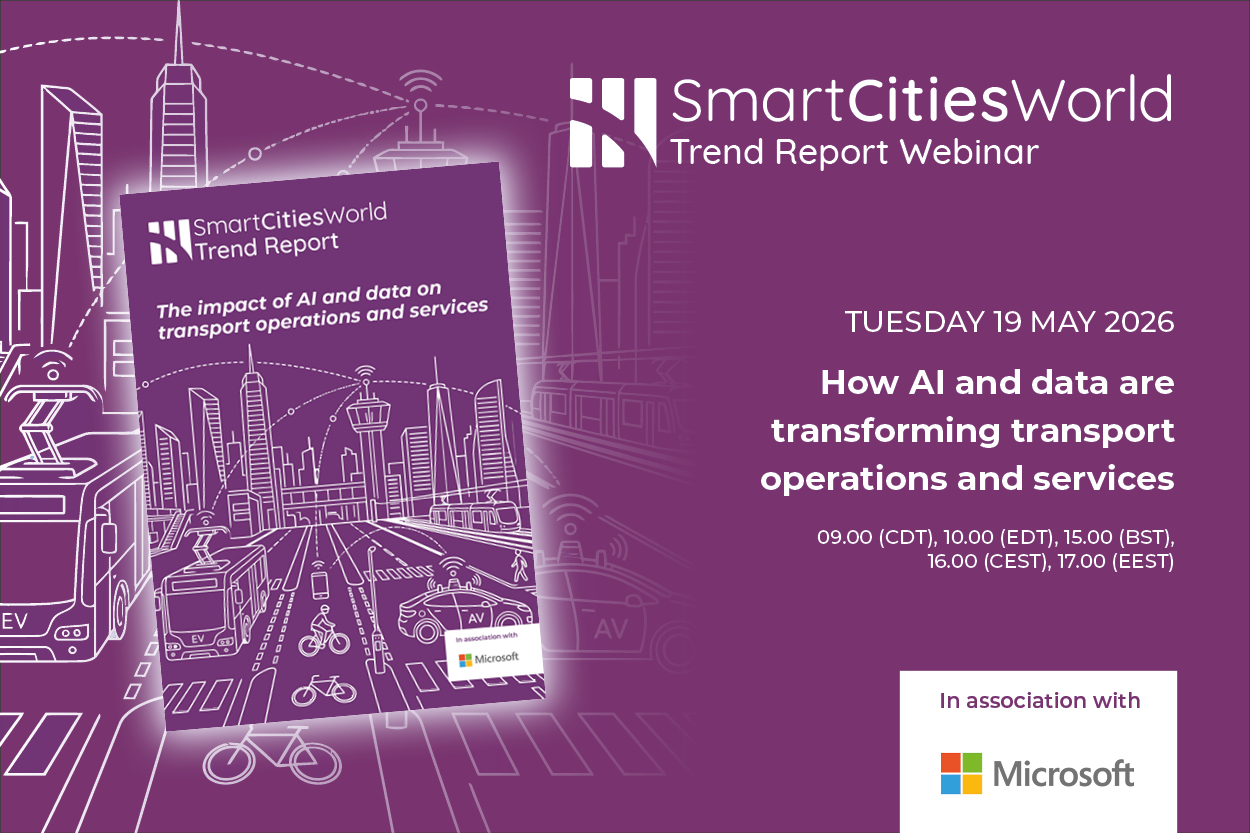
Trend Report Panel Discussion (21 May): Operating smarter: using digital twins and AI to reshape urban infrastructure management


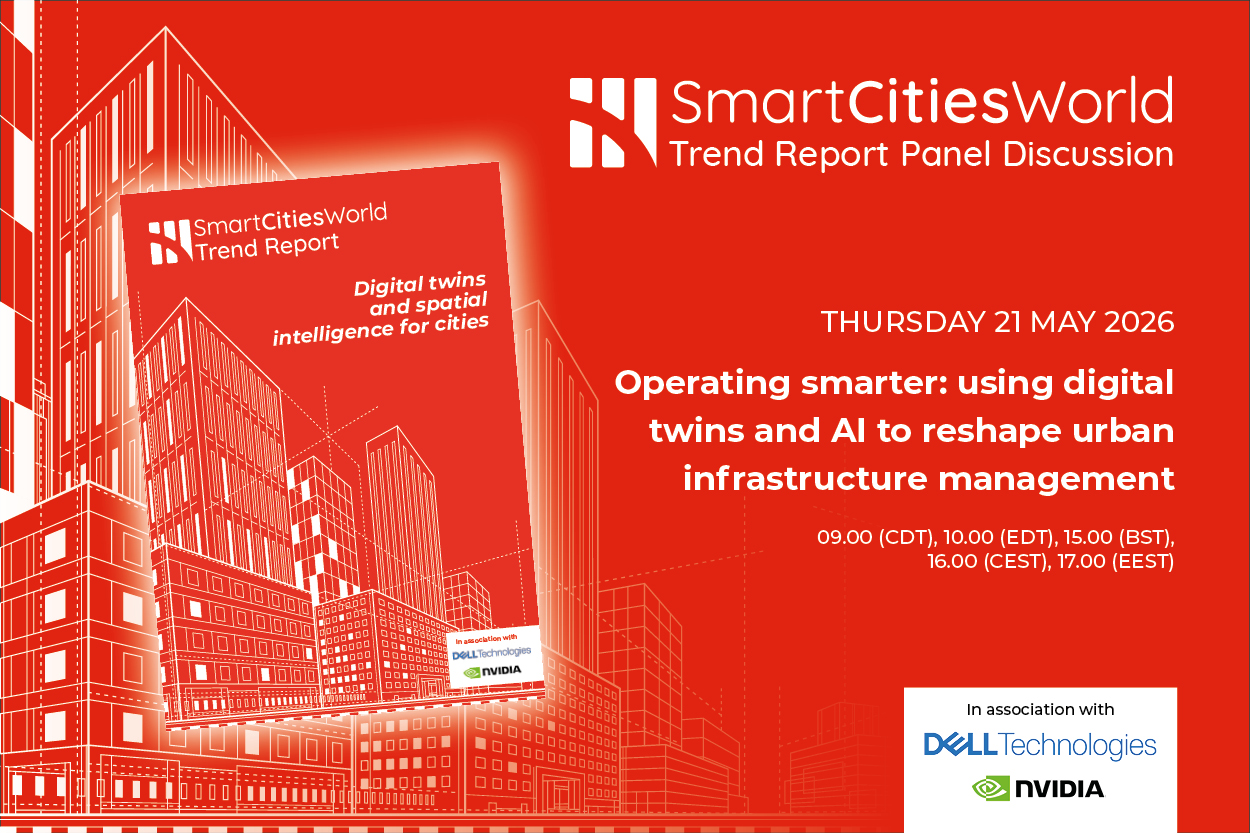
Date: Thursday 21 May 2026
Time: 9.00 (CDT), 10.00 (EDT), 15.00 (BST), 16.00 (CEST), 17.00 (EEST)
Length: 60 minutes + Q&A
As cities face growing pressure to reduce energy use, manage water scarcity, and operate complex infrastructure with limited resources, many organisations across cities are looking to digital twins and artificial intelligence as practical tools for today rather than future concepts.
This webinar will explore how smart campus initiatives can act as real-world testbeds for urban infrastructure innovation, drawing on the experience of Mohammed VI Polytechnic University (UM6P) in Morocco and its AI-powered digital twin programme.
Using UM6P’s AI-powered campus pilot as an example, the session will examine how AI-enabled digital twins can bring together previously siloed operational systems – from energy and water management to security, lighting, and asset maintenance – into a single, unified operational view. Expert speakers from project partners including Dell Technologies, NVIDIA, Akila and UM6P will discuss how this integrated approach supports faster fault detection, predictive maintenance, and more efficient use of human resources, helping operations and maintenance teams move from reactive to proactive management.
The webinar will also address sustainability outcomes in practical terms. Participants will hear how live data, AI agents, and real-time dashboards are being used to track consumption curves, optimise performance, and target measurable reductions in energy and water use, even in challenging contexts such as regions facing water scarcity.
Beyond technology, the discussion will focus on organisational readiness and governance. Topics will include workforce upskilling, data privacy and sovereignty, and the importance of local cloud infrastructure. The session will also look at how smart campuses can scale into wider smart city initiatives, with universities, local authorities, and technology partners working together to extend digital twin approaches from buildings to districts and cities.
Designed for urban infrastructure managers and city practitioners, this session will provide practical insights, lessons learned, and transferable approaches for deploying AI-enabled digital twins to improve resilience, efficiency, and sustainability across urban environments.
Speakers
|
|
Dr. Aawatif Hayar Strategic Advisor University of Mohammed VI Polytechnic (Morocco)
Dr. Aawatif Hayar is the Strategic Advisor as the University of Mohammed VI Polytechnic in Morocco. Previously, Dr. Hayar served as the Minister of Solidarity, Social Integration, and Family and was the President of Hassan II University Casablanca 2019-2021. Since 2016, she has served as the Scientific Advisor of Smart City Expo Casablanca and General Co-Chair of IEEE international Smart Cities Conference. In 2011, she served as a professor at the UH2C. She is also a member of the Casablanca “Avant-garde” City think tank. She was also selected by the African Innovation Foundation as one of the top ten innovative African women in 2015. |
|
|
|
Pierre-Manuel Patry Head of Strategic Accounts Akila
Pierre-Manuel Patry is a global leader in digital twin and AI-powered solutions for build environment. With over 15 years of international experience in sustainability, energy, and digital transformation, he has spearheaded the launch and growth of innovative SaaS platforms across Europe and Asia. Pierre-Manuel focuses on how digitalization and AI can empower cities and industries to achieve operational excellence and net-zero goals.
Pierre-Manuel will be talking about the deployment of an AI-powered digital twin platform at Monaco’s Monte-Carlo station and how the SNCF is using real-time AI and digital twins to reimagine station operations. |
|
 |
Davide Schiavon EMEA Solutions Partners Lead, Smart Spaces NVIDIA
As a Solutions Partners Lead at NVIDIA, Davide develops and executes go-to-market strategies for Smart Spaces solution partners, fostering relationships with ISVs, Solution Providers, and SIs. He collaborate with market leaders in Chatbots, Avatars, Digital Twins, and Video Analytics to deliver innovative solutions for smart cities and local authorities.
With over 10 years of experience in business development and sales, Davide has a proven track record of revitalising and expanding partnerships, driving customer service capabilities in AI, and leading the transformation of company challenges into solutions using emerging GENAI technologies like VLMs and LLMs. |
|
 |
Erik Ullstrand Senior Principle Consultant Dell Technologies
Erik Ullstrand is Senior Principle Consultant at Dell Technologies. With over seven years at Dell, Erik is a trusted advisor and technical consultant, delivering solution-driven expertise in security and information technology. During his time at Dell, Erik has helped customers across Smart Cities, Law Enforcement, and Defense, deploying advanced technologies to enhance resilience and drive digital transformation in for critical infrastructure and across demanding sectors. |
|
 |
Luke Antoniou SmartCitiesWorld
Luke has been reporting on the implementation of smart technologies that benefit citizens and the public sector since 2017.
He has a particularly keen interest in smart and sustainable mobility and its role in influencing the decisions of urban planners, citizens and governments alike.
As rapid urbanisation continues, he keeps his finger on the pulse of the myriad urban challenges facing local and central governments, making new connections in the public and private sectors and finding new angles from which to cover the latest smart city developments around the world. |
In association with:

Why not try these links to see what our SmartCitiesWorld AI can tell you.
(Please note this is an experimental service)
How can AI-enabled digital twins integrate siloed campus infrastructure data?How do AI agents improve predictive maintenance and fault detection?What governance measures ensure data privacy and sovereignty for digital twins?How can real-time dashboards reduce campus energy and water consumption?What workforce upskilling strategies support scaling campuses into smart cities?AI and Machine LearningAI CityXchange - Industry InsightsConnectivity & DataDatadigital twinsPlanningresilience
Latest City Profile
SmartCitiesWorld Newsletters (Daily/Weekly)
You may also like these related articles...
BECOME A MEMBER
© 2026 SmartCitiesWorld
Smart Cities World Ltd, 37 Lombard Street, London, EC3V 9BQ