





























BUILD YOUR OWN
RESOURCE LIBRARY



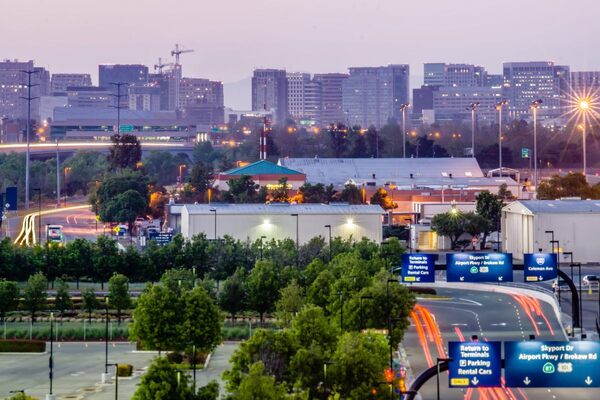
San Jose ranked top city for carbon-friendly transportation
Streetlight Data index ranks the 100 most populous metro areas in the US based on eight key transportation factors impacting greenhouse gas emissions.


San Jose, New York and San Francisco have merged as the metros with the most climate-friendly transportation impact.
The national study from big data company Streetlight Data ranks the 100 most populous metro areas in the US based on eight key transportation factors impacting greenhouse gas (GHG) emissions.
Transportation emissions
In the US, transportation is the biggest contributor to GHG emissions, and reining in transportation emissions is essential to meeting net zero emissions goals. The 2024 US Transportation Climate Impact Index report leverages StreetLight’s InSight platform which transforms multimodal transportation data into contextualised, normalised, and aggregated travel patterns to derive its findings.
This year’s analysis examines eight GHG-related transportation factors to evaluate how America’s cities rank on their efforts to make climate progress: vehicle miles travelled; fuel economy; transit ridership; EV penetration; biking activity; pedestrian activity; trucks miles travelled; and change in VMT.
“With data-driven findings in hand, leaders can more accurately understand the patterns that drive emissions, and thus better plan for and execute on regional transportation projects”
According to Streetlight, understanding how a metro performs across each factor is critical for identifying areas of improvement.
“In 2023 we saw many of the pandemic related reductions in transportation emissions return to pre-pandemic levels,” said Laura Schewel, StreetLight CEO and VP of transportation software at Jacobs, which acquired StreetLight Data in 2022.
“Now is the time to take a close look at transportation climate impact locally. Across the US, the composition of a community’s emissions varies a lot. With data-driven findings in hand, leaders can more accurately understand the patterns that drive emissions, and thus better plan for and execute on regional transportation projects.”
Read More
StreetLight Data’s 2024 US Transportation Climate Impact Index best performing top 10 US metro areas:
The top metro areas generally have low VMT, significant bike and pedestrian activity, high per-capita transit use, as well as better fuel economy.
- 1 San Jose-Sunnyvale-Santa Clara, California
- 2 New York-Newark-Jersey City, New York-New Jersey
- 3 San Francisco-Oakland-Hayward, California
- 4 Los Angeles-Long Beach-Anaheim, California
- 5 Seattle-Tacoma-Bellevue, Washington
- 6 San Diego-Chula Vista-Carlsbad, California
- 7 Portland-Vancouver-Hillsboro, Oregon-Washington
- 8 Boston-Cambridge-Newton, Massachusetts-New Hampshire
- 9 Oxnard-Thousand Oaks-Ventura, California
- 10 Washington-Arlington-Alexandria, DC-Virginia-Maryland-West Virginia
While San Jose is the top metro overall for transportation climate performance – ranking first across four factors: VMT; fuel economy; EV penetration; and truck miles travelled – it ranks in the bottom 50 for change in VMT. VMT is coming back quickly in the region, a warning sign as San Jose looks to lower emissions further, the study finds.
“In 2023 we saw many of the pandemic related reductions in transportation emissions return to pre-pandemic levels”
Meanwhile, the Augusta-Richmond County metro region, spanning South Carolina and Georgia, ranks worst for overall climate impact. The metro scores below rank 70 across every measure and 98th for both VMT and transit. Miles driven are high and EVs, fuel efficient vehicles, and alternative modes are less common than in various other metros.
Marginally, ahead of the greater Augusta metro, the other lowest scorers for overall climate impact are the greater metro regions of Omaha, Nebraska; Columbia, South Carolina; Jackson, Mississippi; and Bakersfield, California.
Acquired by Jacobs as a wholly owned subsidiary in February 2022, StreetLight provides innovative digital solutions to help communities reduce congestion, improve safe and equitable transportation, and maximise the positive impact of infrastructure investment.
Why not try these links to see what our SmartCitiesWorld AI can tell you.
(Please note this is an experimental service)
How does San Jose achieve high EV penetration compared to other metros?What transportation factors most reduce greenhouse gas emissions in top metros?How can increased biking and pedestrian activity lower urban transportation emissions?What role does transit ridership play in improving a metro's climate impact?How does fuel economy influence overall transportation emissions in US metro areas?Bostonclimate actionClimate change/Resiliencecongestionelectric vehiclesEnergy & EnvironmentLos AngelesmobilityNew YorkPortlandRoadSan DiegoSan FranciscoSan JoseSeattle
Latest City Profile
Latest Summit Speakers
(22-26 June)
SmartCitiesWorld Newsletters (Daily/Weekly)
You may also like these related articles...
BECOME A MEMBER
© 2026 SmartCitiesWorld
Smart Cities World Ltd, 37 Lombard Street, London, EC3V 9BQ