Investors were able to pledge as little as £5 to the scheme which will be used by the sustainability team for solar energy projects on city council buildings.
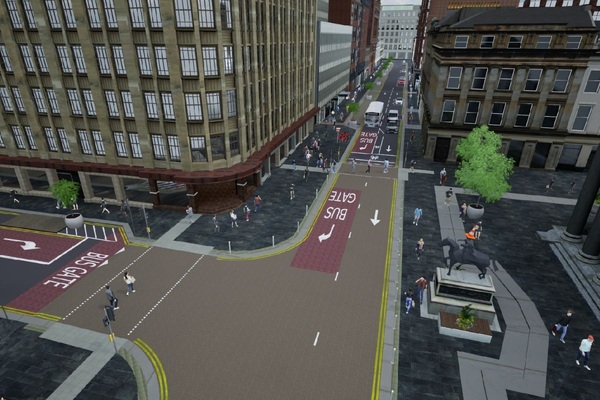
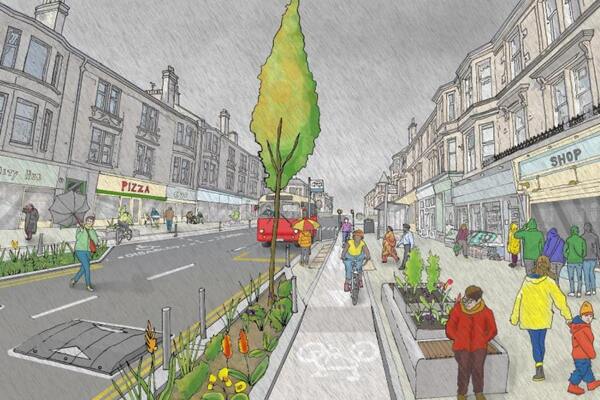
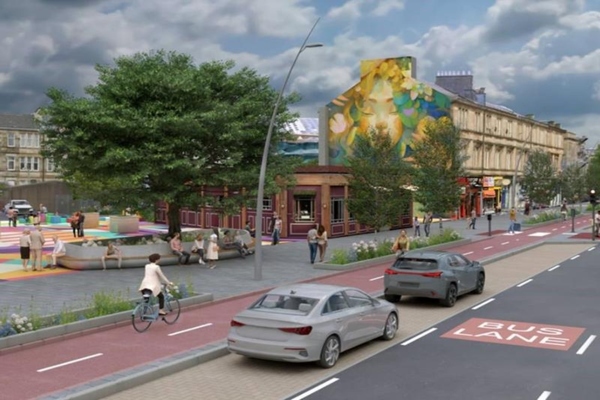
Work begins in February on a redesigned, fully accessible, step‑free junction where Queen Street meets Ingram Street with priority given to pedestrians.
Actions across 11 areas include key priorities such as transport, green economy, heating, built environment, energy, waste, biodiversity and carbon removal.
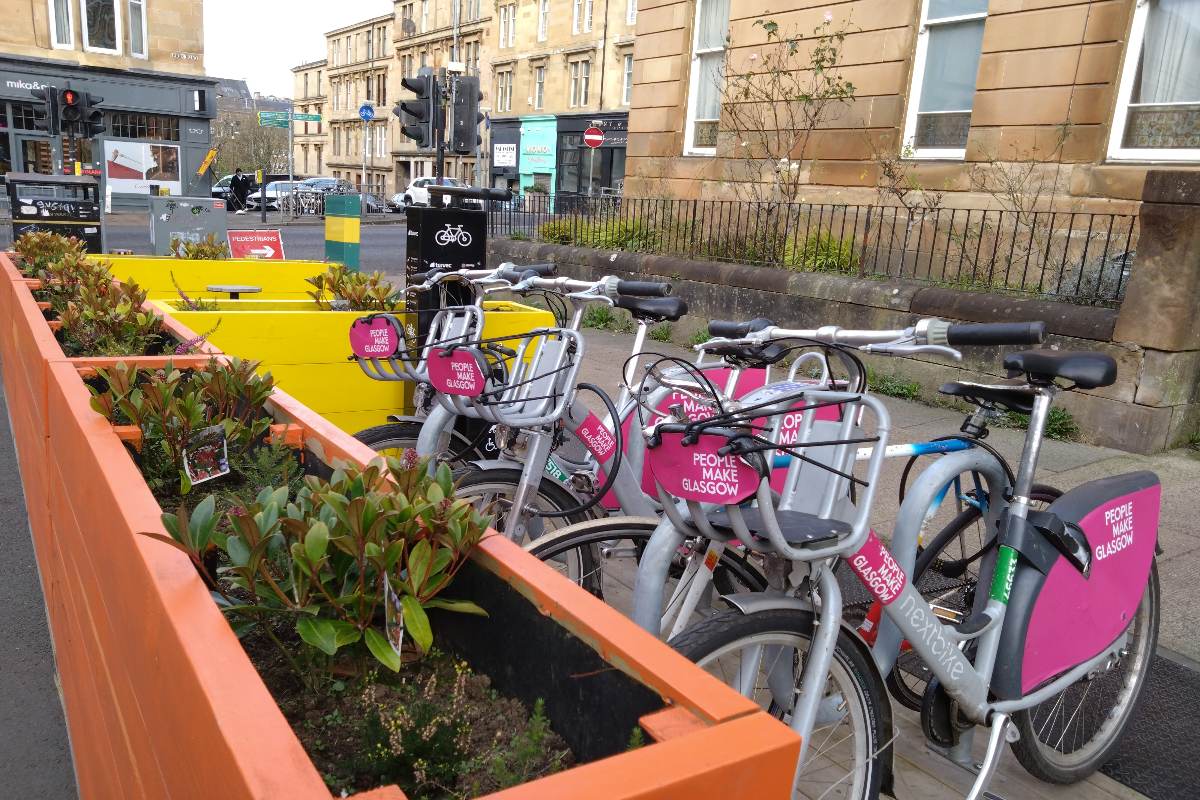
Bikeshare company Voi Technology was awarded the contract to operate the scheme for up to five years, with the service delivered at no cost to the council.
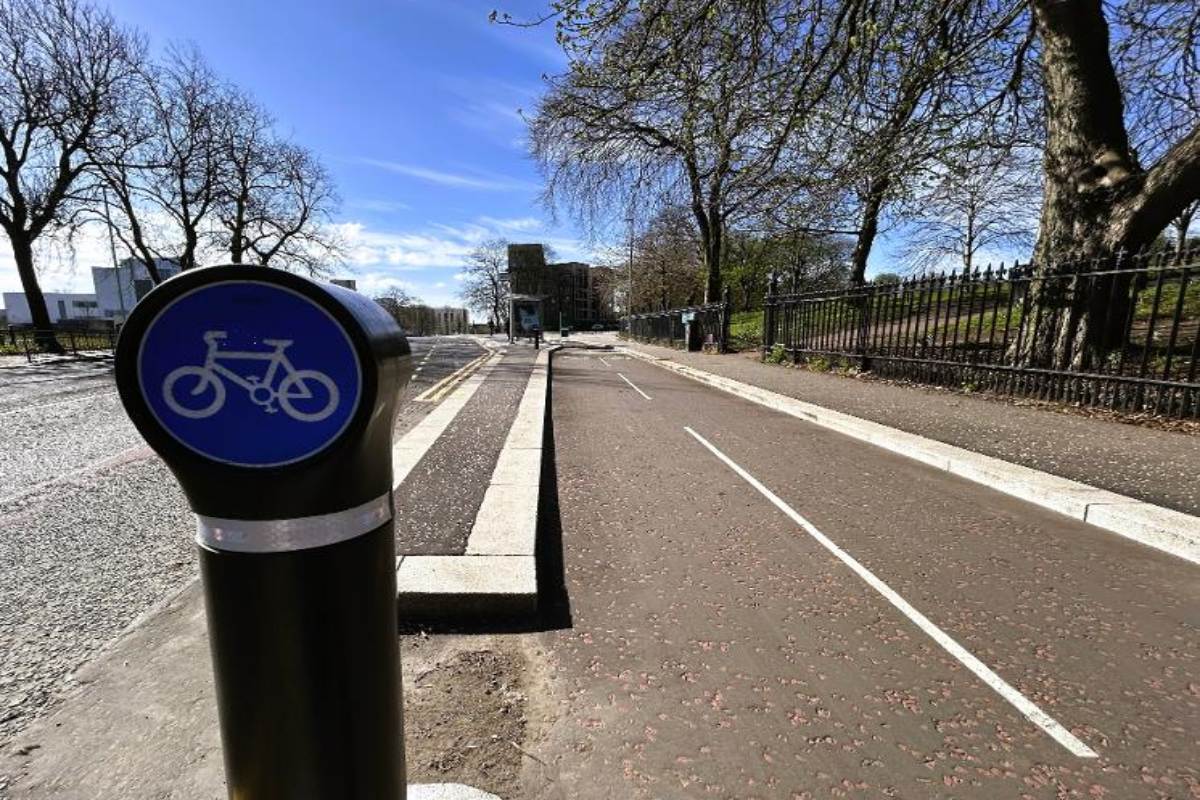
Data collected from 88 automatic cycle counters across the Scottish city between January and August 2025 shows a 43 per cent increase in activity year-on-year.
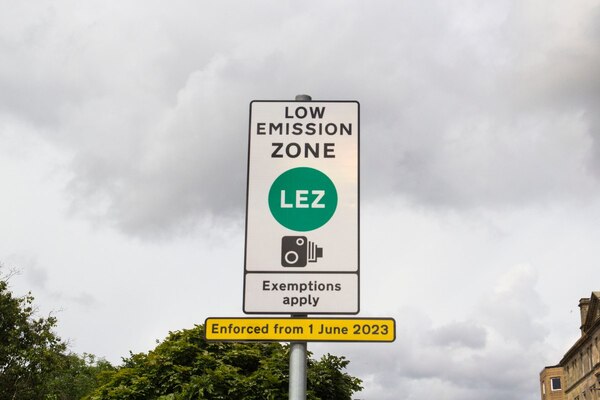
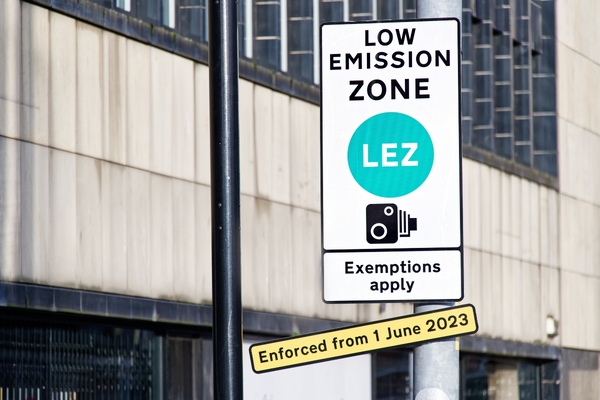
The reduction follows enforcement of the low emission zone, marking a major step forward in the city’s clean air ambitions and safeguarding public health.
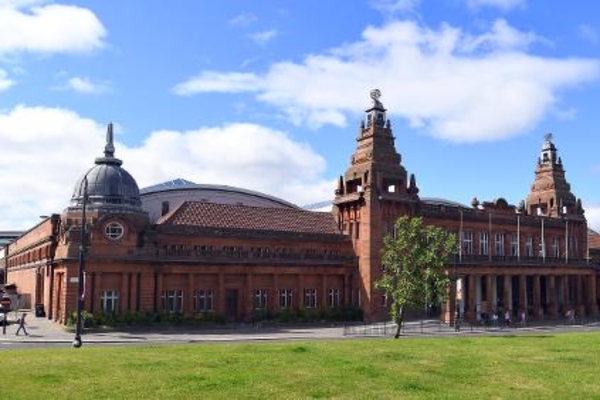
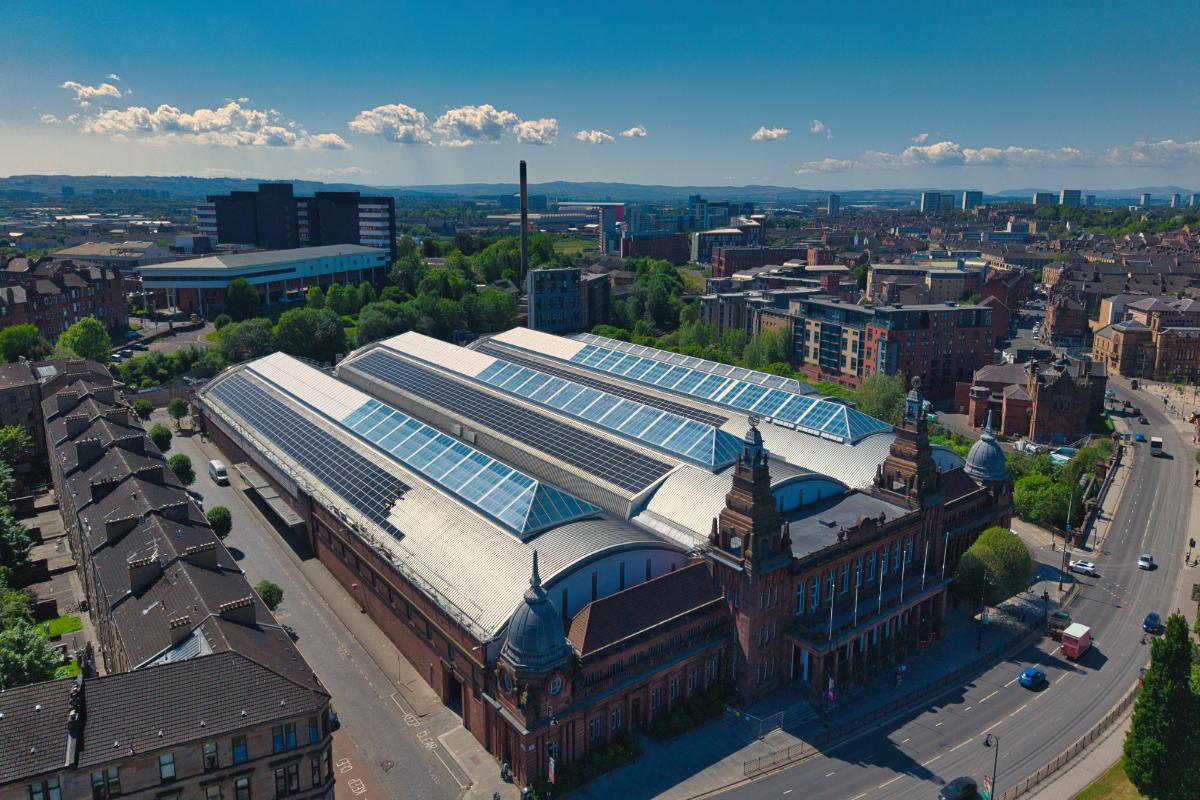
The flagship roof-mounted solar project at Kelvin Hall by Vital Energi is designed to supply approximately 20 per cent of the building’s annual electricity needs.
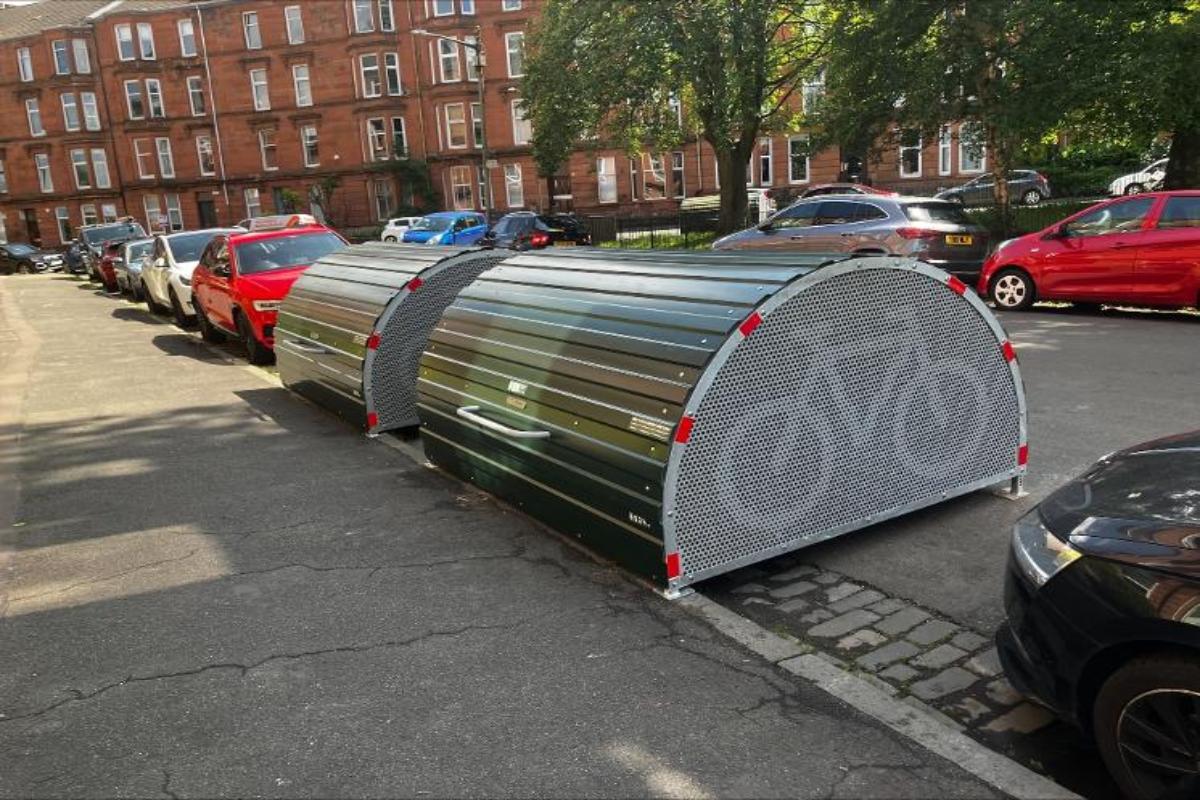
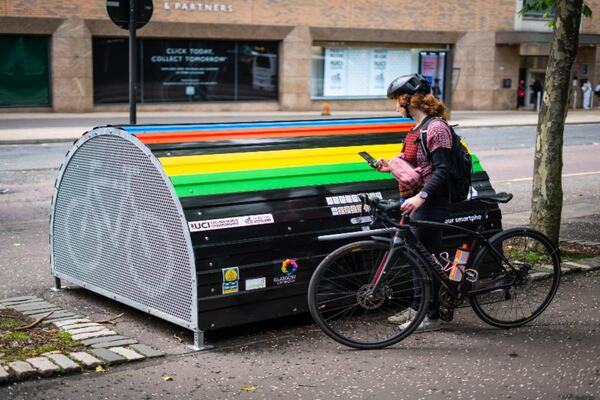
Following a successful trial in 2021, the residential on-street storage scheme, delivered by Cyclehoop, now offers over 1,400 secure spaces across the city.
Funding will go towards a range of measures, including building active travel infrastructure and improving the accessibility of public spaces for pedestrians.
Eighteen organisations will receive grants of between £20,000 and £50,000 from the Low Emission Zone Community Support Fund to deliver a broad range of schemes.
This project aims to secure private sector investment that will transform the famous Lighthouse into a net zero innovation hub for clean tech companies to grow.
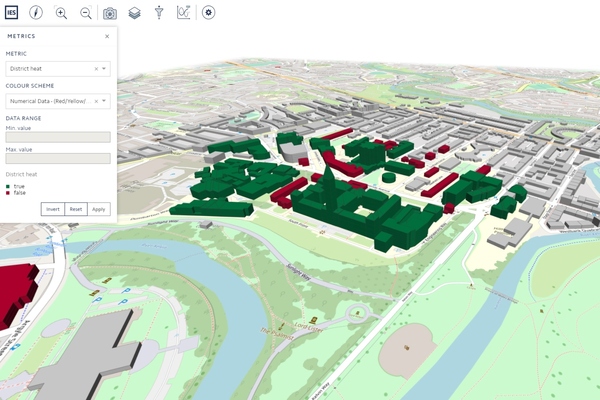
Govanhill has been chosen for the pilot project due to its proximity to a district heating network opportunity, as well as its diversity of built environment.
Mobility hubs bring together a range of transport options and community services in one place, making it easier for people to travel without using private cars.
The roof top solar arrays will power the buildings below and, in places, cover up to 96 per cent of the electricity requirements of each of the buildings.
The latest Air Quality Annual Progress Report shows that nitrogen dioxide levels in the city centre and low emission zone (Lez) area had dropped by 20 per cent.
The project is funded by the Glasgow City Region City Deal that is investing more than £1bn in transport improvements and infrastructure in the city region.
Commsworld expands responsibility to Glasgow’s local area networks, wifi, firewall, security and remote access, as well as wide area network and IP telephony.
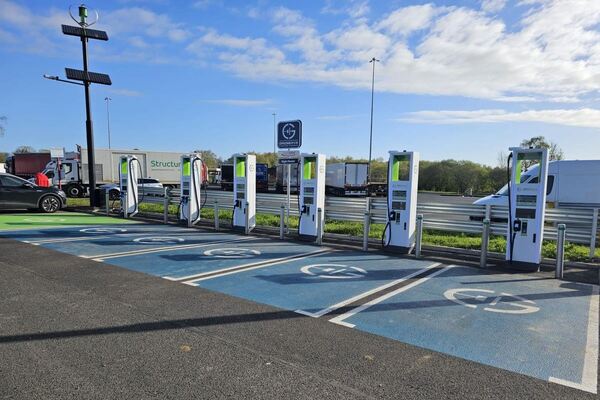
The High-Powered Super Hub at Bothwell services, launched in partnership with EV charging specialist Gridserve, provides six new 350KW chargers on the M74.
Priority actions include a review of air quality monitoring with a focus around schools, hospitals and care homes and expansion of the active travel network.
Following declaration of an AQMA, the council implemented an air quality action plan to bring down levels of harmful nitrogen dioxide and particulate matter.
Female councillors have met with council officers in Glasgow to discuss how to incorporate women’s lived experience and embed gender equality into the City Development Plan.
The team will develop the council’s relationship with the private sector so investment can be attracted for climate initiatives such as local heating networks.
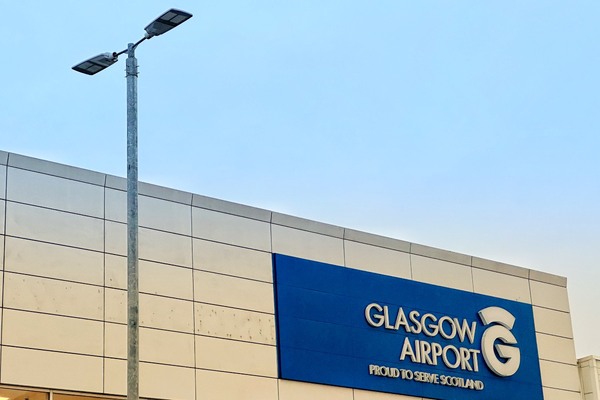
Glasgow Airport’s Living Lab digital twin competition aims to facilitate the development of digital twin technology solutions tailored for the aviation sector.
Glasgow Transport Strategy will play a central role in battling climate change and aims to create more liveable neighbourhoods as well as tackle inequality.
The city will target partnerships capable of delivering large-scale interventions in everything from energy systems and transport to buildings and biodiversity.
Glasgow’s cycling parking hubs are accessed through the free Cyclehoop app and will allows users to find vacant spaces, add credit as well as book a space.
The city council distributed Scotland Loves Local Glasgow Gift Cards worth £105 to 85,000 low-income households to support them during the cost-of-living crisis.
Digital twin versions of three buildings at Scotland’s University of Glasgow will assess how compliance models can be used to improve building performance.
The spread of solar power across the council estate is part of the plan to decarbonise the city’s energy system and ease pressure on the council’s finances.
The Scottish Environment Protection Agency introduced the tool to chart the success of the first phase of the city’s low emission zone, ahead of phase two.
Thousands of trees have been planted across Aberdeen while Glasgow’s Clyde Climate Forest has received a £200,000 funding boost from the eight local councils.
Funding from the ICLEI Action Fund and Google.org will help to boost projects aimed at improving the environment, reducing GHG and climate change adaptation.
The funding will help progress a range of projects including the Govan City Network active travel route as well as several Liveable Neighbourhood projects.
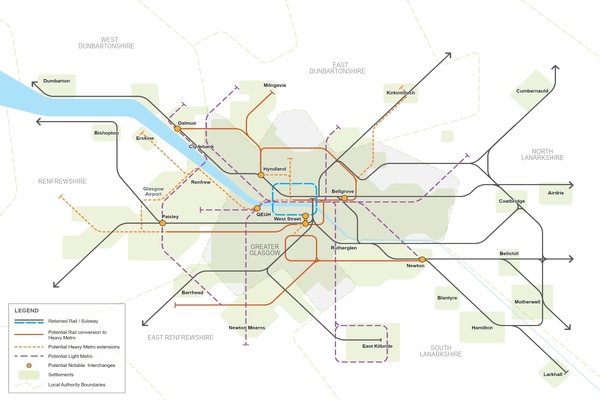
Multi-billion investment over 30 years could better connect more than 1.5 million people to employment, education, and health services in and around the city.
The framework will support delivery of the Glasgow Green Deal, a nine-year mission to transform the city’s economy and tackle climate and ecological emergencies.
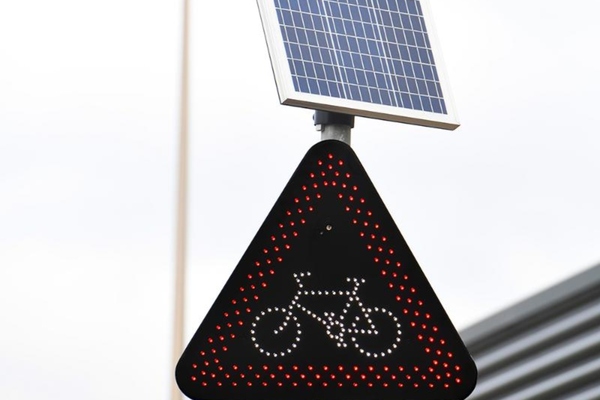
The pilot project of the solar-powered LED signs saw a decrease in the percentage of conflicts between drivers and cyclists so have been installed at multiple locations across the city.
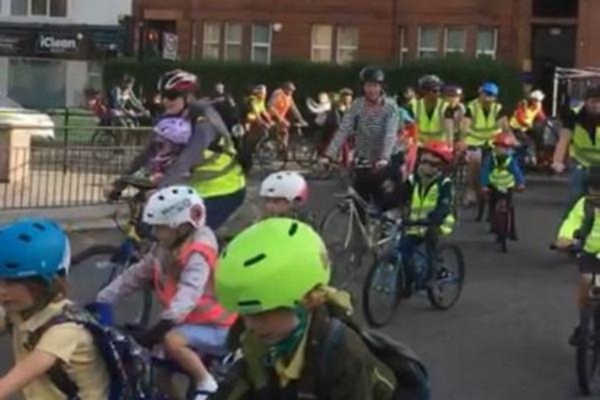
The Ultra-Smart Cycle System is mounted on the lead rider’s bike and uses a military-grade encrypted signal that sets a timed traffic light cycle in motion to hold traffic for 45 seconds.
The roll-out will enable Optibus’ operating companies to improve the service and operational efficiency of buses across Glasgow, Bristol, Essex, Yorkshire, and Cornwall.
The plan aims to help those already impacted by change as well as futureproof the city and aid more people to understand the direct and sometimes unseen indirect local impacts of climate change.
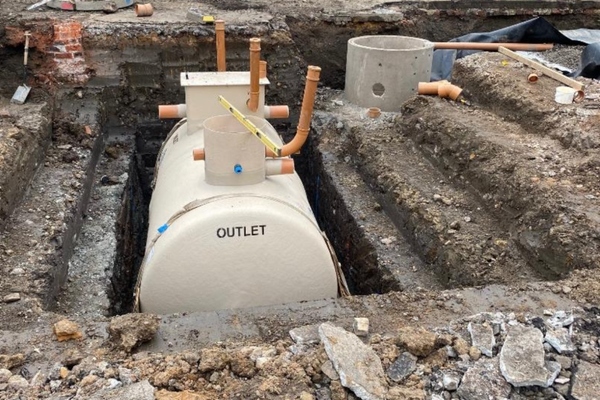
Systems aim to mitigate the effects of climate change and are linked to a smart water management hub which uses predictive weather technology to reduce the likelihood of localised flood risk ahead of storm events.
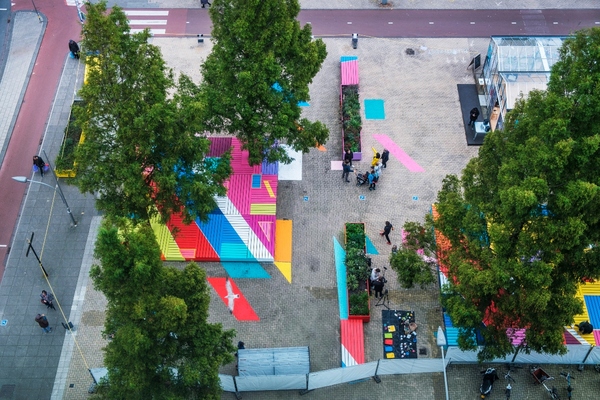
The initiative, which will provide European cities with $25,000 for projects that use art and design to improve street safety and revitalise public spaces, spurred a reduction in traffic crashes in the US.
Analysis shows that place-based approaches to achieving net-zero targets would bring double the economic and social benefits of a single national approach, at far lower cost.
Glasgow City Council is working in partnership with registered social landlords and others with data suggesting that 65 per cent of households living in the city’s social rented housing sector do not use a broadband connection in their home.
Following extensive consultation and preparation over the past year, the Glasgow Transport Strategy covers more than 100 policies that provide a vision for getting about Scottish city.
UK Cities Climate Investment Commission calls for “place-based demonstrators” or neighbourhood pilots where green investment opportunities can be gathered together as a package.
The 2021 survey noted that that city dwellers’ perceptions of how technology is helping to address urban challenges has been highly affected by the pandemic and its acceleration of digital transformation.
Research carried out by the Eurocities network to monitor the ambitions of large cities all around Europe shows that action must be about more than setting targets.
An opening briefing at the conference drew attention to the efforts of cities and regions to deliver on ambitious climate action, especially in working across all levels of government.
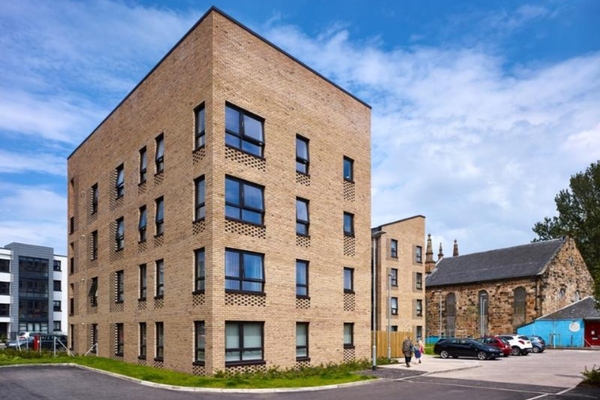
The early years nurseries will use air source heat pumps and smart grey water systems to support Glasgow’s Climate Emergency Plan and the Cop26 host city to achieve net-zero carbon by 2030.
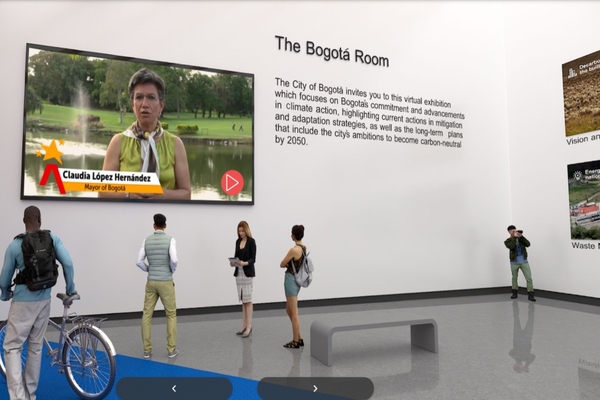
The Global Cities Climate Action Exhibition bids to demonstrate cities’ critical roles in reaching the ambitious targets being discussed by key international bodies and leaders at the conference.
The Storymap enables residents and Cop26 attendees to create their own personalised walking tour of key sites that are helping the host city reach its goal of net-zero carbon by 2030.
The diverse range of projects in the plan include scaling up the Clyde Climate Forest by 9,000 hectares, a city-wide energy-efficient retrofit programme and a proposal to power district heating systems using the River Clyde.
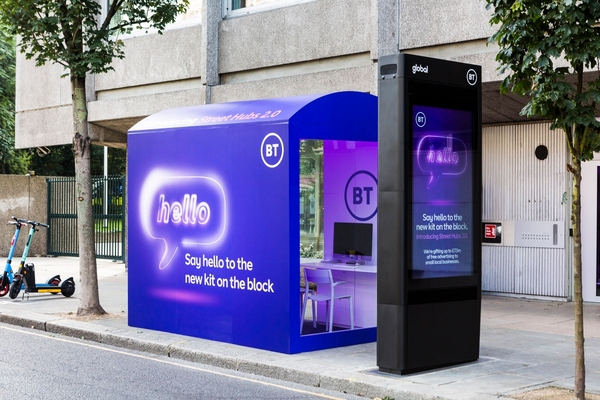
Five per cent of total screen time on each Street Hub unit can be used to promote local community and municipal services such as food banks, health and social care or leisure activities.
With human error a major factor, the Vision Zero for serious or fatal incidents will be based upon creating a safe system for the city’s road network, involving a range of measures including safety cameras.
The measures will play an essential role in enhancing the attractiveness of public transport to discourage private car use and help build more sustainable travel behaviours.
Initial analysis by the new UK Cities Climate Investment Commission suggests that meeting net zero in London and the major cities could bring up to £330bn of investment into the country.