








 22 - 26 June 2026: Find out more










BUILD YOUR OWN
RESOURCE LIBRARY



Podcasts
Cities Thriving on Lighting, Episode 2 – Simplicity by design in smart lightingSponsored by Paradox Engineering
Cities Thriving on Lighting, Episode 1 – Lighting as the backbone of the smart citySponsored by Paradox Engineering
Boston hosts first-ever Air Quality Summit
The event brought together 200 community leaders, researchers, and policymakers to share information and strengthen partnerships to accelerate solutions.


 At a glance
Who: City of Boston.
What: The City of Boston has convened its first-ever Boston Area Air Quality Summit, bringing together 200 community leaders, researchers, and policymakers.
Why: To share information and strengthen cross-sector partnerships and accelerate solutions toward a healthier city for all.
When: The Summit took place on 15 May 2026 at Northeastern University’s Interdisciplinary Science and Engineering Complex.
The City of Boston has convened its first-ever Boston Area Air Quality Summit to accelerate solutions toward a healthier city for all.
It brought together 200 community leaders, researchers, and policymakers to share information and strengthen cross-sector partnerships to improve resident health and address environmental inequities.
Sharing air quality information and practice
Held at Northeastern University’s Interdisciplinary Science and Engineering Complex, the daylong event included two panel discussions, breakout sessions, and a round of “lightning talks” where 10 local organisations shared updates and answered questions on their air quality work.
Guided tours of MassDEP’s ambient air quality monitoring site in Roxbury, Northeastern University’s sustainability and air quality features, and Northeastern University’s mobile air quality lab van explored how these local institutions monitor, mitigate, and reduce air pollution.
“By aligning our expertise across sectors, we are building a clean air roadmap that will deliver a healthier future for Boston”
The summit came on the heels of the City’s release of its 2030 Climate Action Plan, which seeks to advance a range of solutions that will both cut greenhouse gas emissions and improve air quality through co-pollutant emission reductions.
“Clean air is a fundamental right. This summit served as a critical step in identifying how we can reduce local air pollution through innovation and collaboration across Greater Boston,” said Brian Swett, chief climate officer. “By aligning our expertise across sectors, we are building a clean air roadmap that will deliver a healthier future for Boston.”
At the summit, the City announced that it became the newest signatory to the United Nations Global Pledge for Healthy Indoor Air, launched by the UN General Assembly in September 2025. The pledge affirms that clean and healthy indoor air should be considered a basic human right, essential to people’s health and wellbeing.
Boston Public Schools is upholding these values through its indoor air quality monitoring programme. Utilising its existing framework of 4,000-plus sensors across all 119 schools, BPS is currently leveraging a City of Boston Community Clean Air Grant to develop a comprehensive action plan aimed at reducing student and staff exposure to indoor air pollution.
Developed in partnership with Boston University researchers, this system empowers BPS’s 48,593 students and 11,720 staff to monitor temperature, humidity, airborne particulate matter, carbon dioxide, and carbon monoxide levels in every BPS classroom and take precautions to protect their health during pollution events.
Other City-led efforts to improve air quality and health include the Community Clean Air Grant Programme, an annual initiative administered by the Air Pollution Control Commission. Funded primarily by revenue from parking freezes, this programme empowers local nonprofits to spearhead community-driven monitoring, education, and pollution abatement work.
“Air pollution does not respect neighbourhood boundaries or city limits, which is why a coordinated regional strategy is absolutely essential”
In tandem with these grants, the City is actively deploying street-level sensor networks to track the impacts of roadway reconstructions along major transit corridors like Cummins Highway. The City is also leading a landmark pilot alongside the Boston Housing Authority, Codman Square NDC, and Boston University to transition Dorchester residents to healthy, clean induction cooking.
Complementing these built-environment interventions, the City also directly accelerates outdoor cooling and ambient filtration by planting more than 2,000 new trees per year, prioritising environmental justice neighbourhoods. Boston’s tree canopy has grown by more than 200 acres since 2019, providing shade and neighbourhood beautification while reducing air pollution and heat.
“Air pollution does not respect neighbourhood boundaries or city limits, which is why a coordinated regional strategy is absolutely essential,” said Dr Tori Hass-Mitchell, summit organiser and air quality manager at the City of Boston. “This summit was a pivotal step in pulling City and State programs out of their traditional silos, publicising cutting-edge research, and forging the regional connections needed to scale this work while serving the day-to-day health needs of our residents.”
Throughout the day, participants collaboratively established the initial groundwork for Boston’s 10-Year Air Quality Roadmap. The City will actively move these priorities forward by mapping the regional ecosystem of past and current monitoring efforts, standardising science across cross-sector partnerships, and aligning local actions with shifting funding landscapes to secure long-term public health victories.
Why not try these links to see what our SmartCitiesWorld AI can tell you.
(Please note this is an experimental service)
How can street-level sensors quantify roadway reconstruction's air quality benefits?What metrics should guide Boston's 10-year Air Quality Roadmap implementation?How should BPS use classroom sensor data to reduce student exposure?Which funding models best sustain community-led air-quality monitoring programmes?How will regional coordination standardize monitoring science across Boston-area partners?air qualityclimate actionClimate change/ResilienceEnergy & EnvironmentGovernance and CitizenPolicy Making

Latest City Profile
Latest Summit Speakers
(22-26 June)
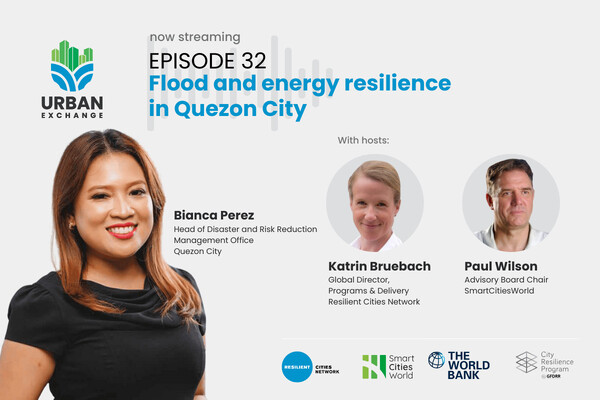
Latest Urban Exchange Podcast
Latest Special Report
SmartCitiesWorld Newsletters (Daily/Weekly)
You may also like these related articles...
BECOME A MEMBER
© 2026 SmartCitiesWorld
Smart Cities World Ltd, 37 Lombard Street, London, EC3V 9BQ