













 Find out more








BUILD YOUR OWN
RESOURCE LIBRARY



Podcasts

Podcast: Using mobility data to shape the future of citiesSponsored by TomTom

Podcast: Building resilient cities: trustworthy AI, digital twins, and urban innovation at YII 2025Sponsored by Bentley Systems
Opinions
Smart lighting: enabling smart cities beyond illuminationSponsored by Paradox Engineering

How AI and biometrics are shaping next-generation mobility paymentsSponsored by ST Engineering
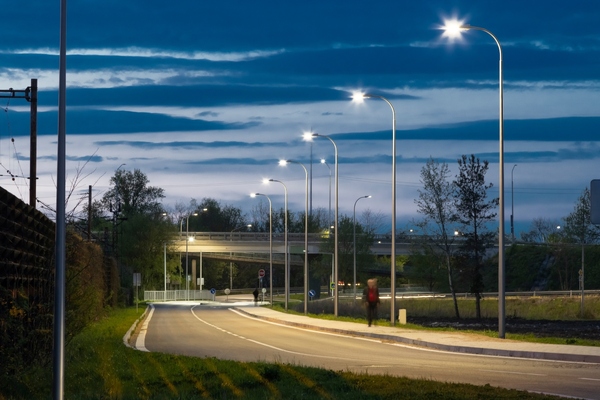
Polish energy group turns to AI to manage street lighting
Kraków-based Gradis has signed a fresh agreement with Tauron to develop an artificial intelligence-based concept for managing 700,000 lighting points.


Gradis, an InnoEnergy portfolio company, has signed a new agreement to develop an artificial intelligence (AI)-based concept for managing 700,000 lighting points of Polish energy group Tauron.
The agreement with Gradis is a significant step towards modernising the lighting infrastructure in Poland.
AI-based street lighting management
The Kraków-based company has developed software for designing, automatic management and control of street lighting systems. The approach has already been implemented in metropolises such as Kraków, Wrocław and Tbilisi, as well as in many smaller urban areas and municipalities across Poland.
Based on the agreement, Gradis will conduct a business analysis of the current operation of the system which consists of, among others, more than 700,00 million light points. The mapping process will allow for the construction of a new IT architecture, with AI models, which will provide a framework for efficient and effective management of Tauron’s lighting assets.
“Why we are excited to co-create the concept of an advanced IT system that will combine and optimise many processes. This will result in investment savings and the reduction of energy consumption by up to 80 per cent”
The system needs to integrate a range of processes and systems, which is why it is crucial to create a precise concept that will take into account the correlations between all elements.
Gradis has experience in building such multi-level structures of dependencies thanks to its system based on graph grammars and self-learning mechanisms. The conversion engine created by Gradis has also been applied in the lighting industry.
Read More
“About 20 per cent of the energy generated worldwide is consumed by lighting systems,” said Professor Leszek Kotulski, founder of Gradis. “In Poland, most units and systems, with nearly 3.3 million street lighting fixtures currently in use, are outdated. At Gradis, we know how complicated the process of modernising and managing lighting infrastructure is.
“That is why we are excited to co-create the concept of an advanced IT system that will combine and optimise many processes. This will result in investment savings and the reduction of energy consumption by up to 80 per cent.”
Deep knowledge of the industry and all dependencies makes it much easier to map processes. Gradis claims its system is used, among others, for faster (by 97 per cent) and more energy-efficient (up to 81 per cent) photometric conversions. Over the past few years, the Gradis team has successfully conducted inventories, performed comprehensive energy audits and created master plans for investments dedicated to more than 150,000 lamps.
Why not try these links to see what our SmartCitiesWorld AI can tell you.
(Please note this is an experimental service)
How does AI improve energy efficiency in street lighting management?What role do graph grammars play in Gradis' AI system?How can AI reduce investment costs in lighting infrastructure upgrades?What processes are integrated by the AI system for lighting control?How does Gradis' AI enable faster photometric conversions?
Latest City Profile
Latest Special Report
SmartCitiesWorld Newsletters (Daily/Weekly)
You may also like these related articles...
BECOME A MEMBER
© 2025 SmartCitiesWorld
Smart Cities World Ltd, 27 Clements Lane, London, EC4N 7AE