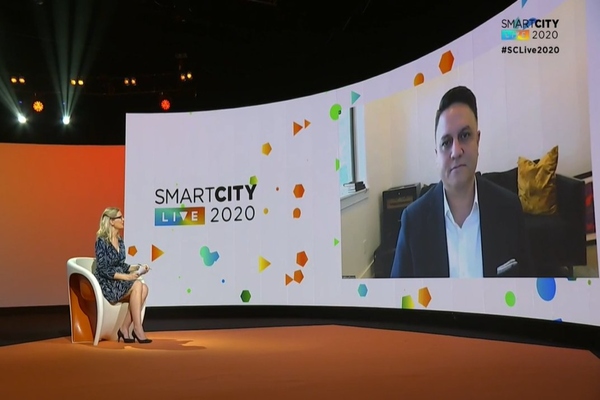

The first day of the online event confirmed that the smart cities sector is well aware of its destination but it’s how it gets there that will be the problem.
Find out how Sunderland is repositioning itself as a leading smart city – using digital infrastructure and low-carbon innovation to build a resilient, future-focused economy in the latest SmartCitiesWorld City Profile.
Download our latest report to uncover how artificial intelligence is being used to support cities in how they plan and operate city services to ensure they are vibrant, sustainable and economically thriving modern spaces.
Discover how AI-powered digital twins are transforming urban infrastructure and how these innovations can improve efficiency, resilience, and sustainability.
Discover the technology and considerations behind how cities can turn existing streetlight networks into secure, interoperable, and future‑proof infrastructure in the second episode of Cities Thriving on Lighting.
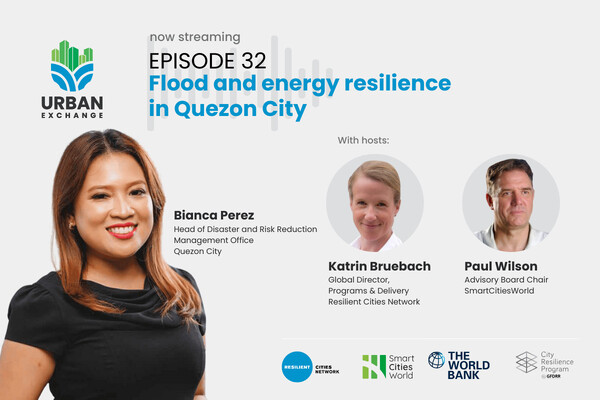
Tune in for the latest Urban Exchange where we get a first-hand account of city resilience measures from Quezon City following unexpected extreme rainfall.
Our editorial newsletter pulls together our latest news items into one email, direct to your inbox. We also feature our latest city interviews, Special Reports and Guest Opinions.
Programme upgrades will prioritise education, helping building owners better understand energy use and identify opportunities for greater energy efficiency.
Department of Environment’s energy benchmarking report shows both progress and areas of opportunity for making large Chicago buildings more energy efficient.
Achievement is revealed in the 2020 Chicago Energy Benchmarking Report, which details an analysis of nearly 2,900 properties spanning over 720 million square feet across the city.
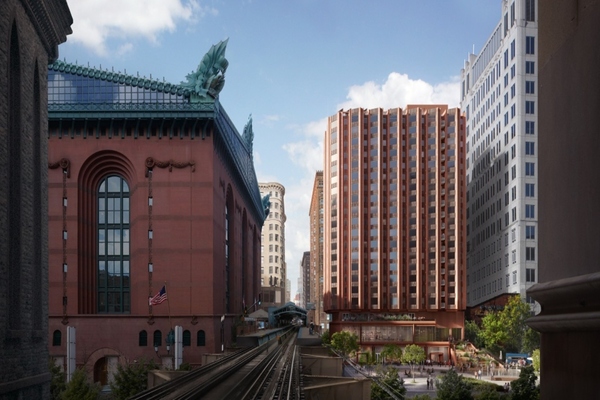
The $102m, 20-story structure, planned by the Community Builders at Van Buren Street and Plymouth Court, was announced winner of Chicago’s C40 Reinventing Cities competition.
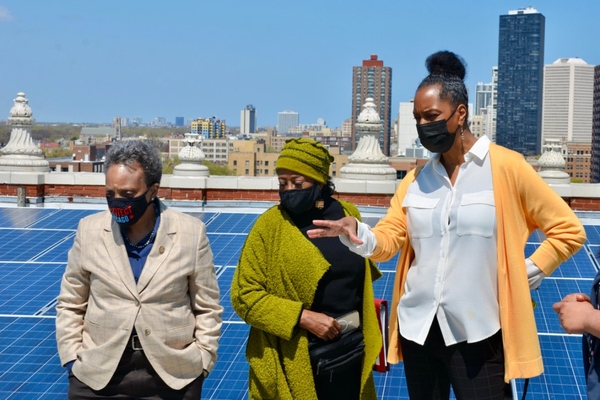
Lori Lightfoot is advancing four strategies that aim to help Chicago achieve its 2025 and 2035 clean energy targets as well as maximise local benefits to communities.
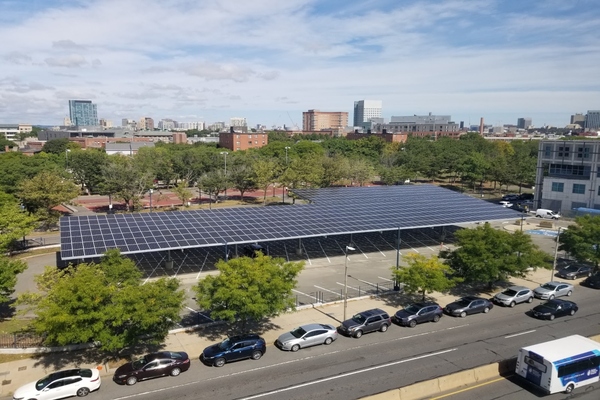
Solar canopy at Boston Police Headquarters completes the first round of energy efficiency and renewable energy upgrades across City of Boston buildings.
It has committed to ensuring that all City-owned buildings will be powered by 100 per cent renewable energy by 2025 and also wants to stimulate the local green economy.
Areas are identified based on their ability to supply energy needs with district heating systems and at least one additional renewable energy or waste heat heating system must be feasible.
The Electric Vehicle Supply Equipment-Ready ordinance updates the city’s municipal code to increase the number of private parking spaces equipped with EV-charging capacity.
To further its environmental efforts, the city has also purchased 95,000 renewable energy credits to reduce its reliance on electricity and natural gas.
The company will build and operate a smart city platform with citywide network connectivity for the Qatar city using advanced AI and data-driven technologies.
Computer vision and machine learning specialist, Univrses, will work with the Swedish Transport Administration to digitise and manage roadside infrastructure.
Smart city is the framework based on Information and Communication technologies that enable the development of sustainable practices to address the urbanisation challenges. Leveraging the technology is one of the foremost pillars of ‘smart cities’ in order to increase efficiencies and improve the quality of resident’s life and the city’s services.
SmartCitiesWorld Newsletters (Daily/Weekly)
Our editorial newsletter pulls together our latest news items into one email, direct to your inbox. We also feature our latest city interviews, Special Reports and Guest Opinions.