




















BUILD YOUR OWN
RESOURCE LIBRARY



Espoo invites partners to accelerate sustainability transition
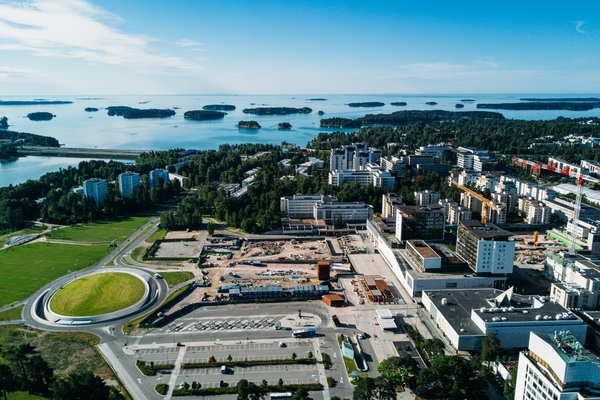
City of Espoo has established the Sustainable and Nature-friendly Espoo development programme and issued an open call for ideas to create a nature-friendly city.


 At a glance
Who: City of Espoo.
What: Espoo has established the Sustainable and Nature-friendly Espoo development programme and issued an open call for ideas to accelerate its sustainability transition.
Why: To obtain ideas to help halt biodiversity loss, reduce greenhouse gas emissions and curb the overconsumption of natural resources to create a sustainable and nature-friendly city.
When: Ideas can be submitted until 24 February 2026. They will then be further developed together with the city’s representatives. During March-April, the programme group will decide which ideas will move forward for further development.
The City of Espoo in Finland is issuing an open call to partners to help create a sustainable and nature-friendly city.
The Sustainable and Nature-friendly Espoo development programme aims to allow both the city organisation and partners to participate in halting biodiversity loss, reducing greenhouse gas emissions and curbing the overconsumption of natural resources.
Accelerating sustainable practices
Espoo is committed to promoting ecological sustainability and climate change and biodiversity loss requires rapid action also at the local level. The city responds to such challenges through cross-administrative development programmes.
Tiina Elo, member of parliament and city councillor (Green Party), who chairs the Sustainable and Nature-friendly Espoo development programme in 2025-2029, said the programmes are “platforms for collaboration, development and piloting” that are used to find innovative solutions to the most pressing challenges of our time, such as halting biodiversity loss.
“However, we cannot solve these challenges alone. That’s why we invite partners to join us in this work.”
She added: “The aim is that all measures will lead Espoo and the city’s partners towards more sustainable practices. We are happy to hear about new initiatives.”
“We encourage all active residents, associations, companies and even research institutes to consider what actions can advance the sustainability transition”
During the council term, the programme will implement several development projects and measures, together with the partners. The goal is that the lessons learned from the pilots and the new solutions can be utilised more widely in the work of the city and its partners in the future.
“We want to give all partners an equal opportunity to propose development ideas. The aim is to collect as many different proposals as possible at once, from which we select the best ones for further processing,” continued Elo. “This is how we strive to allocate the programme’s resources in the best possible way.”
Read More
Ideas can be submitted until 24 February 2026. After this, the ideas will be further developed together with the city’s representatives. During March-April, the programme group will decide which ideas will move forward.
“Anyone can propose a development idea for the development programme and the city. We encourage all active residents, associations, companies and even research institutes to consider what actions can advance the sustainability transition in Espoo and Finland,” said Elo.
Development programmes are given concrete goals, which are used to evaluate success. The programme group of the Sustainable and Nature-friendly Espoo development programme has decided to propose the following objectives for approval by the city council:
- Increasing biodiversity and urban green.
- Strengthening Espoo residents’ relationship with nature and improving opportunities for recreation in nature.
- More sustainable living and consumption among Espoo residents.
- Mainstreaming low-carbon construction and circular economy in construction in Espoo.
More detailed descriptions of the benefit objectives can be found in the Sustainable and nature-friendly Espoo website. The city council will decide on the final objectives on 23 February 2026.
The development programme can support and implement various types of development from small-scale actions to project-type development, which correspond to one or more of the objectives of the programme. The programme has an annual budget of approximately €160,000.
Why not try these links to see what our SmartCitiesWorld AI can tell you.
(Please note this is an experimental service)
How can urban green spaces increase biodiversity in Espoo?What strategies promote sustainable consumption among Espoo residents?How does low-carbon construction integrate with circular economy principles?Which citizen engagement methods best support sustainability transitions locally?What metrics evaluate success in halting biodiversity loss in cities?citizen engagementclimate actionClimate change/ResilienceEnergy & EnvironmentEspooresilienceSustainable Development Goals
Latest City Profile
Latest Summit Speakers
(22-26 June)
SmartCitiesWorld Newsletters (Daily/Weekly)
You may also like these related articles...
BECOME A MEMBER
© 2026 SmartCitiesWorld
Smart Cities World Ltd, 37 Lombard Street, London, EC3V 9BQ