




















BUILD YOUR OWN
RESOURCE LIBRARY



Opinions

Smart lighting: enabling smart cities beyond illuminationSponsored by Paradox Engineering

How AI and biometrics are shaping next-generation mobility paymentsSponsored by ST Engineering
Innoviz and Nvidia partner to power smart infrastructure
Combining on-device processing with cloud-based AI applications enables scalable wireless lidar deployments over constrained networks in cities and campuses.


At a glance
Who: Innoviz Technologies and tech company Nvidia.
What: InnovizSMARTer LiDAR will be integrated with Nvidia Jetson Orin Nano to deliver a complete far edge solution for real-time 3D perception. It will enable wireless deployment of lidar sensors in bandwidth-constrained environments while significantly reducing the centralised processing cost.
Why: It addresses a major barrier to smart infrastructure and enables the deployment of more sensors faster and in more locations in cities.
When: The announcement was made on the opening day of CES 2026 in Las Vegas Convention Centre. CES 2026 runs 6-9 January.
Lidar solutions supplier Innoviz Technologies and tech company Nvidia are teaming to address a major barrier to smart infrastructure and enabling the deployment of more sensors faster and in more locations in cities.
The companies made the announcement at the Consumer Electronics Show (CES) 2026, taking place from 6-9 January in Las Vegas.
Wireless deployment of lidar
InnovizSMARTer LiDAR will be integrated with Nvidia Jetson Orin Nano to deliver a complete far edge solution for real-time 3D perception. The integration will enable wireless deployment of lidar sensors in bandwidth-constrained environments while significantly reducing the centralised processing cost.
High-performing lidar sensors generate gigabits per second of raw data, which is impractical for wireless or cloud-based systems. The compact form factor and high GPU efficiency of Jetson Orin Nano makes it an ideal selection for edge-processing and real-time compression.
“By combining our lidar with Nvidia AI infrastructure, we’re expecting to open new opportunities for urban mobility, security, and intelligent infrastructure, while reducing deployment costs and complexity”
InnovizSMARTer claims to reduce data transmission requirements by one to two orders of magnitude, eliminating the requirement for costly fibre infrastructure and enabling flexible, scalable deployments.
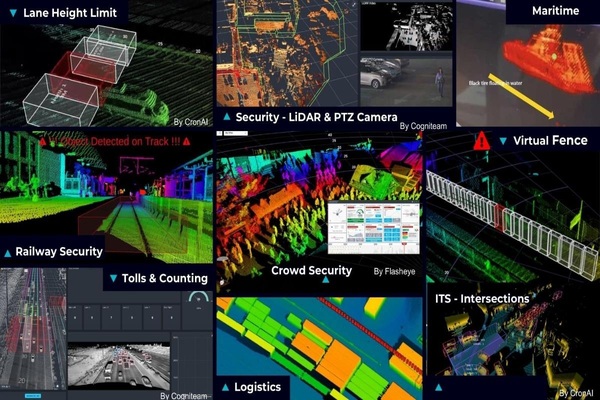
The solution supports wifi, LTE, 5G, as well as other wireless networks, making high-performance 3D perception possible in multiple markets and use cases, including smart cities, mobility, perimeter security, and more.
Read More
With a cloud-connected solution, InnovizSMARTer, integrated with Jetson Orin Nano, simplifies installations, allowing customers to deploy sensors, faster, and in more locations. This is expected to dramatically shorten project timelines and lowers upfront investment, making advanced 3D perception accessible to a wider range of customers and use cases.
The cloud-based architecture is designed to allow customers to monitor, manage, and scale their projects remotely, supporting rapid expansion across cities, campuses, and enterprises worldwide.
“This collaboration with Nvidia demonstrates our commitment to making advanced lidar technology accessible and scalable,” said Omer Keilaf, CEO and founder of Innoviz Technologies. “By combining our lidar with Nvidia AI infrastructure, we’re expecting to open new opportunities for urban mobility, security, and intelligent infrastructure, while reducing deployment costs and complexity.”
The benefits to cities and other customers include:
- Real-time, high-resolution 3D sensing with edge compression – no need for high-power compute or fibre connectivity
- Cloud-based for remote monitoring and digital twin applications
- Wireless-first architecture for rapid, cost-effective deployments
- Flexible, interoperable design for a wide range of infrastructure projects.
As part of the live demonstrations at CES 2026, visitors will be able to explore Innoviz’s lidar solutions for smart applications, integrated with Nvidia Jetson Orin Nano to provide real-time edge AI processing.
Why not try these links to see what our SmartCitiesWorld AI can tell you.
(Please note this is an experimental service)
How does InnovizSMARTer LiDAR reduce data transmission by orders of magnitude?What role does Nvidia Jetson Orin Nano play in edge AI processing?How does wireless deployment improve scalability in bandwidth-constrained environments?In what ways does cloud integration enable remote monitoring and management?How can this solution accelerate smart city sensor installations and reduce costs?Latest City Profile
SmartCitiesWorld Newsletters (Daily/Weekly)
You may also like these related articles...
BECOME A MEMBER
© 2026 SmartCitiesWorld
Smart Cities World Ltd, 27 Clements Lane, London, EC4N 7AE