


Streamlined environmental review process will reduce timetable by up to two years, and slash around $100,000 in costs per project for housing proposals.
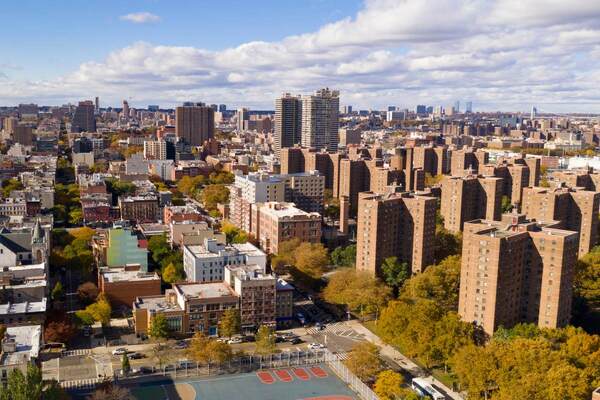
New York City has announced a streamlined environmental review process with the aim of accelerating production of small-and medium-sized housing projects across the city going into effect.
A major initiative of the administration’s “Get Stuff Built” plan to create more housing by cutting red tape, streamlining processes, and removing bureaucratic obstacles, the Green Fast Track will help achieve the City’s housing and climate goals by making it easier for modest, climate-friendly housing projects to proceed through environmental review.
The New York City Department of City Planning (DCP) and City Planning Commission (CPC) reckon the streamlined environmental review process could reduce up to two years of study and $100,000 in costs for qualifying projects.
“Today’s announcement proves that New York City is on the right track to build critically-needed housing in faster, smarter, and greener ways,” said Eric Adams, mayor of New York City.
“The only solution to a generational housing crisis is simple: build more. That’s why the implementation of ‘Green Fast Track’ is a critical step forward in using every possible tool to build more housing across our city, while never losing sight of the importance of protecting our environment. Our administration is proudly declaring ‘no’ to more red tape and ‘yes’ to more housing.”
“That’s why the implementation of ‘Green Fast Track’ is a critical step forward in using every possible tool to build more housing across our city, while never losing sight of the importance of protecting our environment”
The ordinary environmental review process can take up to several years and cost hundreds of thousands of dollars to complete. If the Green Fast Track rules had been in effect over the last 10 years, the City claims approximately 12,000 new homes could have been built more quickly and efficiently.
In exploring the potential for a Green Fast Track, city planning, and environmental experts analysed more than 1,000 environmental reviews over the past decade, consistently finding that modest housing projects with certain characteristics had no negative impacts on the environment. By shifting these projects onto the Green Fast Track – designating them as “Type II” actions under the City Environmental Review process – the City reports it will reduce redundant or unnecessary processes for projects of a certain size and speed up environmental review by as much as 24 months, saving each project an average of $100,000 and quickly delivering urgently needed housing.
By adjusting eligibility requirements to include sustainability measures – such as all-electric heating – the City can also leverage the environmental review process to accelerate its climate goals.
“Making climate-friendly housing easier to build can not only assist us with meeting our climate goals – it can also make them achievable faster,” said Elijah Hutchinson, executive director, New York City Mayor’s Office of Climate & Environmental Justice.
“The new rules will ensure our residents aren’t increasingly exposed to environmental burdens and air pollutants, allowing us to build a more inclusive, affordable, and sustainable city for all New Yorkers.”
“Making climate-friendly housing easier to build can not only assist us with meeting our climate goals – it can also make them achievable faster”
To qualify for Green Fast Track, projects must be under 250 or 175 units, depending on the zoning district; use all-electric heating; be outside of vulnerable coastal areas or areas with industrial emissions, and away from major roads; and meet remediation and attenuation standards for areas with hazardous materials or high-ambient noise.
Projects do not qualify if they exceed 250 feet in height. If the site is adjacent to open space, natural resources, or historically-sensitive areas, the height cap is 50 feet.
The New York City Department of Housing Preservation and Development (HPD) and the New York City Board of Standards and Appeals (BSA) have also adopted the same rule to similarly speed up housing projects they fund or approve. Green Fast Track proposals requiring a rezoning will still undergo the city’s existing Uniform Land Use Review Procedure (Ulurp). Similarly, proposals within historic districts will maintain oversight from the Landmarks Preservation Commission.
Why not try these links to see what our SmartCitiesWorld AI can tell you.
(Please note this is an experimental service)
How does the Green Fast Track reduce environmental review time?What sustainability criteria qualify housing projects for Green Fast Track?How will Green Fast Track contribute to New York City's climate goals?What cost savings does the Green Fast Track provide per housing project?Which agencies are involved in implementing the Green Fast Track process?