









BUILD YOUR OWN
RESOURCE LIBRARY



Podcasts
Cities Thriving on Lighting, Episode 2 – Simplicity by design in smart lightingSponsored by Paradox Engineering
Cities Thriving on Lighting, Episode 1 – Lighting as the backbone of the smart citySponsored by Paradox Engineering
Opinions

Transforming indoor public safety with smart sensor networksSponsored by Motorola Solutions
Smart traffic management tech deployed at Peachtree Corners
Israeli start-up ITC Intelligent Traffic Control is deploying its smart traffic management technology in the Georgia smart city as well as launching in the US.


Israeli start-up ITC Intelligent Traffic Control (ITC) is deploying its smart traffic management technology in the Georgia smart city of Peachtree Corners while also launching in the US market.
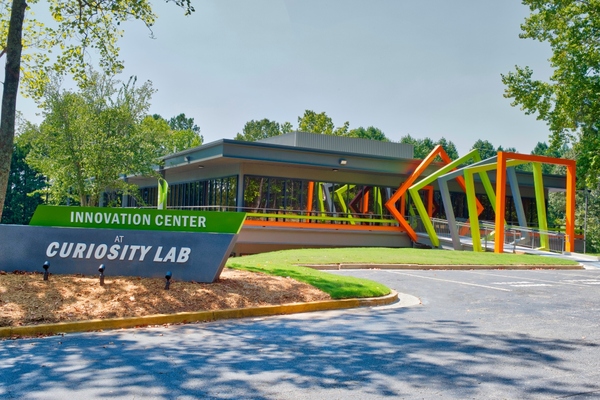
ITC is partnering with the city’s Curiosity Lab and installing the smart traffic management technology at selected Peachtree Corners’ intersections.
Predict and mitigate traffic congestion
ITC provides an agnostic software solution that can be applied to existing traffic infrastructure to measure traffic and predict and mitigate congestion before it occurs.
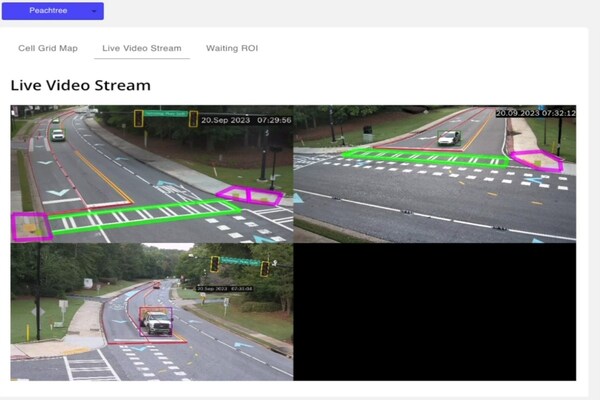
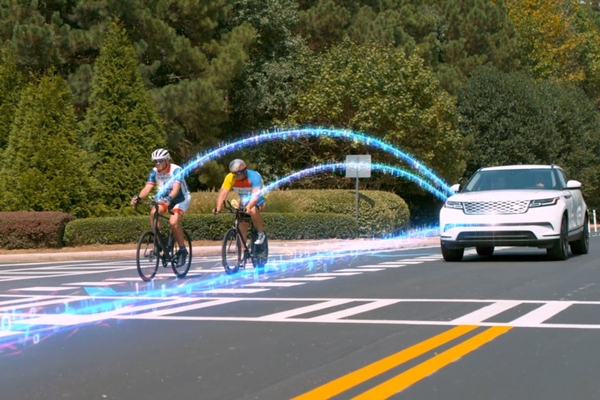
The software solution connects to existing traffic cameras and uses computer vision analysis to accurately identify all road objects and collect data including speed, acceleration, traffic flow, distance, pedestrian activity and more, while complying with privacy regulations by hiding license plates and faces.
Using proprietary machine learning models, this data is then used to create a traffic model that highlights patterns of each intersection or corridor with the ability to connect across a grid of intersections and create one holistic image. ITC is also predicting traffic patterns in real-time based on historic data, enabling cities to have proactive and adaptive control of traffic congestion.
“We will be able to manage intersections in real-time and can easily download a traffic report and adapt traffic signal patterns remotely, which is a huge advantage for city managers”
“With our solution already deployed across Israel, in Australia and other countries worldwide, Curiosity Lab will serve as a real-world playground for us to continue to develop our solution and to officially launch in the US with an official office in the Innovation Centre,” said Aharon Brauner, ITC co-founder and CEO.
“That ecosystem is the perfect opportunity for us to demonstrate the effectiveness of our solution with consistent mixed traffic, public transit and pedestrian activity along the corridor.”
Read More
In addition to uncovering patterns, ITC’s solution can create traffic simulations across intersections and corridors where the software is deployed. Here, traffic controllers and city managers will be able to see real-time object-driven visualisation and simulation with a geographic overlay and to create countless theoretical traffic scenarios for the software to solve.
Through its proprietary algorithms, it can also manage traffic based on a city’s specific goals, whether that be to limit carbon emissions and improve sustainability or provide general traffic management, prioritise pedestrians or public transit and more.
“Our software not only learns and adapts traffic signals and patterns in real-time, but also has the capability to manage traffic to prioritise certain categories of road users,” said Dvir Kenig, ITC co-founder and chief technology officer. “This allows cities to manage each intersection or corridor differently based on the type of traffic they are seeing and/or time of day. If an intersection regularly has heavy pedestrian traffic, our solution can prioritise this category and will develop models for pedestrian tendencies across wait time, how long it takes to cross the street.”
As what is being called #SiliconOrchard in the metro-Atlanta region, The City of Peachtree Corners in Georgia is home to more than 45,000 residents, 45,000 jobs and an innovation hub that houses some of the world’s most disruptive technology companies. It is powered by a smart city connected infrastructure and 5G.
“According to recent studies, more than 40 per cent of traffic accidents occur in intersections, and congestion accounts for 25 per cent of car greenhouse gas emissions – with the average driver spending three days per year stuck in traffic,” said Brandon Branham, Curiosity Lab executive director. “This cost-effective traffic solution is going to be a game-changer for cities across the US. ITC’s solution gives city managers and traffic engineers the affordable tools to make our roadways safer, more efficient and thus more sustainable for everyone on the road.
“We will be able to manage intersections in real-time and can easily download a traffic report and adapt traffic signal patterns remotely, which is a huge advantage for city managers when there are major wrecks, community events and sudden surges in traffic. The ease of scalability is also impressive, which makes this even more appealing to city managers and CTOs across the country. As a city, we are excited to witness how ITC continues to improve our residents’ daily driving experience.”
Why not try these links to see what our SmartCitiesWorld AI can tell you.
(Please note this is an experimental service)
How does ITC's software integrate with existing traffic infrastructure?In what ways does machine learning improve real-time traffic management?How does ITC's solution prioritize different road users like pedestrians?What role does 5G connectivity play in ITC's traffic management system?How can traffic simulations help city managers optimize intersection flow?Latest City Profile
SmartCitiesWorld Newsletters (Daily/Weekly)
You may also like these related articles...
BECOME A MEMBER
© 2026 SmartCitiesWorld
Smart Cities World Ltd, 37 Lombard Street, London, EC3V 9BQ