














BUILD YOUR OWN
RESOURCE LIBRARY



Podcasts

Cities Thriving on Lighting, Episode 2 – Simplicity by design in smart lightingSponsored by Paradox Engineering
Cities Thriving on Lighting, Episode 1 – Lighting as the backbone of the smart citySponsored by Paradox Engineering
Opinions

Transforming indoor public safety with smart sensor networksSponsored by Motorola Solutions
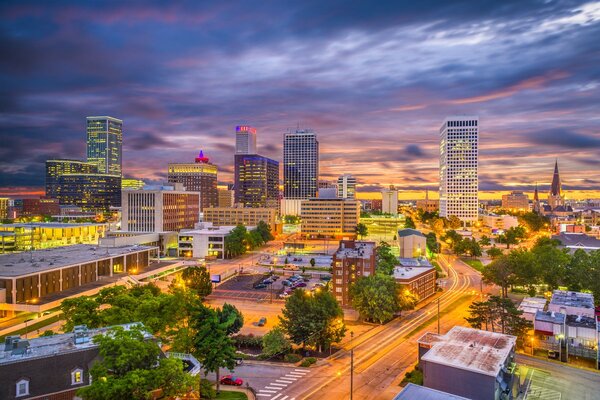
Tulsa designated as latest US innovation tech hub
Consortium of partners, led by Tulsa Innovation Labs, is eligible for up to $75m federal funding to accelerate advanced development of autonomous technologies.


Tulsa, Oklahoma, has been named a “Tech Hub” by the US Economic Development Administration, making it eligible for millions in federal funding to accelerate the development of autonomous technologies.
The Tech Hub designation by the government agency as part of a historic $500m investment in US economic competitiveness and national security gives a consortium of Tulsa partners the opportunity to apply for up to $75m in federal funding.
Generative artificial intelligence
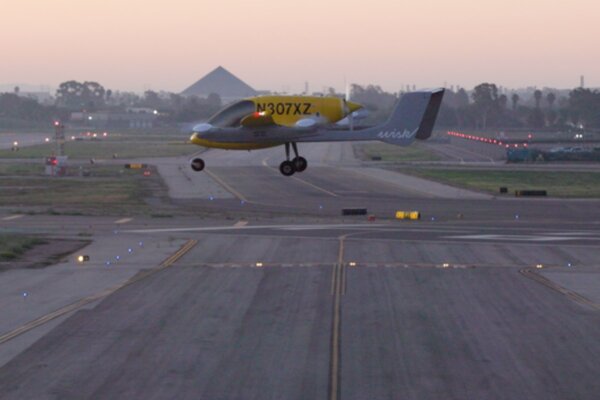
Tulsa’s proposal, the Tulsa Hub for Equitable & Trustworthy Autonomy (Theta), will advance the development of autonomous technologies, such as uncrewed aerial systems (UAS), drones, cybersecurity and generative artificial intelligence.
Theta was led by Tulsa Innovation Labs (TIL) – an initiative of the George Kaiser Family Foundation – and coalition members Black Tech Street (BTS), Madison Strategies Group (MSG), Oklahoma State University (OSU), PartnerTulsa, the University of Tulsa (TU), Tulsa Community College (TCC) and Tulsa Economic Development Corporation (TEDC).
“The Tech Hubs designation is also an important validation of TIL’s tech-led economic development strategy for the region, Tulsa’s Tech Niche”
“The autonomous systems revolution is upon us, and it is evident through this distinction from the EDA that the Greater Tulsa region is uniquely positioned to lead innovation in these technologies, which are critical to our country,” said Jennifer Hankins, managing director of Tulsa Innovation Labs.
“The Tech Hubs designation is also an important validation of TIL’s tech-led economic development strategy for the region, Tulsa’s Tech Niche. This moment affirms Tulsa’s position as a nationwide leader in uncrewed aerial systems, cybersecurity, advanced manufacturing and other complementary industries.”
Theta will develop, deploy and manufacture the next generation of technological innovations in autonomous technologies specifically focused on counter-UAS, agriculture and pipeline inspection, parcel delivery and urban and regional mobility. Theta ensures these innovations and the quality jobs they bring will start, grow and remain in the Greater Tulsa region.
Read More
“This is an incredible moment for Tulsa and northeastern Oklahoma, indicative of our promising economic future and a testament to the tireless work and creativity of countless partners across the region,” said Kian Kamas, executive director of PartnerTulsa.
“PartnerTulsa’s mission is to increase economic opportunities for our citizens and establish a more resilient regional economy. A Tech Hubs designation pushes us closer to our goal of expanding access to all Tulsans and building a more equitable economy."
“This is an incredible moment for Tulsa and northeastern Oklahoma, indicative of our promising economic future and a testament to the tireless work and creativity of countless partners across the region”
With the Tech Hubs distinction, Theta reckons the Greater Tulsa region is set to capture $4bn of the $1.36 trillion global autonomous systems market, with the goal of creating nearly 200,000 new jobs in the next decade. Through Theta’s intentional focus on equity, it claims Tulsa will have an opportunity to add 66,000 women and 39,000 Black, Latinx, and Native American individuals to the region’s workforce in autonomous systems-related occupations, with wages $7,000 higher than the regional average.
Tech Hubs programme
The consortium that participated in the Tulsa Hub for Equitable & Trustworthy Autonomy (Theta) proposal, which resulted in the Tech Hubs designation, includes 50 partners across public and private sectors.
Theta was one of 31 Tech Hubs designees chosen from a pool of 197 applicants. The Tech Hubs designation makes Tulsa eligible to apply for up to $75m in implementation funding from the EDA in Phase 2 of the Tech Hubs programme.
Why not try these links to see what our SmartCitiesWorld AI can tell you.
(Please note this is an experimental service)
How will Tulsa's Tech Hub designation accelerate autonomous technology development?What role does generative AI play in Tulsa's autonomous systems innovation?How can Tulsa's consortium ensure equitable workforce growth in tech sectors?What autonomous applications are prioritized for deployment in the Tulsa region?How does Tulsa's Tech Hub status enhance cybersecurity in autonomous systems?AI and Machine LearningAir travelconnected and autonomous vehiclescybersecurityGovernance and CitizenlogisticsmobilityOklahomaTulsa
Latest City Profile
SmartCitiesWorld Newsletters (Daily/Weekly)
You may also like these related articles...
BECOME A MEMBER
© 2026 SmartCitiesWorld
Smart Cities World Ltd, 37 Lombard Street, London, EC3V 9BQ