









BUILD YOUR OWN
RESOURCE LIBRARY



Podcasts
Cities Thriving on Lighting, Episode 2 – Simplicity by design in smart lightingSponsored by Paradox Engineering
Cities Thriving on Lighting, Episode 1 – Lighting as the backbone of the smart citySponsored by Paradox Engineering
Opinions
Transforming indoor public safety with smart sensor networksSponsored by Motorola Solutions
Utah DoT installs lidar tech at Salt Lake City intersection
Powered by Seoul Robotics’ 3D Perception Engine, system uses lidar data to create a digital twin of the intersection to feed data to optimise traffic flow.


A ‘groundbreaking’ traffic signal system powered by lidar sensor data has been deployed at an intersection in Utah state.
Initiated by the Utah Department of Transportation (UDoT), the project addresses critical needs for advanced sensor technology that can detect, count, and track vehicles and other road users under any weather conditions.
3D Perception Engine
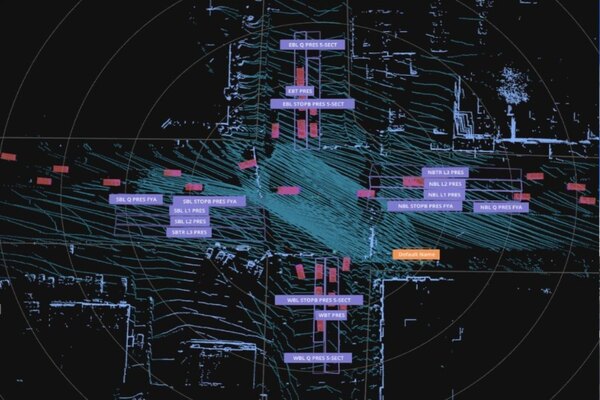
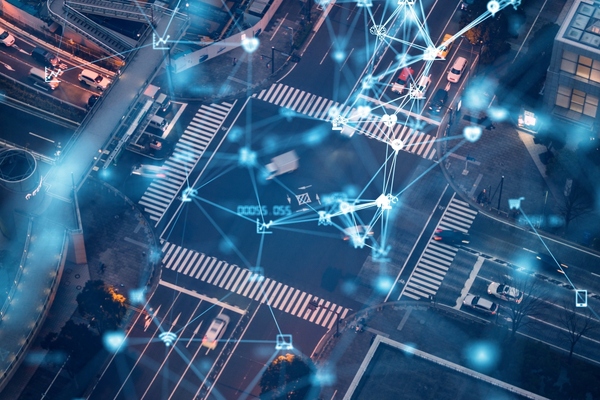
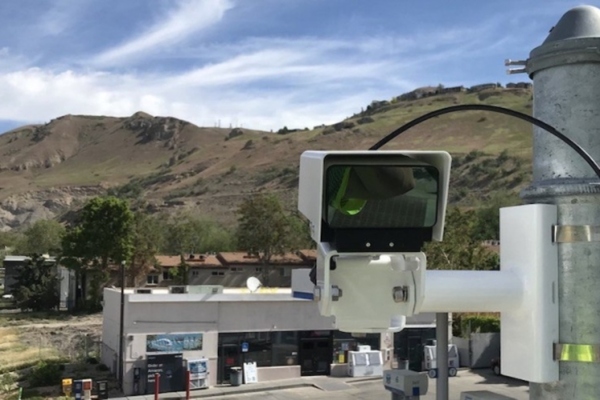
The installation in Murray, located in southern Salt Lake City, is powered by Seoul Robotics’ 3D Perception Engine, housed in a compact edge device, and utilises lidar sensors at each corner of the intersection. The 3D Perception Engine, developed by the autonomous driving company, uses lidar data to create a digital twin of the intersection to feed data to optimise traffic flow and reduce congestion.
The lidar-based system supports traffic management features, including precise stop-bar detection, advanced vehicle detection up to 300 feet from the stop bar, and red light running, Seoul Robotics claims. Additionally, the system boasts a vehicle counting accuracy of 99.8 per cent at the stop bar.
“Since its installation, our lidar-based traffic management system has consistently demonstrated excellent detection and tracking of objects, ensuring reliable performance across all weather conditions”
It is a collaboration between Seoul Robotics, Gades Sales Company, and Blue Band. Gades Sales Company, the local distributor was integral to the installation and ensuring the system was optimally integrated into the local infrastructure.
Meanwhile, Blue-Band’s software acts as a critical interface, translating the data processed by Seoul Robotics’ 3D Perception Engine into signal commands compatible with existing traffic controllers. This collaborative effort guarantees the system’s adaptability to all commonly used traffic controller models in the US.
Read More
“Since its installation, our lidar-based traffic management system has consistently demonstrated excellent detection and tracking of objects, ensuring reliable performance across all weather conditions,” said Lee Han-bin, CEO of Seoul Robotics. “This technology not only meets but exceeds the demands of modern traffic systems.”
Beyond managing vehicle flow, the system also enhances traffic engineering by accurately counting and monitoring vulnerable road users (VRUs), such as pedestrians and cyclists at crosswalks and kerbsides. This data is crucial for traffic engineers aiming to further develop and improve intersections for the safety and convenience of VRUs. The technology opens the way for smart crossings where the traffic controller can adapt to the different mobility needs of pedestrians by adjusting the greenlight time.
Seoul Robotics specialises in 3D perception technology, driving advancements in autonomous vehicle technologies with its Level 5 control tower software. In preparation for a 2025 IPO, the company reports it is engaging in a pre-IPO funding round with a view to enhancing global partnerships and reinforcing its market leadership.
Why not try these links to see what our SmartCitiesWorld AI can tell you.
(Please note this is an experimental service)
How does lidar technology improve traffic flow optimization at intersections?What role does the 3D Perception Engine play in creating digital twins?How does the system ensure accurate vehicle counting under all weather conditions?In what ways can the system adapt traffic signals for vulnerable road users?How is the lidar-based system integrated with existing US traffic controllers?Latest City Profile
SmartCitiesWorld Newsletters (Daily/Weekly)
You may also like these related articles...
BECOME A MEMBER
© 2026 SmartCitiesWorld
Smart Cities World Ltd, 37 Lombard Street, London, EC3V 9BQ