BärGPT has been developed as an open-source solution and tested in collaboration with admin staff, adapting it to the needs of the Berlin administration.
As part of the Federal government’s decarbonisation programme, Berlin State Library is working with Siemens to reduce energy consumption and emissions.
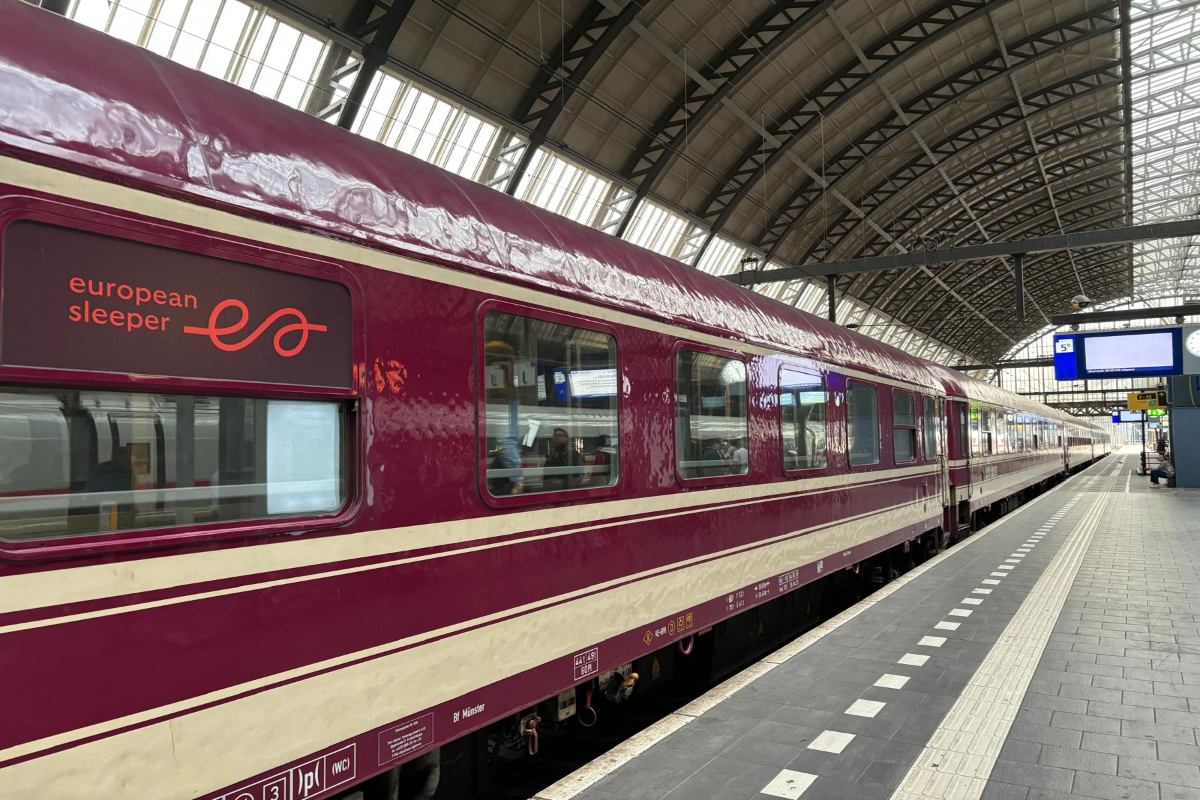
European Sleeper passengers from Brussels, Amsterdam, Berlin, and Prague, can seamlessly plan and pay for their direct night train journeys within Moovit’s app.
Berlin took over the 2,000km-plus district heating network from energy company Vattenfall last year and aims to make it completely climate-neutral by 2045.
By using tech like AI, IoT and blockchain, with an emphasis on cybersecurity, the Kyiv Centre will foster an innovation ecosystem with local and global impact.
The P-12 Shuttle electric ferry line is planned to connect the East Side Gallery, near Ostbahnhof, with the cultural hub Funkhaus in the German capital.
The Senate of the German capital has decided that the expansion of the fibre optic network and mobile communications is now in “the overriding public interest”.
The Berlin Urban Nature Pact aims to empower local governments around the world to take steps towards the operationalisation of a global biodiversity agenda.
The cities aim to pool the expertise of transport companies, associations and administrations to work together on sustainable urban mobility solutions.
Combining the real and the digital worlds, technology from Siemens Xcelerator portfolio will form the backbone of the new neighbourhood in Berlin Spandau.
Centre aims to accelerate international collaboration on public sector innovation, digital transformation, emerging technologies and other critical tech issues.
Berlin TXL project was launched in 2021 to create a smart city on the five-square-kilometre site of the former Berlin Tegel Airport, which closed in 2020.
The IESE analysed 183 cities in 92 countries worldwide for the 2024 Cities in Motion Index according to 114 indicators that feed into nine key dimensions.
Survey data suggests that negativity continues to grow towards the cost of electric vehicles, with many residents unable to commit to the higher price point.
Centre will focus on public sector innovation, digital transformation and application of emerging technologies in government and public sector organisations.
Transport for London will use technology from Via to power its Dial-a-Ride service to further improve the passenger experience for elderly and disabled people.
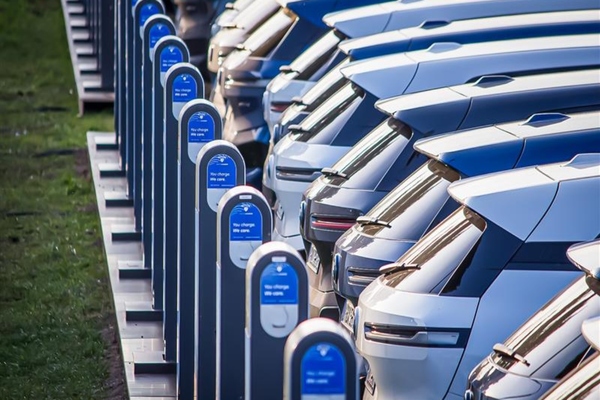
Service4Charger offers e-mobility solutions and full-service implementation, including the planning, installation and operation of charging infrastructure.
The provider-neutral spaces form part of a pilot project in the German capital, which aims to realise city-friendly and climate-friendly mobility systems.
It will supply its mobility data platform to Berlin’s public transport operator to plan 150 parking zones and parking order mobility hubs across the city.
German city will hydraulically balance radiators and install smart thermostats in a large proportion of its public building stock to decrease consumption this winter.
Programme seeks to empower cities around the world to run entirely on clean energy, every hour of every day and accelerate the decarbonisation of regional electricity grids.
After a revision process that began last year, the roadmap details measures designed to guarantee the universal right to mobility in the city and steer it towards healthy and sustainable forms of transport.
Asistobe’s Scott Shepard on how the mobility sector realigned with city objectives due to the pandemic, and what changes that has introduced to how things are done in transportation.