






The cities aim to pool the expertise of transport companies, associations and administrations to work together on sustainable urban mobility solutions.
The German cities of Berlin and Hamburg have signed a memorandum of understanding (MoU) to work together on various issues relating to their extensive and well-connected bus and train services.
The core idea of the strategic partnership is to pool the expertise of transport companies, associations and administrations in Berlin and Hamburg in order to work together on sustainable urban mobility solutions.
The cities are a conurbation of different needs and challenges. The city administrations are in regular contact, and the approach is intended to deepen cooperation between the transport associations and transport companies on specific topics and to transfer this into coordinated structures.
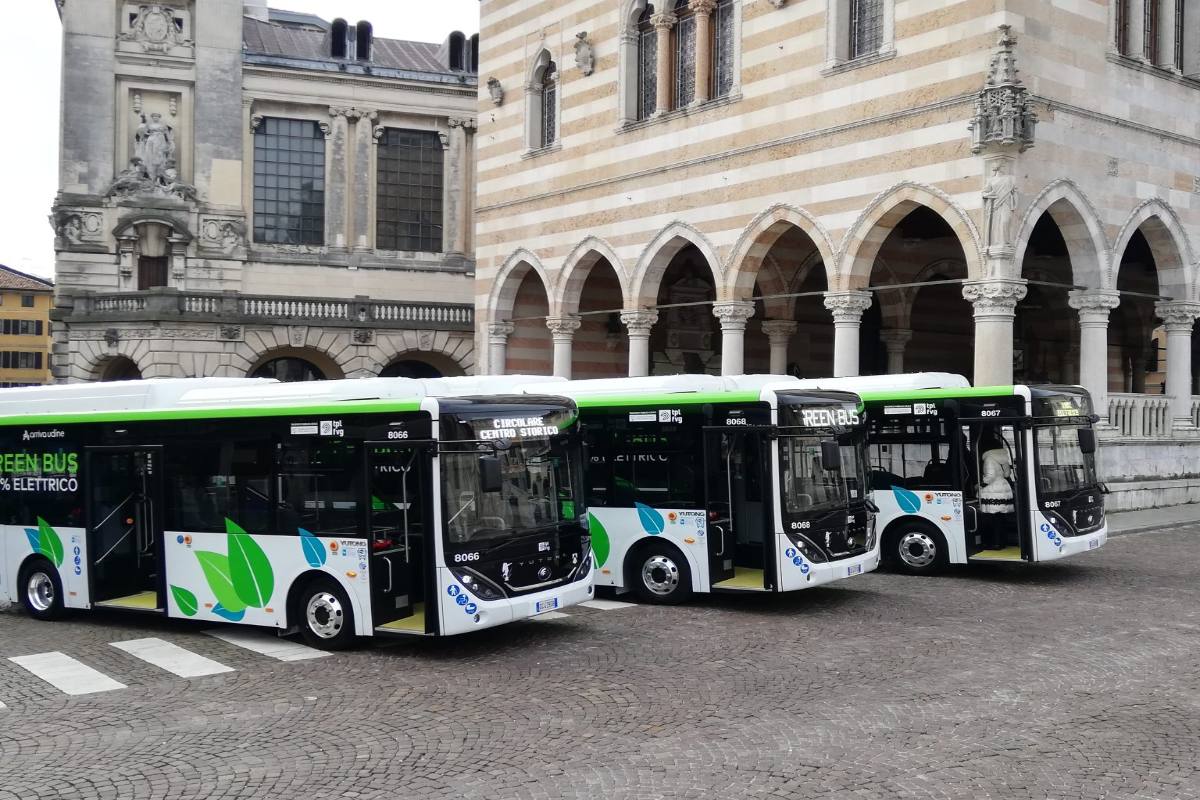
Against this background, Berlin and Hamburg have decided to tackle issues together in order to learn from each other and solve problems together. These include tasks such as automated driving, design issues in public spaces, for example at bus stops, vehicle procurement requirements or technical issues relating to mobility and sales platforms.
“Together we want to learn from each other and with each other, create more efficient structures and pursue the goal of making the public transport experience even more attractive for passengers in Hamburg and Berlin”
"In close cooperation with the transport companies and our responsible authorities, we are already successfully driving forward intelligent, networked and multimodal mobility solutions in Hamburg and the surrounding area. But the future cross-regional cooperation of the transport associations and companies in Hamburg and Berlin will now enable even more future-oriented mobility,” said Raimund Brodehl, managing director of the Hamburg Transport Association (hvv).
“Together we will be able to better recognise the great mobility potential in the metropolises, which lies, among other things, in the use of autonomous vehicles, the expansion of bus stops into mobility hubs and in digital applications, and in thinking in many directions."
“In Hamburg and Berlin, several million passengers travel by public transport every working day. Both cities have a large network of rapid transit and bus connections and are working to expand their services in response to increasing demand and to connect the metropolitan regions even better to the urban centre,” said Dr Anjes Tjarks, Hamburg’s transport senator.
“With their strategic partnership, both city states want to exchange their experiences, create synergy effects and develop joint projects – for example, in the development of autonomous transport, the optimisation of bus punctuality through digitalisation or the development of apps that can better support people with reduced mobility on buses and trains.”
Dr Anjes Tjarks added: “Together we want to learn from each other and with each other, create more efficient structures and pursue the goal of making the public transport experience even more attractive for passengers in Hamburg and Berlin.”
Why not try these links to see what our SmartCitiesWorld AI can tell you.
(Please note this is an experimental service)
How will Berlin and Hamburg coordinate autonomous vehicle deployment strategies?What digital tools will improve bus punctuality in both cities?How can mobility hubs enhance passenger experience at bus stops?What joint projects support people with reduced mobility on transit?How will shared expertise optimize vehicle procurement requirements?