














 22 - 26 June 2026: Find out more












BUILD YOUR OWN
RESOURCE LIBRARY



Tallinn begins work on second circular economy centre
Centre supports the city’s goal of creating a more environmentally conscious living environment and gives residents convenient options to change daily habits.


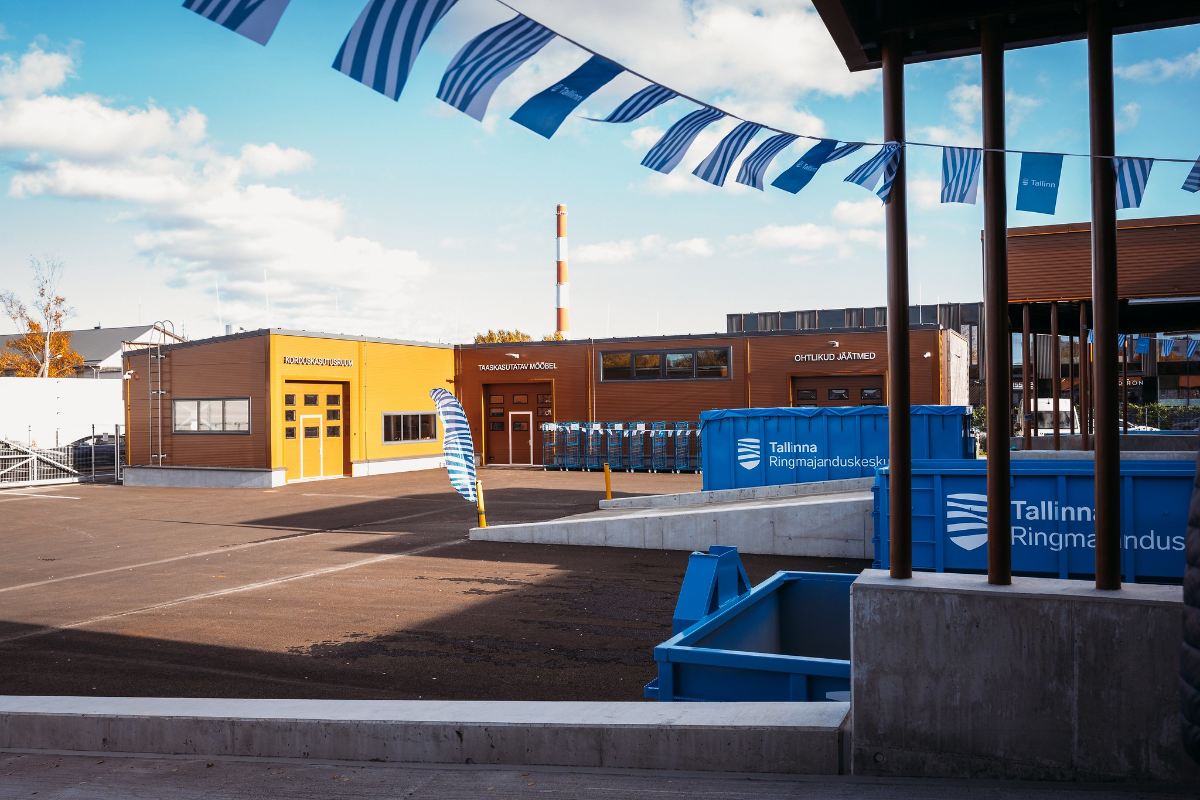
Work has begun on the Lasnamäe Circular Economy Centre in Tallinn. The centre will offer residents in the Estonian capital the opportunity to conveniently dispose of waste, repair items, and reuse them.
The centre supports the city’s targeted move towards efficient waste management, which values the sustainable use of resources and the reduction of waste generation. It will open in 2026 and will mark the second centre of its kind in the city. Last year, it has announced the opening of the Lilleküla circular economy centre, marking the city’s shift from traditional waste management to a circular economy.
Environmentally conscious living
The establishment of the centre supports the city’s broader goal of creating a more environmentally conscious living environment and offering residents a convenient opportunity to change their daily habits. At the same time, it is an important addition to the Lasnamäe urban space with the centre bringing new community services to the area and diversifying the public space.
The aim of mayor Jevgeni Ossinovski is for Tallinn to become a city where environmentally friendly choices are a natural part of everyday life. “Circular economy centres mark an important step in this direction – they help make waste management, repair and reuse easy and accessible for people,” he said. “The Lasnamäe circular economy centre is not just a waste station, but a community-oriented service that enriches the area and supports the city’s green transition.”
Deputy mayor Margot Roose added: “The centre will bring together the local community, innovative companies and will also be of interest to foreign delegations, creating a unique cooperation platform that will support the sustainable development of the region more broadly.”
“The Lasnamäe circular economy centre is not just a waste station, but a community-oriented service that enriches the area and supports the city’s green transition”
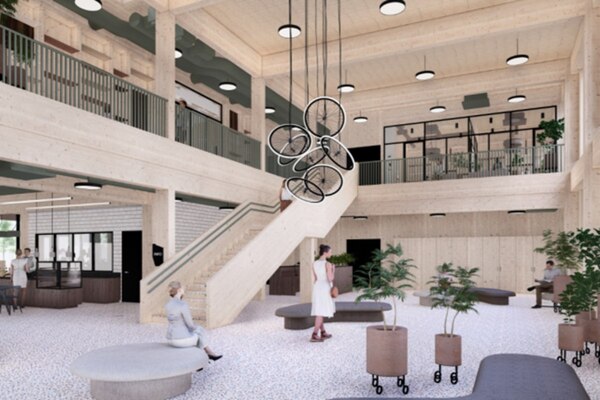
The architect of the Lasnamäe Circular Economy Centre is Urmo Mets from the Kolm Koma architectural firm and it was designed by RTG Projektibüroo AS. The building’s façade will be built from reusable wood and recycled materials will be used in the interior. For example, the shelves will be made from recycled wood and the lighting will be designed from old tyres. A small solar power plant will be built on the roof and the building will be covered with a grass roof, which will help reduce the heat island effect.
Rainwater will be used in the toilet flush boxes and for watering the greenery around the building. A smart control system will automatically adjust the lighting and energy consumption according to the use of the rooms.
Read More
The Circular Economy Centre’s waste station collects various types of waste. In the circular house, you can send items that are no longer in use at home while in the repair workshops you can repair broken items under the guidance of a craftsman. Classrooms will also be created in the circular house, where environmental and circular economy training, practical workshops and conferences will be held.
“We have learned a lot from our Norwegian, Swedish and Finnish colleagues, and we had excellent cooperation with the architect to create a functional but also architecturally top-notch building,” said Rein Kalle, head of the Tallinn Circular Economy Centre.
“As a landscape conservationist, I am proud that the currently overgrown plot behind the building is being transformed into a public park space with minimal intervention, where as much of the natural landscape as possible is preserved.”
The Tallinn City Waste Plan 2022–2026 provides for the establishment of a modern circular economy centre in each district of the city. The Lasnamäe Circular Economy Centre is the second centre of its kind in Tallinn and in the whole of Estonia, combining a waste station and activities that follow the principles of the circular economy. Lasnamäe is the largest district in Tallinn and its area of influence is home to nearly 120,000 residents.
The new centre is being built by OÜ Fund Ehitus and will cost nearly €7.9m.
Why not try these links to see what our SmartCitiesWorld AI can tell you.
(Please note this is an experimental service)
How does the Lasnamäe centre promote sustainable waste management practices?What materials are used in the centre’s eco-friendly building design?How will the centre’s smart control system optimize energy consumption?In what ways will repair workshops support circular economy principles?How does the centre contribute to community engagement and environmental education?climate actionClimate change/ResilienceEnergy & Environmentnet zerosmart wasteSustainable Development GoalsTallinnwaste

Latest City Profile
Latest Summit Speakers
(22-26 June)
Latest Urban Exchange Podcast
Latest Special Report
SmartCitiesWorld Newsletters (Daily/Weekly)
You may also like these related articles...
BECOME A MEMBER
© 2026 SmartCitiesWorld
Smart Cities World Ltd, 37 Lombard Street, London, EC3V 9BQ