








BUILD YOUR OWN
RESOURCE LIBRARY



Opinions

Smart lighting: enabling smart cities beyond illuminationSponsored by Paradox Engineering

How AI and biometrics are shaping next-generation mobility paymentsSponsored by ST Engineering
Coral Gables: a story of beauty and brains
CIO Raimundo Rodulfo explains how Coral Gables in Florida has managed to preserve its history and heritage while becoming one of the smartest cities in the world.


 Technology Innovation for Community-Centric Cities (TICCCITIES)
This article is part of SmartCitiesWorld’s TICCCITIES Campaign, a global initiative that champions technology adoption with communities at the heart. TICCCITIES aims to guide city leaders, practitioners, and partners from various sectors in planning and delivering projects that enhance urban environments for people and planet.
Find out more about the initiative and how you can become a TICCCITIES supporter by visiting our website.
SmartCitiesWorld (SCW): Coral Gables smart city journey has gained international recognition – to what do you attribute its success?
Rodulfo (RR): First of all, it’s a great community. We have a strong sense of collaboration and work together with the entire ecosystem. As a municipality, we engage closely with our citizens. We have 34 citizen advisory boards that inform decision-making and ensure that residents are actively involved.
We strive to drive innovation and technology, which is my area of focus in the city. We work as a strategic partner with all departments and community members, ensuring that everything we do is a co-creative process. We listen to the voices of residents and visitors – understanding their needs, priorities, and pain points – to address the problems that matter most.
Like every municipality, we face challenges. Environmental issues and coastal resiliency and traffic are key issues affecting quality of life but we work hard to tackle these problems by using technology, innovation, and strong collaboration with the community and stakeholders.
SCW: The city is celebrating its centenary this year, tell us a little more about your history and heritage?
RR: Our city was founded in 1925 by the visionary, George Merrick, who also founded the University of Miami in the same year, even donating the land for it. Merrick had a progressive vision focused on education, prosperity, and business. He also founded the Chamber of Commerce in the same year, as he also had a vision about prosperity, jobs and business. Over 100 years the city has maintained that planned community vision from the beginning.
Our city is part of the City Beautiful movement and the Garden City movement. We have 44,000 trees in the right of way, contributing to a large tree canopy – it’s beautiful and that’s why it’s called The City Beautiful.
Over 140 multinational corporate headquarters are based in our city and call Coral Gables their gateway to the America and the LATAM market
The city’s architecture is inspired by Mediterranean Revival style and it’s no coincidence we have connections with European cities like Seville. It is one of our international sister cities alongside Aix-en-Provence in France, Cartagena in Colombia, Granada in Spain, Provence of Pisa in Italy, Quito in Ecuador and more.
We also have a significant international presence, with more than 20 international trade offices and consulates, including those from Spain, Italy, and other countries. Over 140 multinational corporate headquarters are based in our city and call Coral Gables their gateway to the America and the LATAM market. Major companies like IBM, Apple, Amazon, and Fifa have established significant operations here. Apple recently opened an office, as has Fifa, ahead of the World Cup, relocating executives from Switzerland and hiring locally.
SCW: What were your priorities when you started your smart city journey and what have been the major milestones and goals achieved?
RR: As a municipality, we’ve made major strides in building resilience and capacity. I joined the city in 2004 after a career in electrical engineering and telecommunications with companies like Motorola and Siemens. Our first priority was strengthening our infrastructure to withstand hurricanes and natural disasters. We built a high-speed communications network, including about 50 miles of private underground fibre optic corridors.
We’ve also established a network of free wifi throughout the city, covering community centres, public parks, downtown areas and city facilities and we continue building. In terms of resilience, we’ve built a gigabit wireless network for redundancy and use satellite communications. Our team actively supports emergency response efforts, deploying satellite systems and mobile command centres to affected areas.
Smart lighting, energy efficiency, and water management have played a big role in these achievements
In terms of smart infrastructure, we’ve built a network of smart devices and physical systems. We have multimodal traffic sensors to monitor pedestrian and vehicle flow, as well as environmental sensors to track air quality and carbon emissions. Our sustainability master plan aims to reduce greenhouse gas emissions, energy consumption, and water consumption all by 20 per cent over 10 years – and we are close to meeting those goals. Smart lighting, energy efficiency, and water management have played a big role in these achievements.
Our progress has been possible thanks to strong support from city leaders and consistent funding. We’ve achieved a lot and we’ve received international awards for smart city innovation and technology. Our team is very proud of what we’ve accomplished, but we know there’s always more work to be done.
SCW: What skills have been important in your team to these achievements?
RR: We have 25 innovation and technology professionals – our most important capital is human capital. My core team and managers have been with us for more than 10 years. They are highly skilled professionals, experts in their fields, and great leaders. Our team includes a security director and division managers for network communications, systems and application development and more.
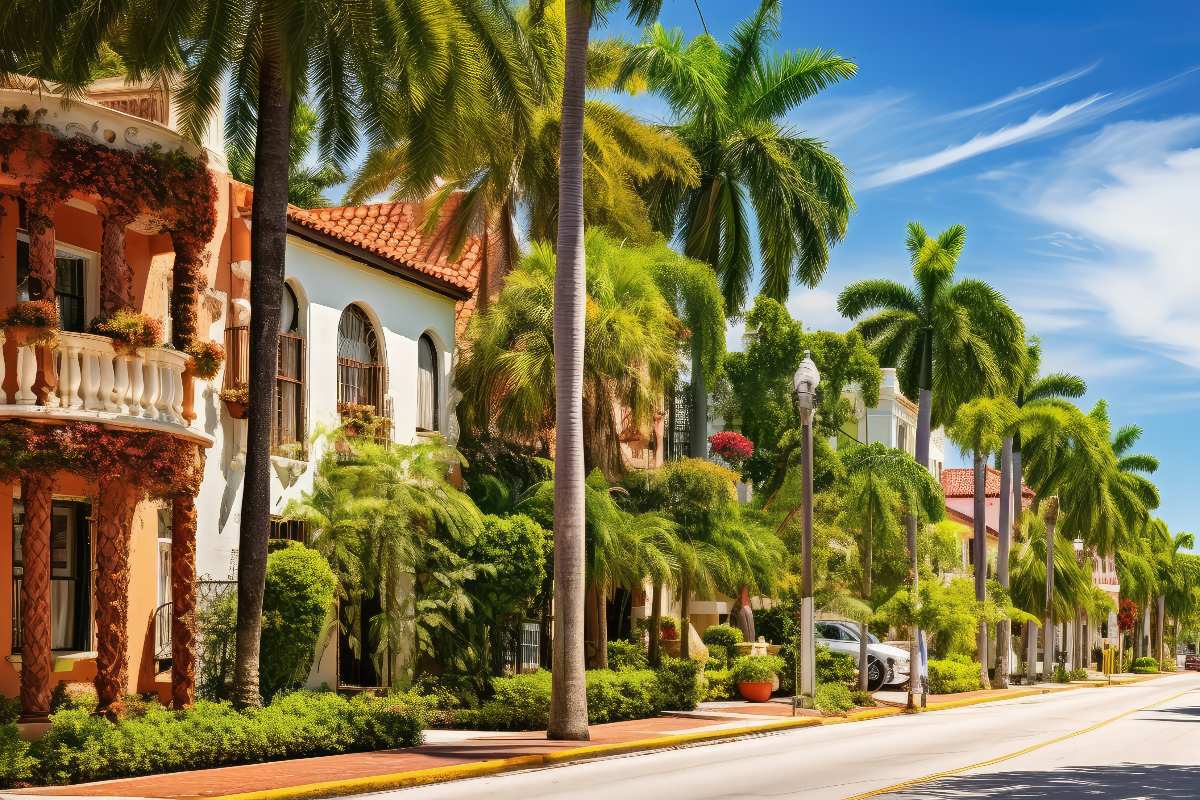
Some of the architecture of Coral Gables is inspired by the Mediterranean Revival style
We aim to match the same capacity I had when I worked in industry. In a way, we wear two hats: one as a general contractor – capable of building infrastructure, handling engineering, and managing design and planning – and another as an R&D lab.
We have a dedicated laboratory where we conduct experiments in collaboration with academia and interns. Our internship programme is very strong, mentoring students from high school to graduates to post-doctoral research. Every spring, summer, and fall, we bring in about 20 interns and put them to work, giving them hands-on experience and valuable training.
SCW: How different did you find working in the public sector after industry?
RR: I knew Coral Gables to be a beautiful city and saw it was looking for a network analyst or network engineer and I thought I’d give it a try. What I didn’t know is that the city didn’t have a network so the job was to build everything from scratch! I’d spent 11 years in the private sector before joining the city and now it’s been 20 years.
Honestly, my initial goal was just to learn about the public sector. At the time, they had just created a technology department. I thought, ‘I’ll give it three or four years, learn how the public sector works, and then go back to the private sector.’ But three years turned into 20, and now I’m the CIO.
In government, you have to understand that your customers are the citizens, and they own the business.
I’m very happy I stayed. The public sector is a completely different world from the private sector. You have two choices: either leave because it’s a different world or stay and work to improve things – helping it become more entrepreneurial, innovative, and efficient. In government, you have to understand that your customers are the citizens, and they own the business.
I was passionate about telecoms in the private sector but it was also one-way. Working in the city required me to learn a lot. I had to understand public safety, civil infrastructure like public works, governance and policy. It forced me to broaden my thinking and change how I approach projects. I had to become a better project manager because, in the public sector, you deal with more stakeholders.
In the private sector we had a project, we had the funding, we could buy everything we needed to buy and then get things done. It was very straightforward. In government, it’s different. You need to negotiate, persuade stakeholders, and collaborate with the community. You can’t operate in silos. It makes you a better manager and a better leader because you face complexities in the public sector that you don’t encounter in the private sector.
SCW: How do you ensure you maintain momentum on your smart city journey?
RR: Continuous improvement has been a key focus for me. My background is in electrical engineering, but over time, I specialised in industrial engineering and systems engineering. That training helped me develop a more systematic, process-oriented approach to problem-solving. I have also become a Six Sigma Black Belt, which has shaped how I approach projects – not just in technology but across the organisation.
First of all, we trained all the business units and all the departments to create a culture around quality and the customer. To achieve this, I partnered with a university to launch a citywide Lean Six Sigma process improvement programme. We graduated at least one Six Sigma Green Belt in every department. These Green Belts became quality champions and served as liaisons for my department, helping us implement technology solutions that aligned with City Hall’s strategic goals and best practices.
We put significant effort into standardisation more than 10 years ago, adopting industry standards like ISO9000 and IEC standards. The goal was to build a culture of quality and create consistent processes. Once we built the capacity, we moved into digital transformation – not just through technology, but by transforming the organisation and investing in human capital.
The key to breaking down those barriers was to create channels of communication and align strategies across departments
Creating effective governance is essential and that’s what we have today. Organisations naturally develop silos and compartmentalisation. The key to breaking down those barriers was to create channels of communication and align strategies across departments. Understanding the vision of the chief of police, fire chief, city manager and mayor was crucial. Alignment around shared goals made it possible to foster collaboration and drive results.
We follow the National Institute of Standards and Technology (NIST) Baldrige Community of Excellence framework. That standard creates a tree and at the top you have residents and visitors who have needs and priorities. Then you have strategic goals in the organisation, which have a number like 1,2,3,4,5. All of the departments work towards the same goals whether that is to improve the citizen experience, become more efficient or make better use of government resources and taxpayers’ funds. All the projects have to align and you have multiple departments working together. You also foster collaboration between the different departments towards the same goal with the citizen as the end-customer.
This alignment and collaboration have been more important to me than any technological advancement or infrastructure project. Listening to the voice of the customer – the citizens – and delivering quick results is essential. Over-planning leads to analysis paralysis, and in the fast-changing technology landscape, that’s a problem. You need to deliver quick wins and execute fast, or the technology will be outdated by the time you’re ready to implement it.
Our operating philosophy is simple and based on five core principles:
- Keep the lights on – business continuity is number one.
- Keep the customers happy – align everything you do with citizen satisfaction.
- Keep the wheels moving – constantly learning and evolving and delivering innovation.
- Keep the team sharp – invest in training and industry-leading skills.
- Get things done – deliver results. Results are what really matters.
This mantra is very much what keeps us focused and moving forward.
The City has published a centenary website at www.100coralgables.com/
Why not try these links to see what our SmartCitiesWorld AI can tell you.
(Please note this is an experimental service)
How does Coral Gables integrate citizen advisory boards into decision-making processes?What technologies support Coral Gables' coastal resiliency and environmental monitoring?How is the city’s high-speed communications network structured for emergency response?What strategies ensure cross-departmental collaboration in Coral Gables’ smart city projects?How does Coral Gables measure progress toward its sustainability master plan goals?AI and Machine Learningair qualityAnalyticsAnalyticscitizen engagementclimate actionClimate change/ResilienceConnectivity & DataCoral Gablesdigital inclusioneconomic developmentEnergy & EnvironmentGovernance and CitizenParks and green spacePedestrianisationPeople and SkillsPlanningurban space
Latest City Profile
SmartCitiesWorld Newsletters (Daily/Weekly)
You may also like these related articles...
BECOME A MEMBER
© 2026 SmartCitiesWorld
Smart Cities World Ltd, 27 Clements Lane, London, EC4N 7AE