
























BUILD YOUR OWN
RESOURCE LIBRARY



Dialogue, partnership, community: putting people first in urban innovation
Raffaele Gareri, founder and partner Urban Innovators Global and former CDO of Rome, explains why innovation in cities must begin with people, and how to deliver the best outcomes to communities through innovation projects.


 Technology Innovation for Community-Centric Cities (TICCCITIES)
This article is part of SmartCitiesWorld’s TICCCITIES Campaign, a global initiative that champions technology adoption with communities at the heart. TICCCITIES aims to guide city leaders, practitioners, and partners from various sectors in planning and delivering projects that enhance urban environments for people and planet.
Find out more about the initiative and how you can become a TICCCITIES supporter by visiting our website.
SmartCitiesWorld (SCW): In your previous role as CDO of Rome, how did you ensure that innovation and technology really benefited the city’s communities?
Raffaele Gareri (RF): When I arrived in Rome, the city’s digital efforts were still very much grounded in a traditional, IT-focused approach. The priority was on managing basic digital systems within the municipality. However, coming from my previous experience in the Province of Brescia – where I had launched several innovation projects across smaller municipalities – I saw a chance to bring a different mindset to the much larger and more complex context of Rome.
My belief then – and still now – is that successful innovation must begin with people, not technology. So rather than starting with tools or platforms, I spent time meeting with the heads of each municipal department to understand their core issues, operational goals and everyday challenges. That helped build a clearer picture of the organisation’s internal needs. We then extended this dialogue to the city’s in-house companies, asking: based on your mission, what are the barriers you’re facing? Is there a digital vision that could support your long-term objectives?
The next step was to involve universities and civil society associations. Rome is home to more than 15 universities, and we wanted to tap into both their research capabilities and their perspectives on urban innovation. This opened up a valuable exchange – one that helped us shape a common understanding of the city’s priorities.
When you begin with needs – and not with technology – you can build stable, long-term progress and create lasting value for the city and its communities
This three-part engagement laid the groundwork for Rome’s first Smart City Plan. It wasn’t built from a top-down idea of what technology should look like – it was rooted in dialogue and shared needs. And we didn’t stop with strategy. We turned this approach into tangible projects, like the development of an urban data platform. That platform started with a request from the Department of Economic Development, which wanted to better understand the city’s economic ecosystem – what types of businesses were operating, which districts were attracting investment, and where potential for growth existed. By bringing together data from the municipality, the Chamber of Commerce, telecom providers and more, we created a cross-functional infrastructure that supported broader, evidence-based decision-making.
This approach also helped address a common challenge in public innovation – overcoming silos. When you start with technology, it’s easy for people to see it as someone else’s responsibility – something handled by IT departments or digital experts. But when you start from real needs, you create a space for dialogue. It becomes a shared effort. This was a critical lesson for us. Engaging different departments and institutions in these conversations helped us understand not only their operational requirements, but also their level of digital maturity and openness to change.
In fact, I would say that this early phase of needs assessment also served as an informal training opportunity – a way to introduce core concepts of innovation and help people see how they could contribute, regardless of their technical background. True innovation requires multidisciplinary collaboration – something not always common in the public sector. But through this process, we were able to show that everyone has a role to play.
Even now, after leaving the role, I’m pleased to see that the smart city strategy is still evolving and being revised every couple of years. That shows a sustained commitment to digital policy. The urban data platform is still active and becoming increasingly central to how departments operate. For me, this is clear evidence that when you begin with needs – and not with technology – you can build stable, long-term progress and create lasting value for the city and its communities.
SCW: How has your experience in Rome shaped what you’re doing now at Urban Innovators Global?
RF: My time in Rome deeply influenced the way I think about urban innovation today. When we started Urban Innovators Global, the core idea was to bring together a diverse group of professionals from around the world – people with very different backgrounds and expertise, including public managers like myself, but also entrepreneurs, investors, private-sector leaders, and technical experts. In Rome, I learned that transforming a city is never about just one discipline – you need a wide range of perspectives to drive real change. That understanding was foundational.
Another principle we’re trying to advance is the need to move away from vertical, siloed approaches – which were common in the past – and instead promote horizontal collaboration. For decades, specialisation has been seen as a strength, and in many ways, it still is. But digital transformation cuts across every domain – it’s no longer confined to just technology. It affects how we organise, how we communicate, how we finance projects, how we lead, and how we make decisions ethically and inclusively. That’s something I experienced firsthand in Rome, and it strongly shapes our work at Urban Innovators Global.
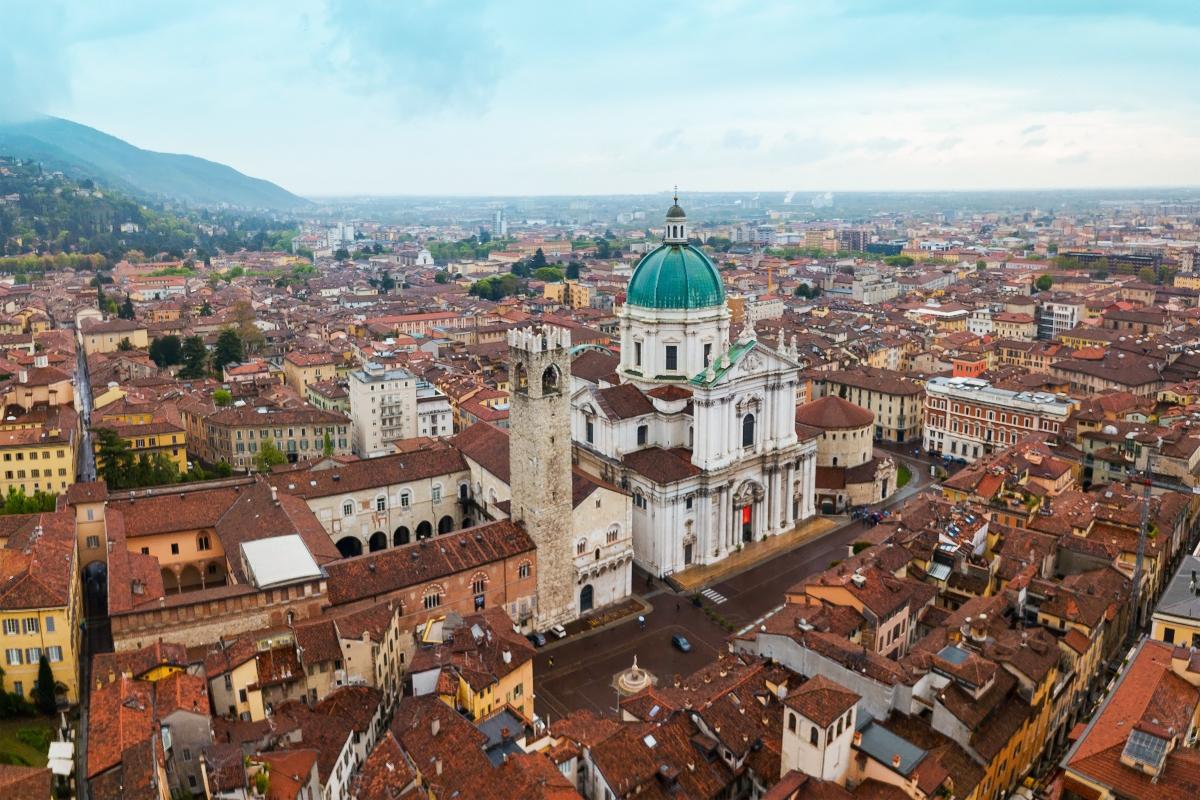
Gareri launched several innovation projects across smaller municipalities in the Province of Brescia in North Italy
One of our first initiatives is a digital transformation assessment tool – a kind of diagnostic we’ve designed to help urban areas understand where they stand. It’s a structured questionnaire that allows us to get a clear picture of a city’s digital maturity across several dimensions. And I deliberately say “city” rather than “municipality,” because innovation is never the result of a single actor – it happens across an entire ecosystem. Of course, we often start with the municipal government, but we’re interested in the broader context: is there a shared vision across stakeholders? What kind of leadership exists? What are the strengths and weaknesses in areas like infrastructure, inclusion, sustainability, privacy and ethics?
This kind of assessment is critical – not just to identify where to begin, but also to ensure that any technology or strategy introduced truly fits the local context. What worked in Rome won’t necessarily work in Paris or London – every city has its own culture, history, priorities and challenges. You have to start there if you want to plan meaningful evolution.
I deliberately say “city” rather than “municipality,” because innovation is never the result of a single actor – it happens across an entire ecosystem
Finally, one of the biggest lessons I took from Rome – and one of the values we strongly believe in at Urban Innovators Global – is that cities should never face these challenges alone. Yes, every city has its own identity, but by seeing themselves as part of a wider network, they can unlock new perspectives and solutions. Sometimes a governance model used for mobility in one part of the world can inspire improvements in waste management in another. That’s the power of international collaboration – it pushes you to think differently and more creatively.
At Urban Innovators Global, our mission is to strengthen the innovation capacity of urban environments – and this aligns closely with the work being done by the Thick Cities Initiative. I found a lot of resonance with their principles and their charter, and many of their guidelines reflect my own experience and current way of thinking. So for me, this next step feels like a natural evolution of the journey I began in Rome.
SCW: How should cities adopt new technologies like AI and digital twins in a way that enhances their relationship with their communities?
RF: I think the starting point has to be open and continuous dialogue with people. Citizen engagement is essential – but it can’t just be a checkbox. If we want people to be genuinely engaged, we have to begin with their issues, their needs. That means focusing not just on the technology itself, but on the problems it’s trying to solve. Cities should involve communities throughout the entire process – from identifying needs, to co-designing solutions, to implementing and even monitoring the services or infrastructure that result.
So engagement needs to happen across all stages – from strategy development to individual project design, to the long-term evaluation of outcomes. And within that engagement, principles like openness, transparency and ethics become absolutely critical. Especially now, as we face another wave of dramatic technological transformation – driven by AI – we need these principles to guide the way. They help build trust, and they provide a framework for cities and communities to shape the development of powerful technologies, rather than being shaped by them.

Every city has its own identity, but by seeing themselves as part of a wider network, they can unlock new perspectives and solutions, believes Gareri
Another key point is impact. Financial and economic indicators matter, of course – but we can’t lose sight of the broader social impact. What is the technology doing for people? What is it doing for the suburbs, the neighbourhoods that are often left behind? Too often, we assume that economic impact and social benefit go hand in hand – but that’s not always the case. We need to be intentional about measuring and pursuing the outcomes that matter most to people.
This is even more important in a time of accelerating change. The world can shift dramatically in just a few years – we’ve seen that with the pandemic, with geopolitical instability, and with the energy crisis. So any strategy has to be flexible, and we need shared tools and frameworks that allow communities to continuously adapt, learn and respond. That includes tools for engagement, for understanding new contexts, and for building a common culture around digital transformation.
And we can’t forget that many people still don’t fully understand what’s happening or how rapidly things are changing. If we fail to make these transformations accessible and understandable, we risk leaving large segments of society behind. And that creates a real problem – because if people don’t understand how or why resources are being allocated, they’re less likely to support or trust those decisions. Participation depends on understanding, and understanding depends on transparency.
From my experience in the public sector, I’ve seen firsthand how the distance between institutions and people has grown. Citizens often feel that public institutions are disconnected from their daily lives. Technology can either widen that gap or help close it – but only if we put the right principles in place. And we must also recognise that the major drivers of digital change today are private actors – companies with goals that may not align with those of cities or the public sector. That makes it even more important for public institutions to take an active role – to understand what’s happening, to guide development in the public interest, and to use one of the last strategic assets they still control: citizen data.
The future of AI in cities depends on our ability to govern that data responsibly. And that’s no longer just the job of the chief digital officer – every policymaker, across departments, needs to understand the implications. From social services to urban planning, from tourism to infrastructure – all areas need to engage with the opportunities and risks these technologies bring. Because if cities can manage data well, it becomes a key asset for building partnerships with the private sector – not just for funding, but also for bringing in the right skills and capabilities.
Citizens often feel that public institutions are disconnected from their daily lives. Technology can either widen that gap or help close it – but only if we put the right principles in place.
We also have to find the right balance between short-term responsiveness and long-term vision. Yes, change is happening fast – and that can drive an emphasis on quick wins. But the societal transformation we’re going through is profound. We’re laying the foundations for a new generation of infrastructure – and that takes time. These systems will create value over the long term, so we need a mindset that looks ahead while also staying grounded in immediate realities.
Of course, that’s challenging in the public sector, where decision-making is often tied to political cycles. But cities need to think beyond a single mandate. In fact, this kind of long-term vision also benefits the private sector – because it reduces uncertainty and risk, creating a more stable environment for investment.
So yes, it’s about balance – between short-term agility and long-term strategy, between innovation and inclusion, between public responsibility and private collaboration. But that balance has to be deliberate. Too often in the past, it hasn’t been. Now is the time to change that.
Why not try these links to see what our SmartCitiesWorld AI can tell you.
(Please note this is an experimental service)
How can cities ensure citizen engagement throughout all innovation project stages?What strategies promote multidisciplinary collaboration in urban digital transformation?How does an urban data platform support evidence-based municipal decision-making?In what ways can AI governance balance public interest and private sector goals?How can cities measure social impact beyond financial and economic indicators?5GAI and Machine LearningAnalyticscitizen engagementCitizen SecurityConnectivity & DataDataData marketplace/Platformdigital inclusionEnergy & EnvironmentGovernance and CitizenHealth & Social CareinclusivityManchesterPeople and SkillsPolicy MakingSensorstransparency
Latest City Profile
Latest Summit Speakers
(22-26 June)
SmartCitiesWorld Newsletters (Daily/Weekly)
You may also like these related articles...
BECOME A MEMBER
© 2026 SmartCitiesWorld
Smart Cities World Ltd, 37 Lombard Street, London, EC3V 9BQ