













 22 - 26 June 2026: Find out more






BUILD YOUR OWN
RESOURCE LIBRARY



Podcasts
Cities Thriving on Lighting, Episode 2 – Simplicity by design in smart lightingSponsored by Paradox Engineering
Cities Thriving on Lighting, Episode 1 – Lighting as the backbone of the smart citySponsored by Paradox Engineering
Opinions

Transforming indoor public safety with smart sensor networksSponsored by Motorola Solutions
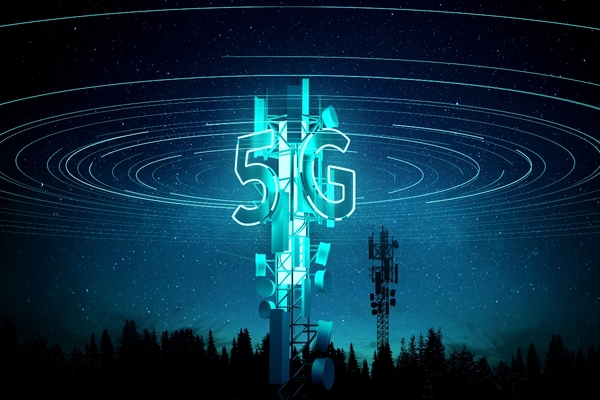
What are the benefits of 5G to cities and citizens?
Economic modelling and survey commissioned by Vodafone reveals the positive impact 5G could have in specific areas as well as societal attitudes towards it.


5G-powered smart city lights, which detect movement to turn on or dim street lighting, could save local councils £700m over the next five years, according to new economic modelling, commissioned by Vodafone and conducted by WPI Economics.
They could also reduce emissions by one million tonnes of CO2 – the equivalent of replacing 250,000 petrol or diesel cars with electric alternatives.
Advanced telecommunications network
The findings follow the announcement of the planned combination of Vodafone UK and Three UK, as well as the launch of Vodafone’s 5G Standalone connectivity service which, it claims, will create the most technologically advanced telecommunications network in the UK.
The initial launch of Vodafone’s 5G Standalone network will offer a glimpse of what is possible in the digital future, while the merger will give the two companies the scale required to invest £11bn over the next decade. Altogether, this will create Europe’s leading 5G network, support the UK Government’s 5G ambitions, drive digital transformation and create jobs.
“Our research shows half of the population think that technology could make their lives easier, for the other half it’s up to us to bring to life the difference technologies like 5G Ultra”
Modelling on smart city lights also highlights other benefits, including reducing light pollution, improving wellbeing (lower depression and insomnia rates), helping nocturnal animals, and allowing for better data collection given lights are fitted with sensors, which could improve urban planning. The modelling also focused on 5G rail and 5G social care.
5G rail findings
- Using 5G-enabled sensors on rail infrastructure can improve the efficiency of track maintenance and reduce the rate of fault incidence
- Analysis by WPI Economics finds that this could save passengers more than 25 million hours over five years – valued at £325m – increasing productivity and wellbeing
Read More
- WPI estimate that fewer delays and cancellations could save train operating companies around £20m every five years in compensation paid out to customers, money which could be used to drive better services
- 5G will enable clearer, faster communications between drivers and network controllers, as well as between trains themselves. Trains will be “virtually coupled” as they share braking and acceleration data with each other. This will enable the train separation distance to be reduced by 43 per cent, ultimately allowing for more services to run
- This will provide a reduction in overcrowded peak-hour trains, boosting productivity and wellbeing.
5G social care findings
- 5G-powered health and social support would enable patient care to be done remotely. Those in need of care could be supported via high quality, high-speed video connection, which would allow for more – and higher quality – remote care
- Based on information from early trials, WPI analysis finds that the NHS could save up to £1bn a year if the 5G support was rolled out nationwide – equivalent to 15,400 full time nursing posts. Between 2023 and 2038, the benefits could reach £17.5bn
- Benefits extend beyond cost-savings: WPI estimates that the quality-of-life improvements associated with installing 5G-powered social care technologies could be worth £1.4bn – a figure that is due to grow as the population ages.
Meanwhile, polling commissioned by Vodafone found that more than half of UK adults (53 per cent) believe 5G has the potential to improve their day-to-day lives and more people believe 5G has the potential to improve society than artificial intelligence (AI).
“Our proposed combination with Three UK will give us the scale to accelerate investment in the UK’s digital future”
The survey of 2,000 UK adults found healthcare (31 per cent), utilities like energy and water (21 per cent) and railways (20 per cent) were identified as key sectors that people think will benefit most from 5G. Unsurprisingly, those were also the areas people say they have been most frustrated with in the last 12 months.
“Our research shows half of the population think that technology could make their lives easier, for the other half it’s up to us to bring to life the difference technologies like 5G Ultra can make to everyday life – the streets we walk down, the trains we travel on and how we look after one another,” said Ahmed Essam, CEO of Vodafone UK.
“Our proposed combination with Three UK will give us the scale to accelerate investment in the UK’s digital future. The launch of Vodafone 5G Ultra gives a taste of what life could be like. Together we can deliver innovation further and faster.”
Vodafone’s Digital Society Blueprint also showed that people are seeing the start of change across public services – with booking medical appointments online, cashless payments on public transport and smart meters now the norm.
Some of the older generation, however, still haven’t made their mind up on 5G. Fewer than a third (31 per cent) of 55-to-64-year-olds see how 5G has the potential to improve their day-to-day life, compared with nearly three quarters (73 per cent) of younger tech natives (18-to-34 year olds), highlighting the need for more education around its potential.
5G modelling and methodology
The 5G rollout modelling by WPI Economics combines estimates of the productivity and economic growth benefits of 5G. It draws on a range of studies to estimate an average benefit, with evidence drawn from the regional rollout of the 4G network. The 5G rollout scenarios are informed by the differing speeds of 4G’s rollout across UK regions.
The 5G case study analysis draws on a wide range of publicly available data sources and studies, to estimate impacts of specific 5G use cases – including DfT Passenger Charter, LGA Revenue Data and HM Treasury Expenditure Analysis.
The methodology also draws on official government guidelines (such as DfT’s TAG book) and well-documented case studies (such as the Liverpool 5G testbed). The companies report all modelling figures have undergone a rigorous quality assurance process.
Why not try these links to see what our SmartCitiesWorld AI can tell you.
(Please note this is an experimental service)
How can 5G-powered smart city lights reduce local council costs?What are the benefits of 5G-enabled sensors for rail maintenance?How does 5G improve remote health and social care services?In what ways does 5G reduce CO2 emissions in urban areas?How will 5G connectivity enhance communication between trains?
Latest City Profile
Latest Urban Exchange Podcast
Latest Special Report
SmartCitiesWorld Newsletters (Daily/Weekly)
You may also like these related articles...
BECOME A MEMBER
© 2026 SmartCitiesWorld
Smart Cities World Ltd, 37 Lombard Street, London, EC3V 9BQ