










 22 - 26 June 2026: Find out more



BUILD YOUR OWN
RESOURCE LIBRARY



Podcasts

Cities Thriving on Lighting, Episode 2 – Simplicity by design in smart lightingSponsored by Paradox Engineering
Cities Thriving on Lighting, Episode 1 – Lighting as the backbone of the smart citySponsored by Paradox Engineering
SmartCitiesWorld Cities Climate Action Summit 2025 (#CCAS25) live blog
Welcome to the third SmartCitiesWorld Cities Climate Action Summit – check out the key points and highlights throughout our virtual day with speakers from around the world.


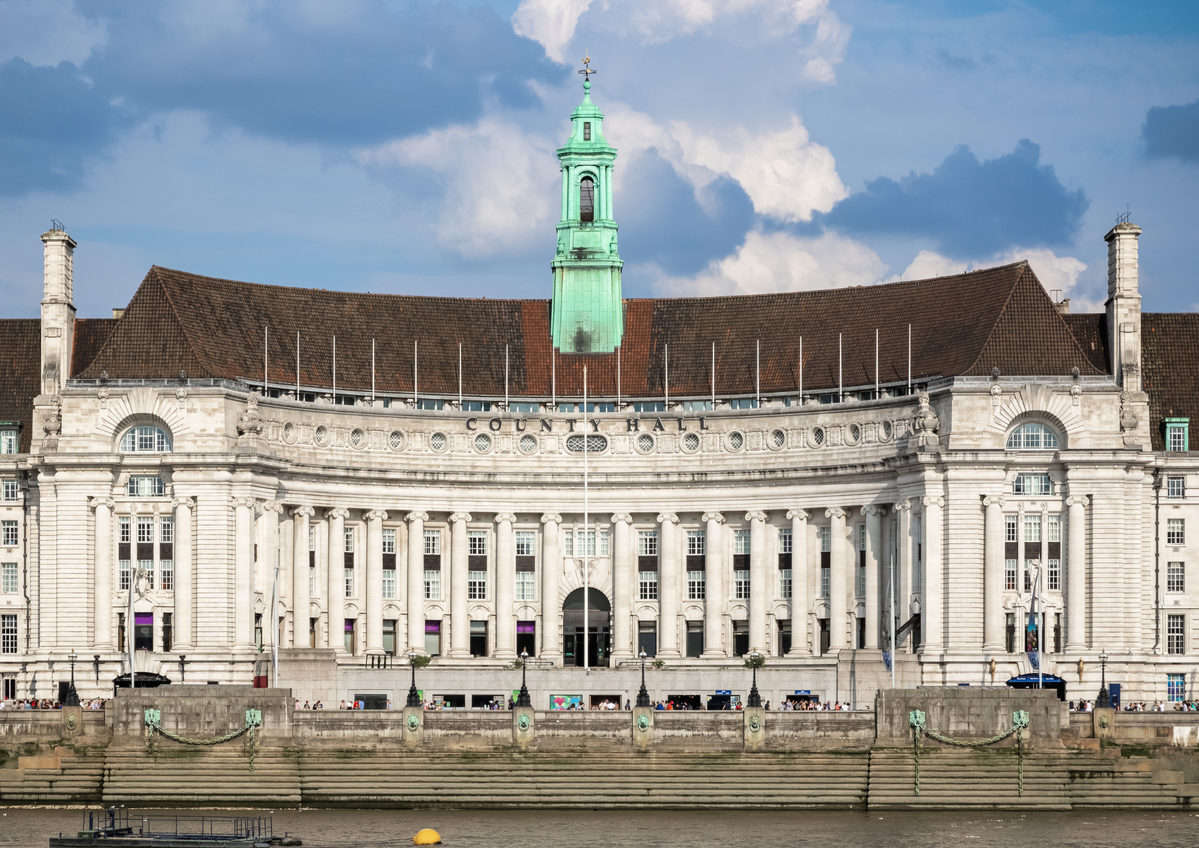
That brings the virtual day of SmartCitiesWorld’s Cities Climate Action Summit (#CCAS2025) to an end. We hope you’ve enjoyed it and have been inspired and informed by our global speakers. Tomorrow attention turns to London and the in-person event at the iconic County Hall building on the banks of the River Thames. We look forward to seeing those who are joining us in-person. Meanwhile, to watch all of today’s content on demand, register here.
17.50: Panel discussion: From the ground up – empowering local climate leadership
Moderator: Sandra Baer, USA Brand Ambassador, SmartCitiesWorld
Victoria Woodards, Mayor, City of Tacoma
Leirion Gaylor Baird, Mayor, City of Lincoln, NE
Steve Patterson, Mayor, City of Athens, OH
Jon Mitchell, Mayor, City of New Bedford
As the urgency of the climate crisis intensifies, local governments across the United States are stepping up to lead. This panel brings together city leaders and directors from across the country to explore how city governments are driving ambitious climate action from the ground up. With a focus on innovation, community resilience, and practical implementation, the discussion will highlight the strategies cities are using to advance sustainability, reduce emissions, and protect their populations – often in the absence of consistent national support. Talking points include:
- Filling the policy vacuum: how cities are creating their own climate frameworks, standards, and targets to maintain momentum, even during periods of national policy uncertainty or rollback.
- Financing local climate action: creative approaches to funding resilience and decarbonisation projects through public-private partnerships, local bonds, and climate funds – particularly when federal funding is limited or delayed.
- Building inter-city and regional coalitions: the power of city networks and regional alliances to drive shared goals, pool resources, and amplify climate leadership beyond city boundaries.
- Community-centric climate solutions: centring frontline communities in climate planning to ensure equity, boost local support, and build long-term social and environmental resilience.
17.00 Panel discussion: Scaling up climate finance for cities – what sub-national leaders need from Cop30
Luke Antoniou, Senior Editor, Smart Cities World
Jessie Press-Williams, Senior Analyst, Cities Climate Finance Leadership Alliance
Katie Walsh, Head of Climate Finance for Cities, States and Regions & North America Lead, CDP
Maya Almog, Associate, Operation Lead of the Green Cities Facility, European Bank for Reconstruction & Development
Rajeev Issar, Policy Specialist, Disaster and Climate Risk Governance, UNDP
With COP30 set to take place in Brazil, cities and sub-national governments are making their voices heard in the global climate finance debate. While national governments negotiate high-level commitments, local leaders are the ones implementing climate action on the ground – yet they often lack direct access to international climate funds. This panel will bring together city and regional leaders to discuss what they need from COP30 to accelerate urban climate action. How can global climate finance commitments be restructured to support cities more effectively? What mechanisms will ensure local governments receive the funding they need for adaptation, resilience, and decarbonisation?
- Direct access to climate finance: why cities need a larger share of global climate funds and how finance mechanisms can be restructured to bypass national bottlenecks
- Scaling climate adaptation and resilience investments: how sub-nationals can leverage COP30 to push for increased funding for urban resilience, extreme weather preparedness, and infrastructure protection
- Private sector engagement and blended finance: strategies for unlocking more private and institutional investment in city-led climate projects
- Evolving CHAMP to strengthen local climate action: the role of the Coalition of High Ambition Multilevel Partnerships for Climate Action (CHAMP) in ensuring cities and sub-national governments have a formal role in climate finance negotiations. How COP30 can enhance CHAMP’s impact by securing direct funding pathways, improving collaboration between levels of government, and integrating local finance needs into Nationally Determined Contributions (NDCs).
Want to watch again or find out more? Watch this panel in full on-demand by registering today at smartcitiesworld.rsvp.gther.com.
16.40: Fireside chat: Establishing, tracking and advancing Manchester’s ambitious climate strategy
Tom Garrood, UK Cities Manager, CDP
Samantha Nicholson, Director, Manchester Climate Change Agency
Dr Ruth Ande, Zero Carbon Project Manager, Manchester City Council
Discover how Manchester City Council, in combination with the Manchester Climate Change Agency, is working to decarbonise Manchester’s built environment. This session covers how the city’s climate strategy is evolving, the importance of tracking and benchmarking progress, and how using data enables cities to accelerate their plans.
Manchester has been on CDP’s A list for several years now and the A list is reserved for those cities who are really demonstrating leadership on climate action so Tom asks about Manchester’s approach.
Manchester’s Climate Change Partnership brings together over 120 organisations from the public, private and third sectors to develop Manchester’s climate change plan, to mobilise and convene action to support delivery of that plan and to track progress against the plan.
Samatha: It is a key part of Manchester’s DNA is that we do things in partnership, we do things together. And so it’s no surprise that we’ve taken the same approach of how we address climate change.
“It also means when we develop a plan underpinned by the need for a socially just transition, we’re confident that we’ve brought a lot of voices into the setting of that plan to raise awareness of the need for action and the urgency of action, but also to kind of gain that buy in to the plan as we develop it.”
The city also takes science based target approach to setting our goals.
The discussion also turns to buildings specifically. Dr Ande sits within the corporate estate and is responsible for buildings, including sports centres, libraries, resource centres and many other different buildings. “We started by saying which are our highest energy consuming buildings. We took our top 12 energy consuming buildings and did a huge retrofit project that was backed by the public sector decarbonisation scheme. Included in this was the National Cycling Centre in Manchester, the Manchester Aquatic Centre but also lots of other leisure centres with swimming pools.
The retrofit programme included improved insulation, double glazing where there wasn’t double glazing, replacing gas boilers with, in some instances, ground source heat pumps, in others maybe where there isn’t the same space, air source heat pumps and more. Solar and other renewable energy generation also featured.
“So we did that across those first 12 buildings and finished in 2023. I’ve now repeated that project for another six buildings again, changing out the boilers, putting in air source heat pumps, putting in insulation, adding solar wherever we can and just making sure that those buildings are headed towards net zero.”
Manchester is also a carbon literate organisation through the Carbon Literacy Trust. “We have signed up to that being compulsory training for every member of staff across Manchester City Council. “We recently were awarded gold standard on that, which means that we have passed 50 per cent of our organisation.”
Manchester also has climate action plan for every ward and a carbon footprint for every ward.
“There is a really great bottom up movement of change as well in the city and I think that extends to the organisations and businesses in the city. We’ve got some anchor institutions, large corporations as part of the partnership, but we’ve also got small organisations and charitable sectors as well.”
“And it’s really important that we bring all of our communities with us as well.”
Find out more about Manchester’s journey by watching this fireside chat in full on-demand by registering today at smartcitiesworld.rsvp.gther.com.
15.55: Panel discussion: Advancing building energy efficiency for a low-carbon, resilient future
James Nowlan, Executive Director, Environment, Climate and Forestry,City of Toronto
Hannah Audino, Buildings Decarbonisation Lead, Energy Transitions Commission
Sarah Merricks, Chief Strategy Officer, Global Network for Zero
Luke Antoniou, Senior Editor, Smart Cities World
As cities push toward net-zero targets, improving building energy efficiency is one of the most cost-effective and impactful ways to reduce emissions and enhance urban resilience. Retrofitting existing buildings, integrating nature-based solutions, and ensuring equitable implementation remain key challenges, but also present significant opportunities for cities and developers.
The panel is bringing together policymakers, industry leaders, and sustainability experts to explore the latest innovations, policy levers, and financing strategies that can accelerate energy efficiency improvements in buildings while aligning with broader climate and resilience goals, including:
Scaling up retrofitting: how cities are implementing deep retrofit programmes to improve insulation, optimise HVAC systems, and upgrade lighting and appliances to reduce energy consumption
- Nature-based solutions for efficiency and resilience: the role of green roofs, living walls, and urban tree canopies in reducing cooling demand, improving air quality, and enhancing building resilience to extreme heat and storms
- Offsetting and carbon neutrality in the built environment: how cities and developers are leveraging renewable energy, local carbon offset projects, and embodied carbon reduction strategies to meet net-zero commitments
- Resilience in building design: integrating passive cooling techniques, flood-resistant structures, and smart energy management systems to ensure buildings remain functional during climate-induced disruptions.
James Nowlan: 56 per cent of emissions come from Toronto’s buildings and it has an overall net zero target of 2040. When it comes to non city-owned buildings, there is a need to create awareness about what can be done and how owners can get positive ROI. It’s also around getting people to understand how they perform against others as well as where they could be saving money by some interventions. Then it also comes down to some of the policy levers and being able to set standards or outline when things need to happen.
Hannah Audino: Very complex to decarbonise buildings. We have to influence millions of home- and building-owners and there is no one-size solution. Defining the direction of travel is difficult but essential. Advocates a street-by-street approach by councils with locally led projects and building the supply chain and skills around them.
Sarah Merricks: Market needs good ROI data for decarbonising buildings. Our goal is to help people get started and take a data-driven approach. We conduct a Scope 1, 2, 3 audit so they can see how they would reach their goals and help identify the issues. Could apply to a city by helping them get baseline data. Green buildings can become a competitive differentiator for cities but they need to be shown in an incremental way, for example using roadmaps, how they can achieve them.
To watch this panel in full on-demand, register today at smartcitiesworld.rsvp.gther.com.
15.20: Fireside chat: Understanding the urban climate impacts of new technologies
Lorena Jaume-Palasi, Founder & Executive Director, Ethical Tech Society
Luke Antoniou, Senior Editor, Smart Cities World
Emerging technologies are having a dramatic impact on how we live in cities, changing service delivery and operations to make urban life simpler. The question must be asked, however – at what cost?
In the AI era, cities can make efficiency gains and cost-savings, but must also take into consideration the environmental and often unseen impacts these new technologies are having. In this session, we will address:
- What are the potential environmental risks or unintended consequences of large-scale AI deployment, and how can they be mitigated?
- How can we improve transparency around the environmental impact of AI systems, particularly in industries with high resource demands?
- What strategies can organisations adopt to reduce the energy consumption and carbon footprint associated with training and operating AI models?
- Are there examples where the pursuit of AI-driven efficiency has conflicted with environmental or social sustainability goals, and what lessons can we learn from them?
Lorena provides a fascinating insight into how data centres have changed over the past 30 years and the implications of this and of AI?
She points to studies that find the size of data centres means they are creating far more intensive emissions and cannot rely solely on renewable energy.
They are creating a conflict with local communities being located in already water-stressed areas.
Is AI creating more problems and demands than it is solving and is there a solution? Among the answers could be making better use of the technologies we have.
For more insight into the ethical and environmental considerations and concerns of using big tech, watch this fireside chat on-demand at smartcitiesworld.rsvp.gther.com.
15.00: Fireside chat: City of Taurage – small, but big enough to make a difference
Dovydas Kaminskas, Mayor, City of Tauragė
Luke Antoniou, Senior Editor, Smart Cities World
This Lithuanian city is proving that size is no barrier to climate leadership. The speech explores Taurage’s ambitious sustainability agenda – from its transition to renewable energy and investments in green mobility, to its citizen-led climate initiatives and commitment to becoming climate neutral. It’s a story of how local action can have a global impact, and how smaller cities can lead by example on the path to a greener future.
Mayor Kaminskas says the city lives by the philosophy “that maybe we are too small to change the world, but we are big enough to show example”.
“And every day in our work when we meet some issues or we have exceptional opportunities, we always to stand by this philosophy.”
Taurage has a population of around 25,000 people and aims to be a sandbox for solutions across a range of areas, including sustainability.
“And when we are speaking about green solutions, when we are speaking about the renewable energy, energy efficiency, circular economy, education – we always say, yes, and have courage to make mistakes and learn.”
Find out how this small city thinks and acts much bigger by watching in full on-demand at smartcitiesworld.rsvp.gther.com
14.10: Panel discussion: Building resilient cities to withstand extreme weather
Moderator: Emily Ferris, Director, Bloomberg Philanthropies What Works Cities, Results for America
Eleni Myrivili, Global Chief Heat Officer, UN-Habitat
Beam Furr, Mayor, Broward County
Julie Dick, Deputy Chief Resilience Officer, Miami-Dade County
Koki Mashita, Co-Founder & CEO, Aeolus Labs
Corinne LeTourneau, Founding Principal, Resilient Cities Catalyst
Extreme weather events – rising sea levels, intense storms, prolonged droughts, and record-breaking heatwaves – are placing unprecedented stress on urban ecosystems. Cities must adapt rapidly to safeguard their infrastructure, protect residents, and maintain essential services. This panel brings together urban resilience experts, policymakers, and practitioners to explore how cities can build resilience across their ecosystems, integrating nature-based solutions, data-driven strategies, and forward-thinking design. The session will focus on cross-sector approaches that enhance the ability of cities to not only endure extreme weather events but thrive in a changing climate.
Talking points include:
- Resilient infrastructure design: future-proofing critical infrastructure, including transport systems, energy grids, and housing, to endure floods, heatwaves, and storms
- Nature-based and community-centred solutions: the role of green spaces, urban forests, and coastal defences in absorbing shocks while improving urban liveability.
- Leveraging technology and data: using digital twins, IoT sensors, and AI to predict risks, optimise resource allocation, and enable rapid responses to climate emergencies
- Integrated urban planning: embedding climate resilience into land use policies, zoning regulations, and infrastructure investment decisions
- Emergency preparedness and recovery: developing systems and strategies for disaster response, ensuring continuity of essential services, and empowering communities to rebuild quickly and equitably after events.
Eleni Myrivili: Trees are the most important tool we have to address extreme heat but they also address the challenges of other things like flash flooding, pollution, noise pollution and health/mental health of the people. To deal with extreme heat we have to increase our urban canopies and this also means making our cities prettier. Increasing tree canopy cover to 30 per cent in urban areas can potentially prevent one-third of deaths caused by extreme heat.
Beam Furr: With sea level rising, Broward County has to adapt its resilience plan and expand capacity and “the price tag is huge,” – around $29bn (19bn in private and 10bn in public). Now when we look at public safety we have to look at people’s properties in terms of the weather. It changes the perspective of everything in terms of budgets.
Julie Dick: Miami-Dade is the only county with two national parks. All policies and capital projects have to factor in projections for the rise in sea level and flood risk now and in the future. Works on projections with neighbouring counties, including Broward. Highlights while they can predict flood risk and sea-level rise, it’s harder to predict the impact of rain bombs.
Corinne LeTourneau, Founding Principal, Resilient Cities Catalyst: Cities are set up for 20th Century problems so they need to think creatively about forging collaborative models and breaking down traditional silos. Provides the example of working with City of Austin to achieve this new model.
To follow this insightful discussion in full, watch the panellists on-demand by registering here today smartcitiesworld.rsvp.gther.com.
13.50 Keynote: Innovation, circularity and the route to sustainable cities
Margot Roose, Deputy Mayor, City of Tallinn
Margot Roose begins by saying it is a great pleasure to speak with us today on behalf of the city of Tallinn, “the place where the European Green Capital Award was born in 2006”. The city won the award in 2023. The year wasn’t just about winning an award but about “real and hands on change”.
Margot also begins by saying that the geopolitical situation means its priorities have had to changed but points out that its focus on climate action continues.
“We considered that if we didn’t delay, we’ll be in a much better place in the future”.
She talks about a number of Tallinn’s green initiatives, which include its flagship Pollinator Highway project, a 13km linear park that connects neighbourhoods and is full of biodiversity, cycling routes and different plants.
“And it’s a real joy for the people of Thailand. But it’s also a food table for our tiny friends, our insects and pollinators. It’s a great way to create a park and at the same time biodiversity and pollinator food table.”
She also highlights its transportation (free public transport) and circular economy initiatives. It is also making waste into a biogas to fuel city buses. Margot also highlights legacy projects and their importance going forward, in particular its established Test in Tallinn programme.
She goes on to talk about its year European Green Capital and says: “Every success comes with its challenges and our Green Capital Year was no exception,” highlighting the challenge of coordinating across city departments, integrating efforts with stakeholders externally.
“Climate action can’t be achieved in silos. It requires cooperation between environmental planners, mobility experts, social services, cultural institutions, pretty much everyone. And how do you engage almost half a million people, residents, companies, multiple community sectors?”
The city took a systematic and inclusive approach that included the launch of the Green Ambassadors programme where environmental activists, influencers, designers and entrepreneurs, through their action and knowledge, inspired others and contributed to the implementation of the more environmentally sustainable lifestyle and principles.
The award was “a turning point” she says, as it helped transform ambition into system, projects into practises, citizens to partners. “Our message to other cities is this you don’t need a title to lead. What you need is a clarity of vision, courage to act and openness to share.
“Climate action is not a competition, it’s a collective journey.
Want to hear more or watch again? Watch the keynote on-demand by registering here today smartcitiesworld.rsvp.gther.com.
12.40: Fireside chat: Kyiv – sustainability at the core of city redevelopment
Victoria Itskovych
CIO
Kyiv City Council
Luke Antoniou
Senior Editor
Smart Cities World
How leveraging cutting-edge technologies, innovative planning, and sustainable building practices, cities can rethink traditional urban development to prioritise resilience, efficiency, and liveability. This session will shine a light specifically on the city of Kyiv and how it plans to use a mix of technologies, from digital twins to community engagement tools, to build back better post-conflict.
Victoria begins with the slide ’City in a Pocket’, how digital platforms change life, a new project for the city.
She explains the digital ecosystem designed for both wartime and civilian life and talks about the importance of the Kyiv digital app. It was launched for transport but broadened out during the conflict to offer a range of citizen services. Victoria moves on to talk about the CityServices Platform, part of its drive to build sustainability at the core of city redevelopment.
So far 50 services are available on the platform but the plan is to offer more than 100. Victoria showcases a service for small and medium-sized businesses, including farmers, to help them participate in the city fair. It will enable them to sell their produce at the fair. Another programme focuses on improving energy efficiency and resilience.
Victoria urges all cities, whatever their circumstances, to examine their own resilience.
To see this fireside chat in full, watch on-demand by registering here today smartcitiesworld.rsvp.gther.com.
12.20: Fireside chat: MAINCODE – Mainstreaming nature for co-design urban climate shelters in schoolyards
Nicola Tollin, Chairholder & coordinator, UNESCO Chair on Urban Resilience, University of Southern Denmark
Luke Antoniou, Senior Editor, Smart Cities World
A look at how urban spaces can become mixed purpose when required during climate events, led by the UNESCO Chair on Urban Resilience at University of Southern Denmark.
This specific project, financed by EU Driving Urban Transition, is coordinated by the Polytechnico Torino and with the partnership of UNESCO Chairman of Resilience of University of Denmark Torino Lab and Commerce Space and the City of Torino and City of Atlanta.
The aim of MAINCODE is to transform critical public spaces – in this case schoolyards – into climate refuges using nature-based solutions. Schoolyards in Turin and Halandri have been chosen for the pilot to foster pathways to heat resilience and healthy cities.
Nicola highlights the growing threat of urban heat and rising temperatures in cities and explains the project has three pillars:
1. Turning schoolyards into urban climate shelters as cooling projects for climate mitigation and adaptation.
2. Incorporating nature and an ecosystem approach to transform schoolyards towards regenerative urbanism.
3. Using co-design to transform schoolyards, engaging children, local communities, policymakers and practitioners in creating a concrete utopia.
“In order to transform the schoolyard, we do need to engage children, local communities, policymakers and practitioners in order to make this project possible,” says Nicola.
“An important feature of the schooling projects and this pilot in the schools is that we will specifically look at the possibility of working with the communities to open up the schools to a wider community, particularly to the most vulnerable part of the population.”
For the selection of schoolyards, the project team has been looking initially at primary schools with younger children that are most vulnerable to heat waves.
The project can also potentially be replicated in other public and private buildings in order to create a network of climate shelters and green spaces across the city in order to propose, ultimately, a regenerative approach to urban planning.
To watch this presentation in full, watch on-demand by registering here today smartcitiesworld.rsvp.gther.com.
Panel discussion: Expanding 15-minute cities and shared transport networks – urban mobility for a sustainable future
Moderator: Carol Schweiger, President, Schweiger Consulting
Gintarė Janušaitienė, Senior Advisor of Future Mobility Policy Group, Ministry of Transport and Communications, Republic of Lithuania
Jaromir Beranek, Deputy of the Prague City Assembly, City of Prague
Misha Mittal, Senior Manager, City Advisory, Expo City Dubai
Tamara Djukic, Head of Green & Urban Mobility, ERTICO
As cities strive to reduce emissions, enhance liveability, and improve accessibility, the concept of the 15-minute city – where residents can access work, education, healthcare, and essential services within a short walk or cycle – has become a guiding vision for urban transformation. At the same time, shared and active transport networks are expanding, with dedicated cycling infrastructure, pedestrian-friendly streets, and car-free zones becoming central to urban mobility strategies. However, scaling these initiatives requires a delicate balance of urban planning, policy reform, public buy-in, and infrastructure investment.
This panel will bring together city leaders, transport planners, and mobility experts to discuss the challenges and opportunities in accelerating the adoption of 15-minute cities and active transport networks. Panellists will explore successful case studies, policy enablers, and the role of digital tools, behavioural incentives, and private sector collaboration in reshaping urban mobility.
- Designing for accessibility and equity: how can cities ensure that 15-minute city planning is inclusive, providing access to services for all communities, including lower-income and marginalised populations?
- Investing in active transport infrastructure: what are the most effective strategies for expanding cycling lanes, pedestrian zones, and mixed-use developments while balancing the needs of different transport users?
- Behavioural and policy levers for adoption: what incentives, regulatory frameworks, and urban design principles can encourage greater uptake of walking, cycling, and micro-mobility solutions?
- Integrating technology and data: how can digital twins and real-time mobility data help cities optimise transport networks, measure impact, and refine urban planning strategies?
Moderator Carol Schweiger kicks off by highlighting the key themes of equity, behaviour and how we integrate technology into 15-minute cities.
Gintarė Janušaitienė: Lithuania has been described as a network of 15-minute cities. Believes cycling is key to lowering car dependency and talks abut the national cycling strategy. But the vision only works if all municipalities work together.
Jaromir Beranek: Stresses the need to come up with solutions that work but are also acceptable. He highlights some of the transport issues Prague is dealing with on a daily basis. These include a now outmoded advantageous parking system for EVs (because of the growth in EV use) and problems with e-scooter parking. On the positive side, the city has achieved a high-level of ridership on public transport and has successful cycling initiatives in place.
Misha Mittal: What enabled a modal shift in Dubai was a collaboration between different stakeholders – ensuring different modes of transport were available, especially at transport hubs like metro stations. They have tried to create a model of sustainability. Misha also highlights the importance of tracking behaviour and mobility patterns. But behaviour change is a process, she says.
Tamara Djukic: Highlights the importance of focusing on macro- (government/policy) and micro-level. At the microscopic level, this means making individuals really think about their journey and which mode of transport to use. She stresses that this will be based on their beliefs about the transport options and maybe cities need to find out how they can challenge these beliefs if they aren’t aware of all options.
To follow this fascinating discussion in full, watch the panellists on-demand by registering here today smartcitiesworld.rsvp.gther.com.
Virtual SessionFireside chat: Decentralising energy for resilience and sustainability
10.40: Fireside chat: Decentralising energy for resilience and sustainability
Luke Antoniou, Senior Editor, Smart Cities World
Min Guan, Head of Systems Insight, Energy Transitions Commission
Distributed energy networks are revolutionising how cities generate, store, and distribute power, offering a more resilient and sustainable alternative to centralised grids. This session will dive into the technological, policy, and financial enablers that make these projects successful, as well as the lessons learned in scaling them.
Discussion points include:
- Integrating solar, wind, and other renewables into microgrids to reduce emissions and enhance reliability
- The role of battery storage and demand-side management in optimising distributed energy systems
- Policy and funding strategies that enable cities to deploy and scale distributed energy networks, with a focus on equitable access for underserved communities.
Min Guan says as the energy transition progresses we are seeing a more complex, distributed energy system; added to this we’ll see far higher demand for electricity. Distributed energy networks support grid resilience by decentralising energy production and reducing dependency on centralised systems. A local energy network or microgrid also helps alleviate congestion across traditional networks. She also talks about how microgrids can help in a major outage as we witnessed in Spain earlier this year - but, that said, there were homes with solar panels connected to the main grid which still suffered an outage.
She stresses the importance of new buildings being geared up for the new energy future which eliminates the need for costly retrofitting afterwards and highlights some case studies in the UK.
Want to see and hear more? You can watch this Fireside Chat in full once it becomes available on-demand by registering here today smartcitiesworld.rsvp.gther.com.
We now have our first panel discussion of the day.
9.50-10.40: Panel discussion: From commitment to action – closing the gaps in city-level climate governance
Anna Lisa Boni, Deputy Mayor, Municipality of Bologna
Annie Pickering, Operations Director, Climate Emergency UK
Tom Garrood, UK Cities Manager, CDP
This session will tackle the challenges of implementing climate commitments at the city level, exploring how local governments can bridge the gap between bold targets and on-the-ground realities. Senior city practitioners will discuss strategies to align policy frameworks with global ambitions, build accountability mechanisms, and foster cross-sector collaborations that deliver tangible outcomes. Talking points include:
- Developing practical roadmaps: how cities are translating national and global net-zero pledges into actionable local policies, with insights into key milestones, timelines, and stakeholder engagement approaches
- Multi-level governance: how sub-national governments can work more effectively with national agencies, private organisations, and NGOs to align climate priorities and secure resources
- Transparency and accountability: discover innovative tools and frameworks for monitoring, reporting, and verifying progress, ensuring trust and legitimacy in climate action efforts.
Anna Lisa Boni talks about how the City has made the most of the EU Missions programme. The idea of tackling one challenge collectively has been really valuable. And adopting something that has the word ‘contract’ in it has also helped alongside having very concrete commitments. “This way of feeling responsible towards one goal is really helping us”.
Annie Pickering: Explains how UK councils were ahead of national government in declaring climate agencies. The non-profit also welcomes the collective approach, saying there is a lot of wealth and knowledge in local areas such as universities that councils can tap into. The latest Council Climate Action Scorecards, published by Climate Emergency UK, reveal that average scores have risen by just six percentage points since 2023, to an average of 38 per cent.
Tom Garrood: Expects to see collaboration across multiple levels of government and CDP tries to ensure those cities that are leading in its A-List have a high-level of ambition and are often aiming above national government targets.
Want to see and hear more? You can watch this panel in full once it becomes available on-demand by registering here today smartcitiesworld.rsvp.gther.com.
9.30: SmartCitiesWorld senior editor Luke Antoniou introduces our first keynote, Mayor Ricardo Rio, Braga City Council
Mayor Rio welcomes the global audience and stresses the importance of engaging all stakeholders and sharing experiences and best practices in the quest for a sustainable environment, a better quality of life as well as safeguarding the interests of the planet.
“When we are talking about action towards climate we are not talking about an abstract. We are not talking about global objectives that don’t have any kind of implication in terms of our citizens or our territories. We are talking about providing quality of life to our citizens, to our communities.
“And that is also why most of the work that we have to do can’t just be done by the government, the European Union, institutions, national governments or the local or regional authorities.
“We have to create an action that mobilises all the stakeholders, that creates awareness on the results we want to achieve.”
- The City of Braga in Portugal is a fast-growing city with a population nearly 200,000 inhabitants.
- Since the beginning of his term in 2013, Mayor Rio has always allocated a lot of attention to the Sustainable Development Goals. He says Braga is a city that has a unique mix of resources, being surrounded by hills with a river capital and beaches.
- In 2014, the City created an action plan for sustainable energy and in 2016 developed a strategy for the adaptation and mitigation of climate change – one of the first developed in Portugal at a local level. It was focused on adaptation and later the City encompassed mitigation.
- In 2024, the plan was adapted to climate law/frameworks at the European level.
- The city wants to be completely carbon neutral until 2050 and to reach an 80 per cent level of reduction of the emissions until 2040.
- A number of mobility initiatives have been put in place: the launch of the Metro bus and expansion of its green electric bus fleet (around 60 per cent of the fleet); enlarged the pedestrian zones and also the bike lanes.
- It has also been investing in the energy sector and public buildings so it can create sustainable and green sources of energy like solar. It is currently engaged in a battery technology project and have also created a plan to fight energy poverty in local households for people with low income.
Mayor Rio re-emphasises the importance of collaboration: “We have created a local council for environment and climate action in which we have representatives from several organisations and individuals as well, so that we can create this impact in the population directly.”
You can see Mayor Ricardo Rio’s full keynote speech on-demand by registering here today smartcitiesworld.rsvp.gther.com
9.25: Welcome to the cities climate Action 2025 (#CCAS25) live blog
If you’d like to register for today’s online event and watch on-demand as content becomes available, register here today at smartcitiesworld.rsvp.gther.com. Once registered, you should receive two emails from the Cities Climate Action Summit with the email address summit@smartcitiesworld.net. The first is your registration confirmation, while the second contains joining links for the live stream/networking platform. If you cannot access the live streaming/networking platform, please email us summit@smartcitiesworld.net.
Welcome: Chris Cooke, founder and CEO of SmartCitiesWorld welcomes attendees from around the world to the third SmartCitiesWorld Cities Climate Action Summit.
He says over the past year, the political momentum behind climate action has more has become more fragmented and the consensus we saw building globally in the years following Cop26 now feels more uncertain.
“This is not the moment to retreat into our own echo chamber though. The transition is not a burden but a generational opportunity to create good jobs and drive economic growth, to spur innovation in technology, infrastructure and planning, and to build healthier, more resilient, more inclusive places to live.”
- New partnership announced between Smart Cities World and London Climate Action Week as part of the global platform’s ongoing Cities Climate Action campaign. It sees the launch of a global initiative to encourage cities and towns across the world to create and host their own Climate Action Weeks.
- For the smallest cities and towns, the two sides will provide resources, case studies and information to help them get started.
- For larger cities, London Climate Action Week will provide direct advisory support, as they’ve already done in cities like Rio, Bangkok, Baku, Sydney, Dublin and Prague.
- Together, this global network of local action weeks will perform a powerful movement grounded in place and driven by community and united by urgency.
“While the climate emergency is real and the window for meaningful action is narrowing, so is the distance between us.
“Today is all about, building connections, inspiring action, and surfacing solutions.
“Throughout the day and across the virtual platform, you’ll hear from city leaders, policymakers, finances, technologists, and frontline change makers, all working to turn ambition into action.
“I’d like to thank you, our speakers, sponsors, partners, and of course, the amazing team at Smart Cities World who’ve made this event possible.
“But above all, I want to thank you, the people doing the work every day to make cities more sustainable, more resilient, and more just.”
Why not try these links to see what our SmartCitiesWorld AI can tell you.
(Please note this is an experimental service)
How can cities create effective local climate finance mechanisms without national support?What strategies enable successful retrofitting of public buildings for net-zero goals?How do urban nature-based solutions improve resilience against extreme heat events?What policy levers best support scaling 15-minute city mobility networks equitably?How can distributed energy networks enhance grid resilience and sustainability locally?climate actionClimate change/ResilienceConnectivity & DataEnergy & EnvironmentGovernance and Citizenmobilityresilienceurban space
Latest City Profile
Latest Urban Exchange Podcast
SmartCitiesWorld Newsletters (Daily/Weekly)
You may also like these related articles...
BECOME A MEMBER
© 2026 SmartCitiesWorld
Smart Cities World Ltd, 37 Lombard Street, London, EC3V 9BQ