









 22-26 June 2026: Find out more





BUILD YOUR OWN
RESOURCE LIBRARY



Podcasts
Cities Thriving on Lighting, Episode 2 – Simplicity by design in smart lightingSponsored by Paradox Engineering
Cities Thriving on Lighting, Episode 1 – Lighting as the backbone of the smart citySponsored by Paradox Engineering
Digital visualisation tool aims to build greater public trust
New flagship community consultation tool Engage3D uses game-engine technology to provide visualisation and total transparency in infrastructure planning.


 At a glance
Who: Luc; Trydan Gwyrdd Cymru.
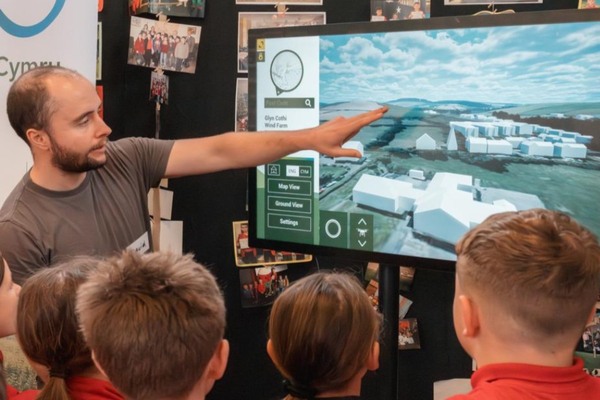
What: Environmental consultancy Luc has introduced an immersive visualisation tool, Engage3D, that produces interactive 3D models of proposed developments in real world landscapes on a touchscreen TV.
Why: To build greater public trust and engagement during the consultation process.
Where: Publicly owned renewable energy developer Trydan Gwyrdd Cymru is one of the first adopters of Engaged3D, using the technology to consult with communities on a series of new wind farms across Wales.
Environmental consultancy Luc has introduced an immersive visualisation designed to build greater public trust and engagement during the consultation process.
Built on advanced game-engine technology, Engage3D produces interactive 3D models of proposed developments in real world landscapes on a touchscreen TV.
Virtual drone view
According to Luc, stakeholders at consultation events can move freely through the site at eye level, switch to a virtual drone view, and compare alternative layouts and scenarios.
The tool is fully customisable, with users able to explore landmarks or custom viewpoints, toggle seasons, weather, visibility, turbine speeds and more, and access integrated supporting media and annotations. Each model combines multiple datasets – including lidar terrain models, aerial imagery, the National Tree Map, and photography – to reflect real-world conditions.
“The 3D digital model is an excellent tool for visualising what a project can look like in the local landscape from close up, or from kilometres away”
“At Luc, we believe that the best projects start with listening. Effective consultation builds understanding, strengthens trust, and helps communities feel part of shaping their future,” said Rob Booth, chief executive at Luc.
“This is why we developed Engaged3D – an integrated service backed by 60 years of environmental consultancy expertise and robust GIS data. It’s a tool that will facilitate meaningful conversations about development proposals and place communities into the heart of decision-making.”
Read More
Welsh, publicly owned renewable energy developer, Trydan Gwyrdd Cymru, is one of the first adopters of Engaged3D, leveraging the technology to consult with communities on a series of new wind farms across the country. The tool enables residents to explore landscapes within an average 10-kilometre radius of each site.
Trydan Gwyrdd Cymru commissioned Luc to apply the Engaged3D technology to help communities better understand the visual change that could occur if proposed sustainability infrastructure in their area proceeds to construction and operation.
“It’s a tool that will facilitate meaningful conversations about development proposals and place communities into the heart of decision making”
“The 3D digital model is an excellent tool for visualising what a project can look like in the local landscape from close up, or from kilometres away,” said Dr Catrin Ellis-Jones, head of public involvement, Trydan Gwyrdd Cymru.
“It helps provide context and illustrates how some features, such as trees and buildings, or topographic effects, mean the turbines are less apparent when observed from certain locations, and more obvious from other viewpoints.”
Ellis-Jones added: “It was appreciated by local people and stakeholders who participated in our early-stage project-introduction events, and the 3D model will be updated through the iterative and consultative planning process, so people can also ‘see’ our designs evolve.”
Why not try these links to see what our SmartCitiesWorld AI can tell you.
(Please note this is an experimental service)
How does Engage3D integrate lidar, aerial imagery, and National Tree Map data?How can interactive 3D models improve community trust in planning?How does virtual drone view assist stakeholders' visual assessment of turbines?How can toggling seasons, weather, and visibility enhance consultation clarity?How will iterative model updates reflect evolving design during planning?citizen engagementConnectivity & DataDatadigital twinsGovernance and CitizeninclusivityPlanningSensorsurban space
Latest City Profile
Latest Urban Exchange Podcast
SmartCitiesWorld Newsletters (Daily/Weekly)
You may also like these related articles...
BECOME A MEMBER
© 2026 SmartCitiesWorld
Smart Cities World Ltd, 37 Lombard Street, London, EC3V 9BQ