










 22 - 26 June 2026: Find out more

BUILD YOUR OWN
RESOURCE LIBRARY



Podcasts

Cities Thriving on Lighting, Episode 2 – Simplicity by design in smart lightingSponsored by Paradox Engineering
Cities Thriving on Lighting, Episode 1 – Lighting as the backbone of the smart citySponsored by Paradox Engineering
Opinions

Transforming indoor public safety with smart sensor networksSponsored by Motorola Solutions
Can low traffic neighbourhoods reduce overall car use?
Study finds they have a positive impact for the residents living on the streets but more needs to be done to drive down traffic and create healthier cities.


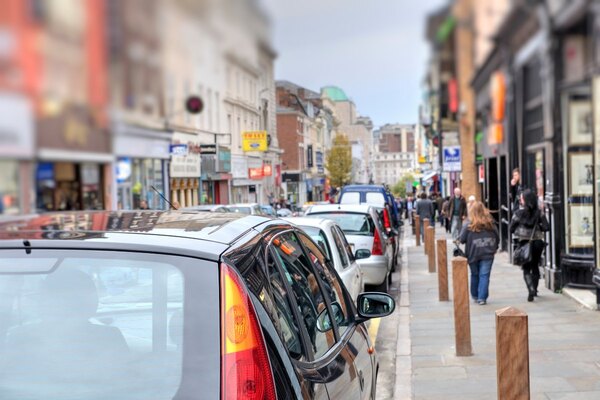
A study of low traffic neighbourhoods (LTN) across London has shown that streets within them experience substantial, overall falls in traffic, implying significant changes in street use.
Campaigners are calling on local authorities to use the report’s findings to introduce more LTNs and take further measures to address traffic on boundary roads.
Reducing traffic
The study was carried out by climate charity Possible and the University of Westminster’s Active Travel Academy. It reveals that the mean average decrease in motor traffic on roads within LTNs (a reduction of 815 motor vehicles) was shown to be almost 10 times higher than average increases in motor traffic on boundary roads (an increase of 82 motor vehicles), suggesting that LTNs are creating a substantial overall reduction in traffic.
Across London, the mean percentage reduction of traffic on streets within LTNs was 46.9 per cent. This has resulted in many more streets experiencing under 1,000 motor vehicles passing through them a day, implying that there may be a qualitative change in the local environment that has meant an increase in walking and cycling.
“What we need now is action to drive down traffic, make our cities happier and healthier, and directly address the climate crisis”
“This report shows that low traffic neighbourhoods are having a verifiable, positive impact for the people living on these streets,” said Hirra Khan Adeogun, head of Car Free Cities at climate charity Possible. “But, importantly, it shows that they have no consistent impact on boundary roads. In a climate crisis, we need our policymakers to make bold, data-led decisions; this report gives them that information. What we need now is action to drive down traffic, make our cities happier and healthier, and directly address the climate crisis.”
The study also analysed the impact on boundary roads surrounding LTNs. Overall, 47 per cent of boundary roads surrounding LTNs saw a decrease in traffic and 53 per cent saw an increase. Average motor traffic counts showed that on boundary roads, traffic changed relatively little – with a mean average increase of just 82 motor vehicles per day; a less than one per cent increase on the mean average of 11,000 vehicles that pass through boundary roads on a typical day.
Read More
Acknowledging this small increase, the report goes on to note the importance of the substantial variations, in regard to both increases and decreases in traffic on boundary roads, between individual LTN schemes. These variations, the report points out, are not likely to be primarily caused by LTNs but could, instead, be caused by other contextual factors such as major local works or wider background trends.
For example, the report notes that in Newham increases in motor traffic may well be due to Olympic legacy-related development, particularly increasing motor traffic on boundary roads. This leads the report to conclude that with the installation of an LTN, there should be no expectation of an increase or decrease in motor traffic on boundary roads.
Low emission zones
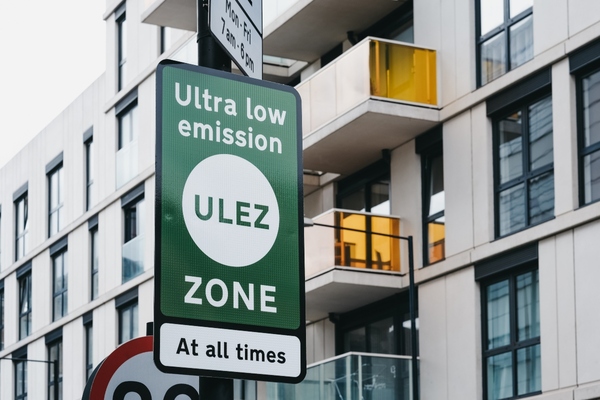
The report emphasises the need to consider that boundary roads are still highly likely to still be polluted, unsafe, or difficult to cross or cycle on. Removing LTNs is unlikely to alleviate these issues so it is vital for local authorities to consider other measures that could. For instance, expanding low emission zones, road user charging, increasing the number of bus lanes and public transport provision, urban greenery, widening pavements, and protected cycle lanes could all make a contribution.
Possible is calling on local authorities to use the report’s findings to introduce more LTNs and to challenge misinformation about the direct impacts on boundary roads. They are also calling for further measures to address traffic on these boundary roads.
“This suggests that not only do LTNs have substantial benefits inside their boundaries, but they can also contribute to wider traffic reduction goals”
“This study finds that most streets within LTNs see reductions in most traffic, improving the experience of walking and cycling,” said Asa Thomas, PhD researcher at the Active Travel Academy, University of Westminster and lead author of the study. “Two-thirds of these now have vehicle flows below 1,000 vehicles a day, a rough threshold for a quiet pedestrian friendly street, compared to only two-fifths before. What’s more, there is little indication of systematic displacement of this traffic to boundary roads."
Professor Rachel Aldred, director of the Active Travel Academy at the University of Westminster and co-author of the study, added: “The research indicates there has been overall ‘traffic evaporation’ as a result of these schemes, as the mean average reduction in motor traffic on internal roads is around 10 times higher than the mean average increase on boundary roads, adjusting for background trends.
“This suggests that not only do LTNs have substantial benefits inside their boundaries, but they can also contribute to wider traffic reduction goals.”
Possible is a UK-based charity that brings people together to take positive, practical action on climate change. The Active Travel Academy is a research centre based within Westminster University’s School of Architecture and Cities.
Why not try these links to see what our SmartCitiesWorld AI can tell you.
(Please note this is an experimental service)
How do low traffic neighbourhoods impact overall motor traffic within their boundaries?What effects do LTNs have on traffic levels on surrounding boundary roads?Which additional measures complement LTNs to reduce traffic and pollution effectively?How does traffic reduction in LTNs influence walking and cycling rates locally?What factors contribute to traffic changes on boundary roads beyond LTNs?
Latest City Profile
Latest Urban Exchange Podcast
Latest Special Report
SmartCitiesWorld Newsletters (Daily/Weekly)
You may also like these related articles...
BECOME A MEMBER
© 2026 SmartCitiesWorld
Smart Cities World Ltd, 37 Lombard Street, London, EC3V 9BQ