









 22 - 26 June 2026: Find out more



BUILD YOUR OWN
RESOURCE LIBRARY



Podcasts
Cities Thriving on Lighting, Episode 2 – Simplicity by design in smart lightingSponsored by Paradox Engineering
Cities Thriving on Lighting, Episode 1 – Lighting as the backbone of the smart citySponsored by Paradox Engineering
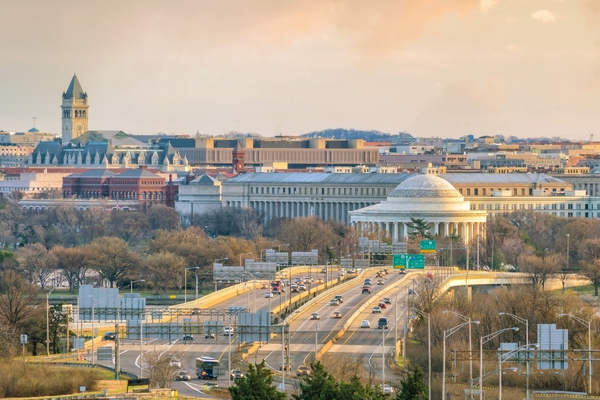
Washington DC seeks tech entrepreneurs for AV challenge
The initiative will help equip DDoT with tools and data insights to better understand how AVs interact within a bustling multimodal transportation environment.


 At a glance
Who: Washington DC’s District Department of Transportation (DDoT); Southwest Business Improvement District (SWBid); George Washington University; University of Washington.
What: DDoT and SWBid have announced plans to launch an Autonomous Vehicle Observation (Avo) Zone Challenge.
Why: To identify and pilot innovative solutions that enable DDoT to detect, monitor, and analyse the impact of autonomous vehicle operations in Washington DC.
When: The challenge will kick-off in June 2026.
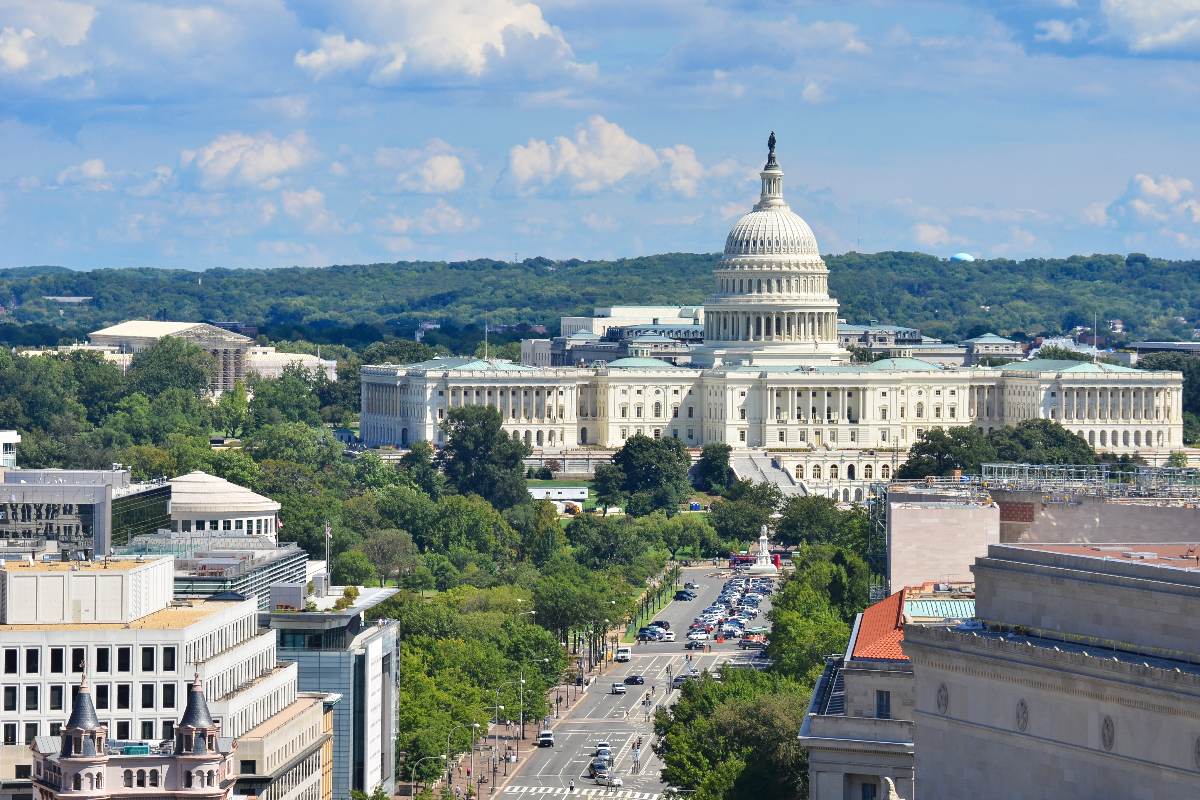
Washington DC’s District Department of Transportation (DDoT), and Southwest Business Improvement District (SWBid) have announced plans to launch an Autonomous Vehicle Observation (Avo) Zone Challenge.
In collaboration with non-profit US Ignite, the partners reckon the challenge, starting in June 2026, marks a pivotal step toward understanding autonomous vehicle activity on public streets in dense urban environments.
Impact of autonomous vehicle operations
The Avo Zone Challenge is designed to identify and pilot innovative solutions that enable DDoT to detect, monitor, and analyse the impact of autonomous vehicle (AV) operations in Washington DC.
Supported by academic partners, the George Washington University and the University of Washington, the initiative aims to help equip DDoT with tools and data insights to better understand how AVs interact within a “bustling multimodal transportation environment” as emerging transportation technologies continue to evolve.
“It reinforces the need for cities to build capacity to better understand and monitor how AVs operate in complex, real-world conditions.”
“This effort leverages cutting-edge transportation technologies to provide the necessary data to inform AV policies in the district and nationwide,” said Nick Maynard, CEO, US Ignite. “It reinforces the need for cities to build capacity to better understand and monitor how AVs operate in complex, real-world conditions.”
Ideal challenge participants include organisations offering solutions that can detect and monitor AV activity and interactions with other road users in mixed-traffic environments.
Read More
Solutions should also be able to identify safety-critical events and providers must be capable and willing to offer high-quality data to support policy, research and public transparency. The Avo Zone Challenge seeks visionary teams ready to contribute to safer and smarter mobility systems in urban environments.
An information session will be held in June 2026 to discuss further details about the AVO Zone Challenge. Interested participants can sign up to receive notifications at us-ignite.org/avo-challenge-interest-form/
The District Department of Transportation’s mission is to equitably deliver a safe, sustainable, and reliable multimodal transportation network for all residents and visitors of the District of Columbia.
Ideal challenge participants include organisations offering solutions that can detect and monitor AV activity and interactions with other road users in mixed-traffic environments
US Ignite works closely with communities, military bases, startups, and researchers to solve their toughest economic development and technology innovation challenges.
According to the non-profit, it operates like a high-tech startup to deliver customised results through stakeholder engagement, technical expertise, and targeted tools. In collaboration with its partners, it aims to deliver project outcomes that include breakthrough technologies while creating innovative new jobs, startups, and services.
The Southwest Business Improvement District (SWBid) is situated in the Southwest quadrant of Washington DC. It weaves together three distinct areas in the 500 acres south of the National Mall: Federal Centre South, housing 26 federal headquarters; the Southwest neighbourhood centred around the Waterfront Metrorail Station; and the transformational District Wharf development, located on the waterfront.
Why not try these links to see what our SmartCitiesWorld AI can tell you.
(Please note this is an experimental service)
How can sensor fusion detect autonomous vehicles in mixed-traffic urban environments?What data standards best support transparent AV operation reporting for policymakers?How can cities validate safety-critical AV events using high-quality external data?Which metrics effectively measure AV interactions with pedestrians, cyclists, and transit?How should public-private partnerships structure pilots to encourage equitable AV deployment?CAVsconnected and autonomous vehiclesConnectivity & DataDataeconomic developmentelectric vehiclesmobilityPeople and SkillsPublic-private partnershipsRoadtransparencyWashington DC

Latest City Profile
Latest Urban Exchange Podcast
SmartCitiesWorld Newsletters (Daily/Weekly)
You may also like these related articles...
BECOME A MEMBER
© 2026 SmartCitiesWorld
Smart Cities World Ltd, 37 Lombard Street, London, EC3V 9BQ