






The data is available to all state US Department of Transportation agencies, with a view to enabling them to better address safety, maintenance, and repair work.
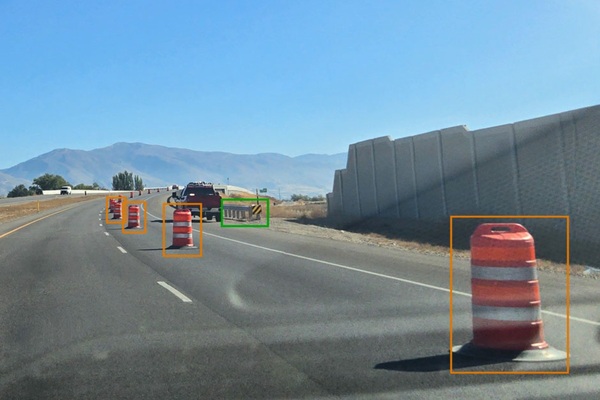
Blyncsy, a subsidiary of Bentley Systems, has published a comprehensive public map of all interstate highways in the continental US showing key roadway assets such as guardrails, speed limit signs, and work zones to support roadway safety and maintenance conditions.
This data is available to all state US Department of Transportation (DoT) agencies, with a view to enabling them to better address safety, maintenance, and repair operations of deteriorating and at-risk roads more efficiently and cost-effectively, especially during times of natural disasters.
The new Blyncsy interstate highway map uses crowdsourced dash camera imagery from more than million vehicles in use today which, when coupled with Blyncsy’s AI image analysis toolset, can detect some 40 different road conditions and asset inventory issues in near-real time. These issues include potential roadway safety hazards from guardrail damage, missing signage, and lack of proper road striping to roadway vulnerabilities from crashes, natural disasters, and work zone areas.
Blyncsy’s AI-powered crowdsourced data is delivered through an open API, providing state DoTs a solution that is infinitely scalable and more cost-efficient when compared to other manual data collection technologies like lidar, or traditional road inspection methods, which require road maintenance crews to be dispatched.
“With increasing workloads and smaller budgets, state DoTs need a way to improve roadway safety and operational efficiencies”
“The application of advanced technologies like AI, combined with new sources of data, are transforming the transportation sector, giving us better information as we make investments in safety and mobility,” said Laura Chace, president and CEO of ITS America.
“We applaud companies like Blyncsy for deploying these forward-thinking technologies and making this digital infrastructure data available to the public in an accessible format. We’re excited to see how Blyncsy’s data launch will support the core values of safety and equity while furthering the digital infrastructure movement on a national scale.”
“With increasing workloads and smaller budgets, state DoTs need a way to improve roadway safety and operational efficiencies,” said Mark Pittman, Blyncsy CEO and Bentley’s director of transportation AI.
“Today, we’re supporting a national digital infrastructure vision and democratising roadway data by publishing an open dataset of US highways to help state DoTs better prepare, maintain, and repair more miles and create safer environments for maintenance crews and drivers, alike.”
Blyncsy is a provider of intelligent roadway insights, automated asset management and near real-time status of road infrastructure to local governments and state departments of transportation.
“The application of advanced technologies like AI, combined with new sources of data, are transforming the transportation sector, giving us better information as we make investments in safety and mobility”
Blyncsy claims it is the only company that utilises crowdsourced imagery from more than 800,000 vehicles already on the roads, machine learning and artificial intelligence to make roadways smarter, safer, more equitable and more efficient. It provides organisations and Departments of Transportation with the data they need to make better decisions when it comes to traffic, safety, and health. Clients include Hawaii Department of Transportation, North Central Texas Council of Governments, Port Authority of New York and New Jersey, City of Plano Texas.
Bentley Systems is an infrastructure engineering software company. It provides innovative software to advance the world’s infrastructure – sustaining both the global economy and environment.
Why not try these links to see what our SmartCitiesWorld AI can tell you.
(Please note this is an experimental service)
How does Blyncsy's AI analyze crowdsourced dash camera imagery?What types of roadway assets are identified in Blyncsy's highway map?How can state DoTs use Blyncsy's data to improve road safety?In what ways does Blyncsy's open API enhance data scalability?How does crowdsourced data compare to traditional road inspection methods?