













 22 - 26 June 2026: Find out more






BUILD YOUR OWN
RESOURCE LIBRARY



Podcasts

Cities Thriving on Lighting, Episode 2 – Simplicity by design in smart lightingSponsored by Paradox Engineering
Cities Thriving on Lighting, Episode 1 – Lighting as the backbone of the smart citySponsored by Paradox Engineering
Opinions

Transforming indoor public safety with smart sensor networksSponsored by Motorola Solutions
MTA launches charging pilot for buses with tech lab winner
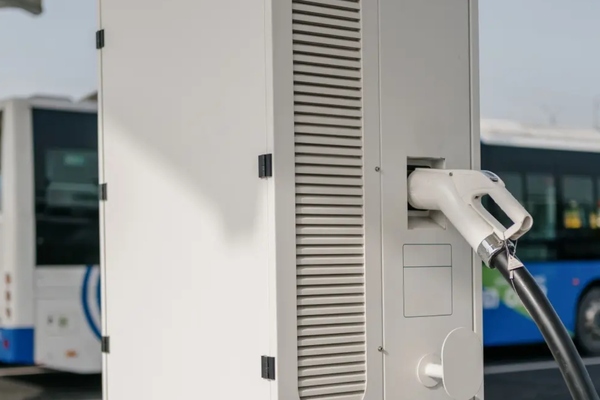
The Mobility House will manage charging for 27 charge ports across two New York City Transit bus depots in Staten Island and Queens during the year-long pilot.


NYC Metropolitan Transportation Authority has selected the Mobility House to deploy its smart charging and energy management solution for New York City Transit (NYCT).
During the year-long pilot programme for the largest public bus fleet operator in the US, the Mobility House will manage charging for 27 charge ports across two bus depots in Staten Island and Queens.
Utility rate structures
Coordinating local utility rate structures with bus schedules and travel routes, the company claims its ChargePilot solution will optimise charging to maximise vehicle uptime, reduce electricity costs and streamline the transition to electric vehicles.
The Mobility House reports its proof-of-concept modelling with the Transit Tech Lab demonstrated that ChargePilot can reduce operating expenses by more than $35,000 per month in operating expenses at one of the two depots alone.
“As the largest public fleet operator in the country, ensuring reliable operations is essential to the success of [its] electrification goals, especially when some buses require two- to four charging sessions a day”
The partnership with NYCT is a continuation of the Mobility House’s participation in the Transit Tech Lab programme – a public-private initiative between the Partnership for New York City and four New York metro area transit agencies – and follows the Mobility House’s successful proof-of-concept study on how NYCT could maximise electric bus availability and save operating costs.
The simulation study demonstrated that 64 per cent of scheduled trips on local routes from the Charleston depot could be operated with the selected electric bus model, and when using ChargePilot, the charging infrastructure planned for 12 electric buses at the Charleston depot can operate 96 per cent of the viable trips while generating operational savings, compared to unmanaged charging.
Read More
“We are thrilled to partner with the MTA as they embark on a journey toward zero-emission,” said the Mobility House US managing director Gregor Hintler. “As the largest public fleet operator in the country, ensuring reliable operations is essential to the success of [its] electrification goals, especially when some buses require two- to four charging sessions a day.”
“We are proud that the Mobility House’s technology and electrification expertise will contribute to that critical mission.”
Pressing challenges
The Transit Tech Lab is a programme that enables public transit agencies to test and deploy innovative technology solutions to their most pressing challenges. Selected companies participate in an eight-week accelerator and advance to a one-year pilot if successful. During the programme, companies work closely with transit agency staff to refine their products and test them in the agency operating environment.
The lab is designed to accelerate the modernisation of transit operations and customer experience through the strategic deployment of emerging technology.
Why not try these links to see what our SmartCitiesWorld AI can tell you.
(Please note this is an experimental service)
How does ChargePilot optimize electric bus charging schedules and reduce costs?What impact does smart charging have on electric bus fleet uptime?How can utility rate structures be coordinated with bus route operations?What operational savings were demonstrated in the Transit Tech Lab study?How does the Transit Tech Lab support public transit technology innovation?
Latest City Profile
Latest Urban Exchange Podcast
Latest Special Report
SmartCitiesWorld Newsletters (Daily/Weekly)
You may also like these related articles...
BECOME A MEMBER
© 2026 SmartCitiesWorld
Smart Cities World Ltd, 37 Lombard Street, London, EC3V 9BQ