


















BUILD YOUR OWN
RESOURCE LIBRARY



Podcasts
Cities Thriving on Lighting, Episode 2 – Simplicity by design in smart lightingSponsored by Paradox Engineering
Cities Thriving on Lighting, Episode 1 – Lighting as the backbone of the smart citySponsored by Paradox Engineering
Innovation incubator announces scalable tech cohort
Wells Fargo Innovation Incubator is a $55m energy tech programme and the cohort represents those from housing, utilities, infrastructure, and real estate.


At a glance
Who: Wells Fargo & Company; US Department of Energy’s National Laboratory of the Rockies (NLR)
What: The Wells Fargo Innovation Incubator (IN2) has chosen the latest Scalable Tech cohort for its $55m energy tech programme. They represent corporations and nonprofits from in housing, utilities, commercial infrastructure, and multifamily real estate.
Why: To accelerate adoption of technologies that address today’s pressing challenges while creating replicable models for widespread scaling.
When: The cohort will now take part in a six-month programme and then will paired with a curated, derisked startup technology and develop a detailed adoption strategy. They will present these strategies during a reverse pitch competition.
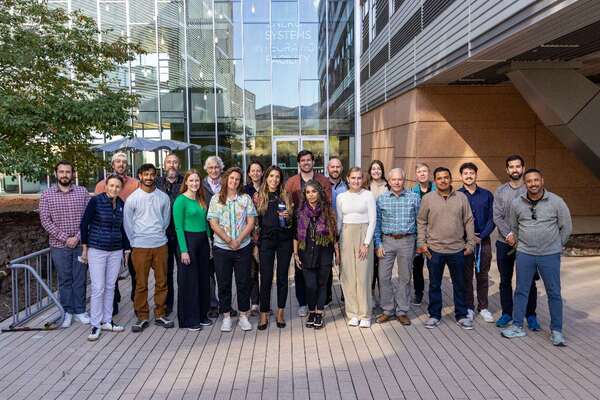
The Wells Fargo Innovation Incubator (IN2) has announced the eight members of its second Scalable Tech track cohort.
The $55m energy technology programme is funded by Wells Fargo & Company and co-administered by the US Department of Energy’s National Laboratory of the Rockies (NLR).
Technology adoption strategies
Each organisation will take part in a six-month curriculum designed to provide practical technology adoption strategies and access to validated advanced energy solutions.
The cohort represents corporations and nonprofit organisations across housing, utilities, commercial infrastructure, and multifamily real estate. The eight participants share a common goal of adopting technologies that strengthen reliability while improving performance.
“As seen by the geographic and market industry diversity of this cohort, there is broad demand for innovation technologies that help organisations navigate increasing energy and resilience needs”
“These organisations are eager to demonstrate the value of pairing market demand with scalable, real-world energy solutions,” said Sarah Derdowski, IN2 programme manager at NLR. “From affordable housing to grid modernisation, our goal is to accelerate adoption of technologies that address today’s pressing challenges while creating replicable models for widespread scaling.”
Cohort members are:
- EdgeCore Digital Infrastructure will explore innovations in mechanical cooling systems, electrical distribution systems, and construction materials to enhance data-centre efficiency and promote responsible resource use. Headquartered in Denver, Colorado
- Habitat for Humanity of Greater Los Angeles will focus on integrating resilient building solutions into affordable housing for wildfire-impacted communities. Headquartered in Los Angeles, California
- Haskell will explore modular construction techniques, advanced digital design tools, and alternative energy integration to shape the next generation of data centres and heavy manufacturing facilities. Headquartered in Jacksonville, Florida
- National Grid is exploring approaches to accelerate large-scale electrification projects, enhancing the speed and flexibility with which new energy demands connect to constrained distribution infrastructure. US headquarters in Waltham, Massachusetts.
Read More
- SLB will focus on de-risking and scaling advanced industrial technologies and energy-efficient solutions, leveraging its robust engineering and industrialisation capabilities. Headquartered in Houston, Texas
- Stoneweg will focus on energy efficiency and resilience in multifamily real estate by leveraging actionable energy data to improve decision-making and financial performance. US headquarters in St Petersburg, Florida
- Tucson Electric Power will explore grid-edge technologies to enhance visibility and enable solutions like virtual power plants and digital twin applications for enhanced system reliability. Headquartered in Tucson, Arizona
- WinnCompanies will seek to enable buildings to proactively and dynamically manage energy and capital expenses by utilising new data streams and automated controls that enhance multifamily housing resilience and affordability. Headquartered in Boston, Massachusetts.
By the end of the educational programming, each organisation will be paired with a curated, de-risked startup technology and develop a detailed adoption strategy. They will present these strategies during a reverse pitch competition, with the opportunity to receive up to $250,000 in Wells Fargo funding to support short-term pilot projects in collaboration with their selected startup and NLR experts.
“From affordable housing to grid modernisation, our goal is to accelerate adoption of technologies that address today’s pressing challenges”
“As seen by the geographic and market industry diversity of this cohort, there is broad demand for innovation technologies that help organisations navigate increasing energy and resilience needs,” said Jeffrey Schub, head of sustainability at Wells Fargo.
“Our support of IN2 and the Scalable Tech track brings together the innovators and solutions seekers to help move a small business’ proof-of-concept towards a scalable market growth.”
The Wells Fargo Innovation Incubator (IN2) seeks to advance innovative energy solutions from concept to commercialisation. By bridging the gap between cutting-edge startups and market adopters, IN2 fosters collaboration across a growing ecosystem – convening entrepreneurs, industry stakeholders, and research institutions.
Through this networked approach, IN2 aims to accelerate real-world implementation and scaling of transformative technologies in the built environment and infrastructure sectors, driving a more resilient, adaptable future.
Why not try these links to see what our SmartCitiesWorld AI can tell you.
(Please note this is an experimental service)
How can digital twins improve reliability in smart grid management?What strategies enhance energy efficiency in multifamily real estate?How do modular construction techniques benefit data centre development?What role do grid-edge technologies play in virtual power plants?How can startups accelerate adoption of scalable energy solutions?Commercial buildingsConnectivity & DataDataData Centresdigital twinsEnergy & EnvironmenthousingResidential buildingssmart gridsurban space
Latest City Profile
SmartCitiesWorld Newsletters (Daily/Weekly)
You may also like these related articles...
BECOME A MEMBER
© 2026 SmartCitiesWorld
Smart Cities World Ltd, 37 Lombard Street, London, EC3V 9BQ