





















BUILD YOUR OWN
RESOURCE LIBRARY



Podcasts

Cities Thriving on Lighting, Episode 2 – Simplicity by design in smart lightingSponsored by Paradox Engineering
Cities Thriving on Lighting, Episode 1 – Lighting as the backbone of the smart citySponsored by Paradox Engineering
Lakeview Village on course to build sustainable, future-ready city
Partners behind the project are focused on creating a highly inter-connected, environmentally conscious 15-minute community while restoring the ecological ecosystem decimated by years of industrial use.


The group behind Lakeview Village smart city development has announced it is undertaking an extensive water channel restoration project on the former coal-fired powerplant site to help execute against its long-term sustainability commitments.
Lakeview Community Partners Limited (LCPL) has been working alongside environmental partners on the restoration of Serson Creek, an environmentally degraded and underground piped water course that currently runs under the GE Booth Wastewater Treatment Plant.
Flooding and other issues
Over the years, LCPL reports that piping the creek flow underneath the water treatment plant has prevented its use by local wildlife and caused a host of issues, including flooding, which has occasionally resulted in the temporary closure of the water treatment plant.
“The Lakeview Village site was once home to the Lakeview Generating Station known as the Four Sisters smoke-stacks, once a place of smog, pollution and environmental degradation until its eventual decommissioning in 2005,” said Brian Sutherland, vice-president of development, Argo Development Corporation and development lead for Lakeview Village.
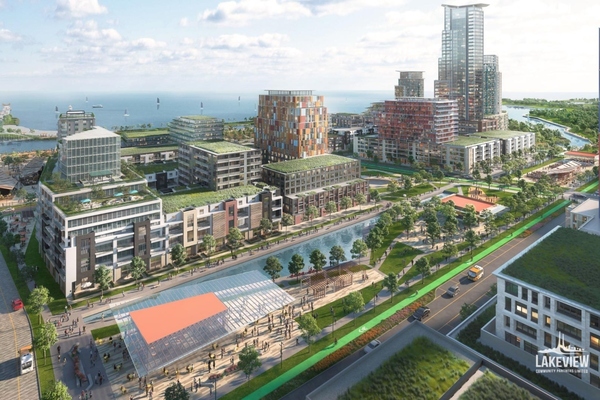
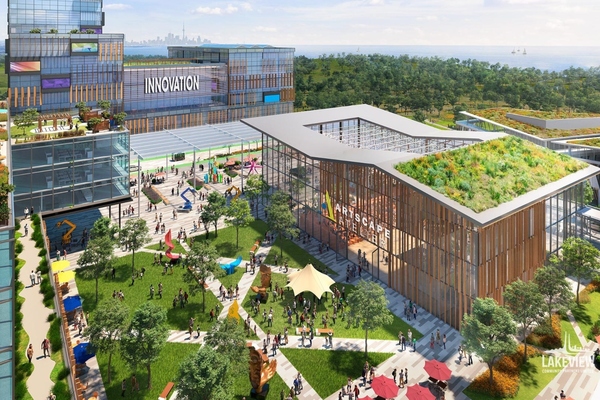
“In 2018, we purchased the 177-acre brownfield site and began working with passionate locals on our vision for what this incredible transformation could bring to Mississauga’s waterfront – a vibrant and sustainable mixed-use community with solutions to address climate change, energy resiliency, waste management and mobility challenges.”
Read More

Sunflowers and butterflies at Lakeview. Photograph: Nation Wong
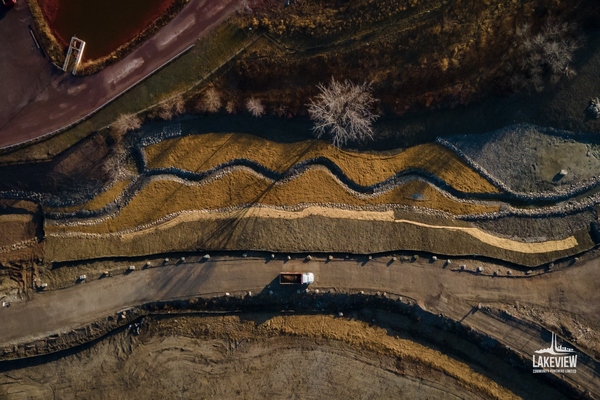
Aerial view of a portion of Serson Creek. Photograph: Michael Halavonj
LCPL said it remains focused on creating a highly inter-connected, environmentally conscious 15-minute community while restoring the land’s ecological ecosystem decimated by years of industrial use.
Prior to becoming the Lakeview Generating Station, the land was once home to many species of plants and animals distinct to the area. Due to its industrial history, years of pollution and environmental degradation, the region’s natural landscape, flora and fauna have suffered. Since purchasing the land in 2018, LCPL has undertaken several initiatives to restore the natural habitat and reinvigorate the lands.
Thriving ecosystem
As a key component of the Lakeview Village project, LCPL has been working to restore the channel and surrounding habitat to its formerly thriving ecosystem.
During phase 1 of the years’-long restoration effort, LCPL engaged excavators to dig a new low-flow channel, stabilise and prepare the creek to divert the flows out from underneath the treatment plant, re-establish the natural heritage corridor and seamlessly connect the future Lakeview Village community to a waterfront greenspace before finally flowing into Lake Ontario.
Further to Serson Creek, LCPL has undertaken efforts to return the native flora and fauna to its rightful place through this extensive restoration.
“We are in an incredibly unique position to take the site of a former coal refinery and turn it into a future-ready, sustainable community, right on the shores of Lake Ontario”
The Serson Creek corridor has been designed specifically to create a vital fish and wildlife habitat, support the formation of coastal zones along the lake and inlet shorelines to sensitively balance and promote ecological connectivity. This restoration approach is anticipated to create a source of native biodiversity that, over time, will spread into other adjacent areas and benefit many species of native fish and wildlife.
Since 2019, LCPL has also planted a field of one million sunflowers to support native wildlife rehabilitation and nature conservancy. As one of many initiatives undertaken to help remediate the site’s soil through phytoremediation, the sunflowers also help to reduce concentration of contaminants in the surrounding environment.
“Very soon, Lakeview Village will be a place where we can welcome local residents and people from around the world to show them our amazing accomplishments in responsible, environmentally conscious development,” added Sutherland.
“We are in an incredibly unique position to take the site of a former coal refinery and turn it into a future-ready, sustainable community, right on the shores of Lake Ontario, while propelling Canada’s leadership position on climate and sustainability on the international stage.”
Why not try these links to see what our SmartCitiesWorld AI can tell you.
(Please note this is an experimental service)
How does restoring Serson Creek improve local flood management and ecosystem health?What strategies enable Lakeview Village to function as a 15-minute sustainable community?How do phytoremediation techniques like sunflower planting reduce soil contaminants?In what ways does the project support native biodiversity along Lake Ontario's shoreline?How will the redevelopment of the brownfield site enhance climate resilience locally?Argo DevelopmentbrownfieldClimate change/ResilienceEnergy & EnvironmenthousingLakeview Community PartnersLakeview VillageMississaugaOntarioParks and green spacePedestrianisationPlanningRecreational spaceResidential buildingsTorontourban space
Latest City Profile
SmartCitiesWorld Newsletters (Daily/Weekly)
You may also like these related articles...
BECOME A MEMBER
© 2026 SmartCitiesWorld
Smart Cities World Ltd, 37 Lombard Street, London, EC3V 9BQ