














BUILD YOUR OWN
RESOURCE LIBRARY



Podcasts

Cities Thriving on Lighting, Episode 2 – Simplicity by design in smart lightingSponsored by Paradox Engineering
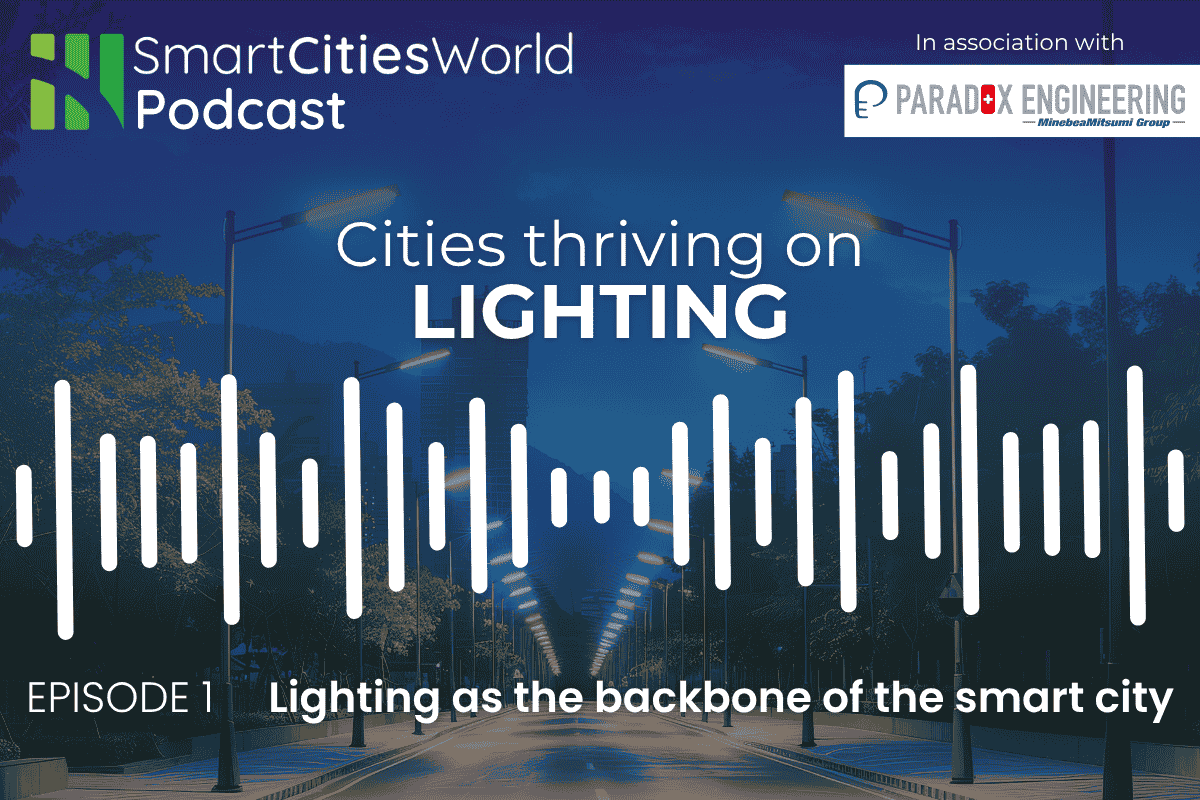
Cities Thriving on Lighting, Episode 1 – Lighting as the backbone of the smart citySponsored by Paradox Engineering
Nearly two-thirds of cities hit by extreme weather risk
CDP data reveals 35 per cent of companies recognise extreme weather as a material financial risk, but 62 per cent of cities, states and regions are impacted.


 At a glance
Who: CDP.
What: CDP has published the report, Disconnected Defenses: Extreme Weather Risk across Corporates, Cities and Financial Systems.
Why: Extreme weather risk is reshaping the global economy and costing almost $1 trillion in projected losses.
Where: The analysis is based on more than 11,000 companies disclosing through the 2025 CDP corporate questionnaire, including 149 insurers, and 1,005 cities, states and regions.
Extreme weather risk is reshaping the global economy and costing almost $1 trillion in projected losses, according to analysis from the independent environmental disclosure system, CDP.
It also highlights that the cost of mitigating risks is nearly 13 times lower than their financial impact.
Environmental data disclosure
The analysis in Disconnected Defenses: Extreme Weather Risk across Corporates, Cities and Financial Systems is based on more than 11,000 companies disclosing through the 2025 CDP corporate questionnaire. It includes 149 insurers, and 1,005 cities, states and regions reporting through CDP-ICLEI Track and CDP’s states and regions questionnaire.
Of the 11,261 companies that disclosed full environmental data through CDP in 2025, only 35 per cent identified extreme weather as a material financial risk. However, despite this, firms disclosed that it caused nearly $3bn in real losses in 2025 alone, primarily through increased direct costs ($309m) and operational shutdowns ($266m).
“Extreme weather is already a financial risk. It has a dangerous domino effect, disrupting operations, reducing production and driving losses today, with far greater impacts lying ahead”
Heavy rain was the largest single driver of these losses, accounting for $1.5bn across disclosing companies.
Looking ahead, however, the figures escalate, with companies anticipating $898bn in future financial impacts, principally due to flooding ($528bn), cyclones ($161bn) and heavy rain ($86bn). Moreover, nearly half (48 per cent) of extreme weather risks are envisaged to materialise in the next two years, placing these risks firmly within current business planning and investment horizons.
Financial losses are expected to be driven by reduced production capacity ($326bn) and asset impairment or early retirement ($218bn). They are not anticipated to be confined to isolated assets or sectors either, but to be spread across systems businesses depend upon, such as infrastructure, supply chains, insurance markets and public services.
Read More
Although the price tag of environmental risks is high, the cost of mitigating them is much lower. CDP’s 2025 Disclosure Dividend report showed that the median cost of risks per company stood at $39.4m, compared to only $3.1m to mitigate them, nearly 13 times lower.
Of the 1,005 cities, states and regions across 80 countries reporting data through CDP-ICLEI Track and CDP’s States and Regions questionnaire in 2025, 62 per cent identify already being significantly impacted by extreme weather events. Over 60 per cent expect these hazards – especially extreme heat, urban flooding and drought – to increase in intensity, frequency, or both, in the future.
Subnational governments increasingly recognise extreme weather events as a financial and economic risk, with close to a quarter (23 per cent) specifically highlighting financial and insurance activities as highly exposed to intensifying climate hazards. In response to these hazards, cities around the world are moving beyond pledges to concrete solutions, steadily designing new climate infrastructure projects that protect people and businesses.
“This is a systemic challenge that no single actor can manage alone”
Over 60 per cent have at least one adaptation project for which additional funding is needed, highlighting a global investment gap of at least $34bn, and almost half (46 per cent) report budget constraints limiting their ability to adapt to the effects of climate change. But when risks are made visible and actions implemented, all stakeholders are able to harness the social and economic benefits.
“Extreme weather is already a financial risk. It has a dangerous domino effect, disrupting operations, reducing production and driving losses today, with far greater impacts lying ahead,” said Amir Sokolowski, global director of climate at CDP.
“This is a systemic challenge that no single actor can manage alone. Our report highlights that efforts to address this risk coherently are not sufficiently coordinated and that the gaps in collaboration are significant risk in their own right. By aligning investment, strengthening shared systems and scaling adaptation – with disclosure as a guide to enable better decisions – businesses and governments can not only reduce risk, but accelerate the transition to an earth-positive, resilient economy.”
CDP said companies and financial institutions are best positioned to absorb or reduce environmental risk when operating within systems that are managed collectively and supported by adequate financing. Among other measures to safeguard against the effects of extreme weather, CDP is calling:
- For companies to treat extreme weather as a system-exposed business risk – recognising dependence on shared systems, such as infrastructure, utilities and logistics networks, rather than focusing solely on asset-level exposure
- For subnational governments to clarify – through public disclosure – where hazard exposure, infrastructure risks, and service disruption intersect, helping to reduce uncertainty and unlock private investment
- For national governments to align fiscal, adaptation, and risk-management policies around shared economic exposure for the public and private sectors, reducing economy-wide vulnerability to physical climate risks
- For regulators and central banks to use supervisory tools to address systemic financial risks, like uninsured physical risk.
Why not try these links to see what our SmartCitiesWorld AI can tell you.
(Please note this is an experimental service)
How can companies assess system-level exposure to extreme weather across supply chains?Which adaptation investments yield highest return per dollar in urban flood resilience?How should subnational governments disclose infrastructure hazard intersections to attract private investment?What supervisory tools can central banks use to mitigate uninsured climate risk?How much funding shortfall exists for city adaptation projects and prioritization options?climate actionClimate change/ResilienceConnectivity & DataDataEnergy & Environmentresiliencetransparency
Latest City Profile
SmartCitiesWorld Newsletters (Daily/Weekly)
You may also like these related articles...
BECOME A MEMBER
© 2026 SmartCitiesWorld
Smart Cities World Ltd, 37 Lombard Street, London, EC3V 9BQ