





BUILD YOUR OWN
RESOURCE LIBRARY



Podcasts
Cities Thriving on Lighting, Episode 2 – Simplicity by design in smart lightingSponsored by Paradox Engineering
Cities Thriving on Lighting, Episode 1 – Lighting as the backbone of the smart citySponsored by Paradox Engineering
Opinions

Transforming indoor public safety with smart sensor networksSponsored by Motorola Solutions
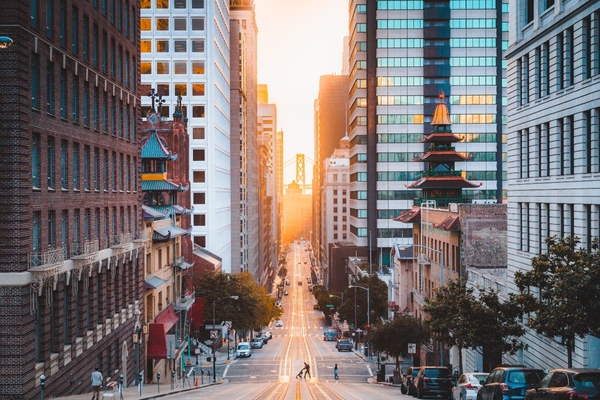
Urban vision to reimagine Downtown San Francisco
Urban design firm Sitelab is working with the Downtown SF Partnership to reinvent the area as a pedestrian-centric, more vibrant and culturally rich space, based on a framework and vision to influence change.


A comprehensive plan that includes physical, programmatic, and organisational recommendations to reimagine the future of downtown San Francisco has been unveiled.
The Downtown SF Public Realm Action Plan (PRAP), released by the Downtown SF Partnership and Sitelab urban studio, serves as a visioning framework to influence change in the area and identify public realm improvement opportunities.
Community benefit district
The Downtown SF Partnership is the community benefit district that oversees 43 blocks across San Francisco’s Financial District and Jackson Square Historic District, and Sitelab is a strategic urban design firm.
The PRAP outlines six replicable public realm concepts and pilot programmes, leaning on urban design as a means of economic recovery, to reimagine downtown San Francisco as a pedestrian-centric, more vibrant and culturally rich area.
This includes creating and utilising privately-owned public open spaces, increasing access to nature, investing in public art, increasing accessibility, walkability and flexible seating, as well as integrating inclusive community programming into the area.
The PRAP outlines six replicable public realm concepts and pilot programs, leaning on urban design as a means of economic recovery, to reimagine downtown San Francisco as a pedestrian-centric, more vibrant and culturally rich area. This includes creating and utilising privately-owned public open spaces, increasing access to nature, investing in public art, increasing accessibility, walkability and flexible seating, as well as integrating inclusive community programming into the area.
“As an organisation and a city, we can continue operating under a pre-pandemic status quo or we can embrace this opportunity to evolve our practices and places to better serve all who live, work, and play in SF’s urban and economic core”
Recognising the existing assets of the downtown area, the PRAP is centred on converging public and private investments and activating spaces. The plan identified six “action areas” to apply the concepts in tandem for near-term pilots to be deployed, which will generate momentum and inform iterations for a long-term tangible vision.
“Downtown San Francisco finds itself at a pivotal moment. As an organisation and a city, we can continue operating under a pre-pandemic status quo or we can embrace this opportunity to evolve our practices and places to better serve all who live, work, and play in SF’s urban and economic core,” said Robbie Silver, executive director of the Downtown SF Partnership.
“Forward thinking adaptation is the clear choice for us, and with the PRAP, we have laid the groundwork for that people-centric change to become reality.”
Read More
The six action areas are: Pedestrian Paradise; Rediscover Public Open Spaces; Let’s Green; Downtown as a Stage; Continue Downtown’s Story; and Re-energise from the Ground Up.
Among a wide range of strategies for each of the areas include:
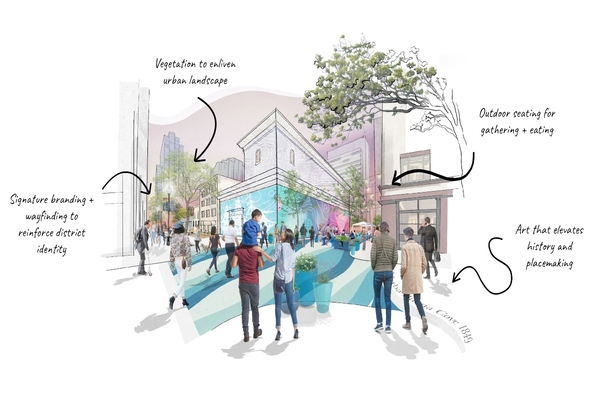
- Reclaim the kerb to improve the pedestrian experience and invite people to stay by expanding spaces for people along the street
- Build better connections: make moving through the district more comfortable and fun by improving biking infrastructure, adding mid-block pedestrian crossing and improving the alleyway network
- Broadcasting invitations: increase wayfinding and signage, incorporate art as a focal point, and create a platform where people can learn more about the district’s open spaces and discover upcoming events
- Green the streets: add street trees, planters, and sidewalk vegetation to expand the urban landscape in downtown, where no parks exist
- Plazas as parks: transform public plazas and Popos (privately owned public spaces) to expand the need for outdoor spaces and refuge from the city
- Curate a downtown canvas: cultivate a new wave of place-based art, from murals to installations to sculptures, to attract people to downtown spaces and contribute to the cultural and aesthetic quality of the neighbourhood
- Incentive programmes: foster opportunity programmes, such as flexible ground floor use, to make vacant spaces available for diverse uses and support district growth.
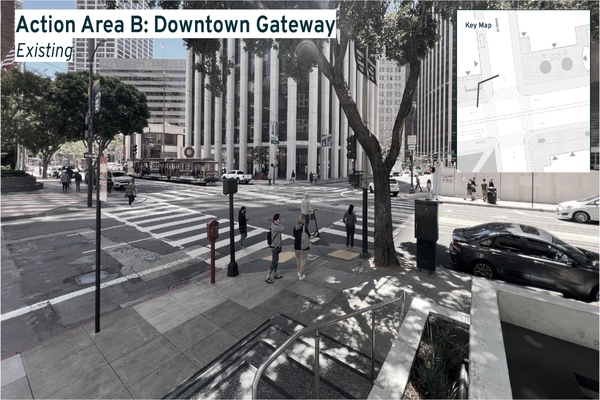
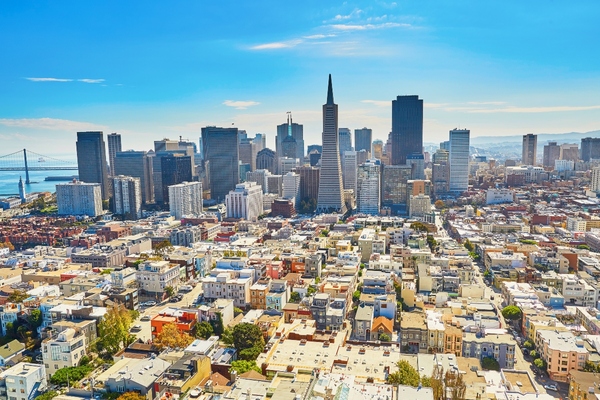
An existing area in downtown San Francisco being targeted for change. Image courtesy: Sitelab urban studio
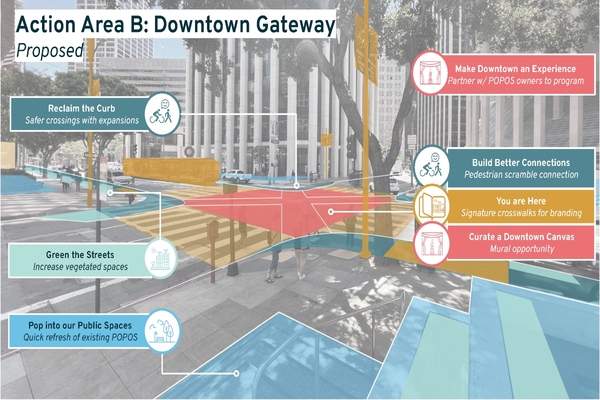
Action Area B measures include reclaiming the kerb and greening the streets. Image courtesy: Sitelab urban studio
“For far too long, there was little investment in downtown San Francisco because it was assumed that the area took care of itself. Now, as we find ourselves slowly moving beyond the pandemic and into a new future of work, we’re faced with the unique opportunity to reimagine downtown as more than just a workplace, as a social destination,” added Laura Crescimano, co-founder and principal of Sitelab urban studio.
“We want to make that visible and tangible in the streets. The PRAP demonstrates how urban design can be used as a means of economic recovery. The bones of downtown are amazing, with incredible architecture, walkable streets, a historic waterfront as well as serving as the bay area hub for transit, the area is perfectly poised for transformation.”
Why not try these links to see what our SmartCitiesWorld AI can tell you.
(Please note this is an experimental service)
How can pedestrianisation improve economic recovery in downtown San Francisco?What strategies increase accessibility and walkability in urban public spaces?How do privately-owned public open spaces enhance community engagement?What role does public art play in revitalising urban cultural spaces?How can green infrastructure be integrated into dense downtown environments?Cultural spaceParks and green spacePedestrianisationPlanningRecreational spaceSan FranciscoSiteLaburban space
Latest City Profile
SmartCitiesWorld Newsletters (Daily/Weekly)
You may also like these related articles...
BECOME A MEMBER
© 2026 SmartCitiesWorld
Smart Cities World Ltd, 37 Lombard Street, London, EC3V 9BQ