









BUILD YOUR OWN
RESOURCE LIBRARY



Opinions

Smart lighting: enabling smart cities beyond illuminationSponsored by Paradox Engineering

How AI and biometrics are shaping next-generation mobility paymentsSponsored by ST Engineering
How cities can get ahead with AI-enabled traffic management
Opinions25 Sep 2025by Dr Chong Chee Chung: Vice President, ITS Architecting, Mobility Road, Urban Solutions, ST Engineering
Sponsored by ST EngineeringDr Chong Chee Chung, Vice President, ITS Architecting, Mobility Road, Urban Solutions at ST Engineering, explains how a combination of deep learning, computer vision and artificial neural networks are transforming urban traffic management.


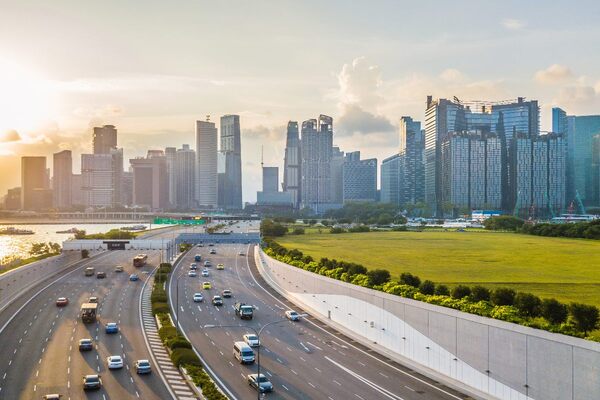
Technologies like AI, IoT, as well as multimodal transport data are improving the efficiency of urban traffic management in cities like Singapore
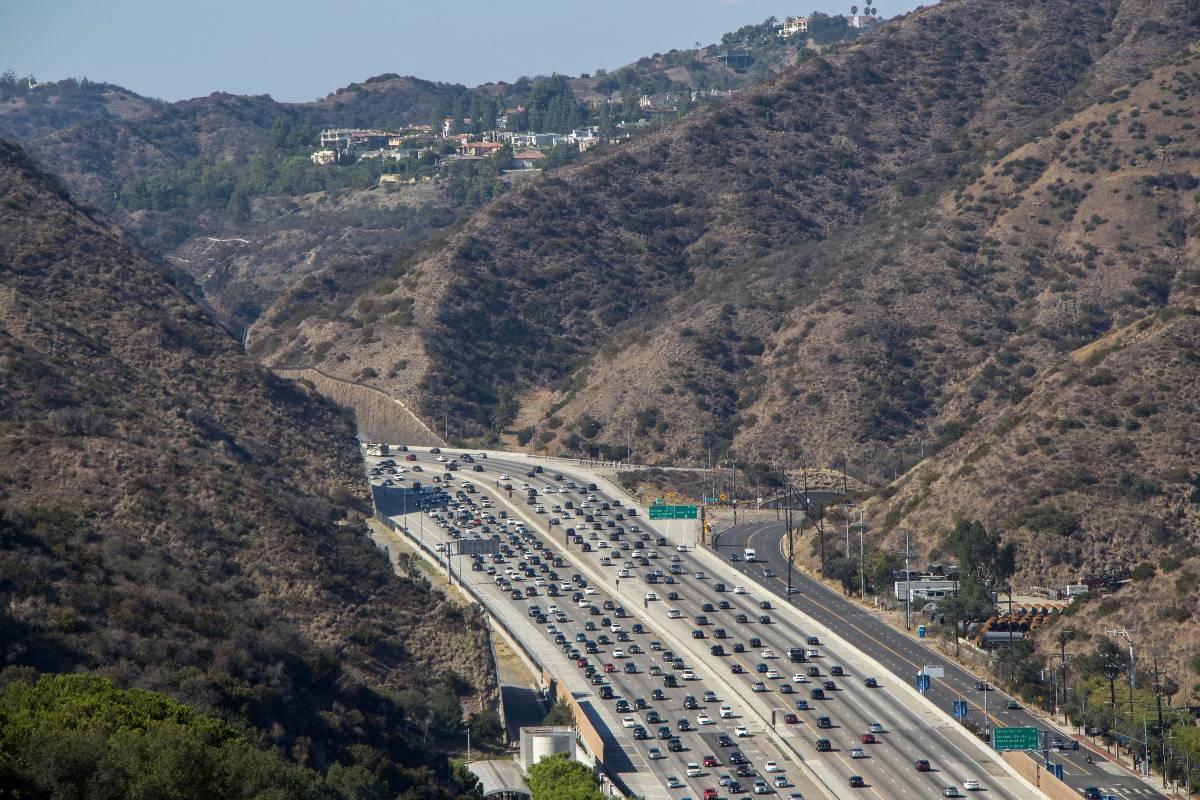
Urbanisation is driving today’s mobility challenges in cities. As urban populations grow and cities become more complex, so too do the challenges associated with movement and mobility in urban environments – particularly the challenge of managing traffic congestion.
Traditional methods of traffic management – such as fixed-timing traffic lights, manual monitoring, and static data reviews – can no longer keep pace with the real-time demands of modern urban environments. Instead, cities are turning to a new generation of digital technologies: artificial intelligence, computer vision, big data, and the internet of things. Together, these tools are creating smarter, more responsive urban traffic systems.
Predicting traffic flow and congestion in real time
Congestion is a universal issue for cities, and often the number one challenge that cities want to solve. Tackling it successfully requires alignment between operational practices, city policies, end-user expectations, and technology strategies that can support city management across each of these areas.
Historically, cities have used long-term forecasts to plan roads and public transit investments. These forecasts, based on demographic and economic trends, provide a valuable macro-level view but lack the immediacy needed to manage live traffic. The recent evolution of AI changes that.
By analysing historical and real-time data, AI can help cities better predict congestion – especially in the short term, such as within the next 30 minutes. AI models trained on historical and live sensor data can more effectively predict the ripple effect of a minor accident on traffic flow. If a crash occurs on a major arterial road, how quickly will the congestion spread to feeder roads? Which intersections will become choke points? With AI, traffic operations centres can anticipate conditions and respond proactively.
AI models trained on historical and live sensor data can more effectively predict the ripple effect of a minor accident on traffic flow
ST Engineering’s AGIL Urban Traffic Management System’s AI features help to predict how quickly congestion will build up following an incident, enabling traffic authorities to respond quickly by rerouting traffic, adjusting signals, or informing drivers through apps and signage.
To understand the advancements these technologies can bring, we can look to Singapore, one of the world’s leaders in intelligent traffic management. The city operates a multi-faceted iTransport platform, an all-in-one back-end system that aggregates real-time information from a suite of intelligent transport systems to enable traffic analysis and planning as well as traffic monitoring and incident management. The iTransport platform was recently enhanced by ST Engineering Urban Solutions, giving it the ability to process and interpret large amount of traffic data from multiple sources to enable faster incident detection and more responsive traffic management.
Deep learning in video analytics: seeing and understanding traffic
Camera systems have long played a role in traffic management, but early video analytics had limited capabilities. Today, with deep learning and high-performance GPUs, cities can use computer vision to monitor roads with far greater accuracy.
As we enter the deep learning era, computer vision has become a reliable way to identify traffic incidents. Detecting accidents, stalled vehicles, or wrong-way drivers is now much faster and more accurate. These AI-powered systems can classify vehicle behaviours, detect traffic deviations, and identify incidents with minimal false alarms, which is important for operational and transport efficiency. Deep learning models can now be trained to account for variations in weather and lighting, which often caused basic systems to fail.
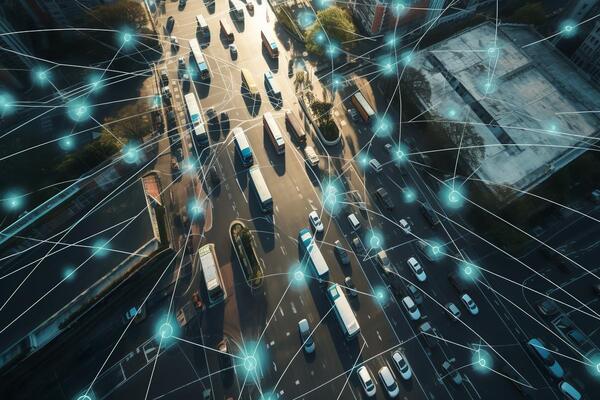
Cities can build up the level of intelligence in its transport systems using AI and unlock intelligent coordination for critical services like response planning
Beyond accuracy, computer vision allows comprehensive 24/7 monitoring of video feeds, unlike human operators who can only monitor a few screens at a time. The result is quicker detection and response. These capabilities enable the AGIL Urban Traffic Management System to reduce incident detection time from minutes to seconds.
Taking incident detection beyond cameras
There are generally two approaches to incident detection in traffic systems. One is the approach already discussed, using cameras to visually monitor roads for incidents like accidents, stalled vehicles, or illegal stops. This works well at fixed locations like junctions or highways where cameras can be installed. However, it’s not practical to cover an entire road network, especially stretches that span hundreds of kilometres.
That’s where traffic data becomes very useful. Cities can collect real-time information from GPS-enabled probe vehicles like taxis or delivery fleets which provide a picture of traffic flow. Traditionally, this data has been analysed using rule-based methods – for example, comparing upstream and downstream traffic speeds or volumes, and looking for sudden drops or irregular patterns that might suggest an incident. These methods can be helpful, but they’re limited in fast-changing or unpredictable traffic scenarios because they’re based on fixed rules pre-defined by a traffic expert.
Cities can collect real-time information from GPS-enabled probe vehicles like taxis or delivery fleets which provide a picture of traffic flow
Artificial neural networks (ANNs) offer a more adaptive and intelligent solution. Inspired by how the human brain processes information, ANNs are made up of layers of interconnected nodes, called neurons, that can learn to recognise complex patterns in large datasets. In traffic management, platforms like our AGIL Urban Traffic Management System use ANNs to analyse real-time and historical traffic flow data, such as vehicle speed variations and traffic volume changes over time and across different locations. By training the network on known patterns of normal and abnormal behaviour, the system learns to recognise conditions that likely indicate an incident, even without any visual confirmation.
Unlike rule-based systems, neural networks don’t rely on fixed assumptions. They learn from historical and real-time data, which allows them to detect subtle changes and anomalies that traditional systems might miss. This makes them particularly powerful for wide-area incident detection – covering large zones beyond camera visibility – where quick detection and response can make a big difference in reducing congestion and improving safety.
From detection to decision
When a city builds up this level of intelligence in its transport systems using AI, it can unlock more intelligent coordination for critical services like emergency services and response planning. For example, AI can help emergency services find the fastest possible route to an incident. By using real-time traffic data and predictive models, AI can recommend the best path to avoid congestion or roadblocks. This routing can be dynamically updated as conditions change on the ground.
Beyond vehicle movement, artificial intelligence in transport networks can also support better incident response planning. Traditionally, traffic operators relied on standard operating procedures to decide the steps to take when there’s an incident – like calling an ambulance or notifying the traffic police. But traffic conditions are fluid, and effective response often require decisions that go beyond predefined protocols. For instance, transport authorities may need to adjust downstream traffic signals to divert vehicles away from the scene, or activate digital road signs to warn drivers in advance.
Beyond vehicle movement, artificial intelligence in transport networks can also support better incident response planning
Across a dense urban traffic network where there are hundreds of variable message signboards across expressways, notifying approaching vehicles isn’t enough – cities should also inform drivers on surrounding highways who are heading towards the affected area. Manually coordinating this messaging in real-time would be impossible.
That’s where the AI-powered AGIL Urban Traffic Management System comes in. The system helps operators automatically generate an appropriate response plan: which signs to activate, what messages to display, and where to display them based on each driver’s proximity to the incident.
For example, a driver just 500 metres away needs specific lane information to avoid the hazard, while someone 10 kilometres away might simply be advised to take the next exit and avoid the route entirely. The faster cities can coordinate and act, the better they can manage traffic, prevent secondary accidents, and improve overall road safety.
Real-world impact: Abu Dhabi’s Integrated Transport Control Platform
ST Engineering Urban Solutions was appointed by the Abu Dhabi Integrated Transport Centre (ITC) to design, build, and maintain the emirate’s first multimodal Intelligent Transportation Central Platform (ITCP).
The ITCP is designed to integrate various subsystems and data sources into a centralised platform, enabling the ITC to implement effective multimodal transport strategies through automated response plans. Leveraging AI, the ITCP enables real-time road traffic monitoring, incident detection, automated traffic information dissemination, and traffic congestion prediction, thereby improving traffic flow and reducing incident response times.
While initially focused on managing road transport, the ITCP is designed to connect to other transport modes including rail networks. A key component of Abu Dhabi’s Transportation Mobility Management Strategy 2030, the ITCP supports Abu Dhabi’s vision for a world-class sustainable transport system.
ST Engineering Urban Solutions is the consortium lead and is responsible for the design, build, system integration and overall project management, while Injazat Data Systems LLC is responsible for the IT and security infrastructure and system interfaces.
The project adds to ST Engineering Urban Solution’s decade-long track record of delivering urban transport management projects in the UAE, including the AI-powered iTraffic system in Dubai.
Technology convergence for smarter mobility
Technologies like AI, IoT, as well as multimodal transport data are improving the efficiency of urban traffic management. Traditionally, detecting an incident relied on infrastructure like inductive loops embedded in the road. Today, with the integration of IoT and AI, cities have access to a wide array of real-time data – from connected vehicles, mobile devices, roadside cameras, and even crowdsourced information. When combined with AI, this wealth of data can be processed more intelligently and enable faster, more accurate decision-making.
In this context, AI is the brain of the ecosystem – it analyses the data, identifies patterns, and enables predictive decision-making. IoT functions as the nervous system, providing real-time sensing and feedback. Meanwhile, multimodal transport data provides a comprehensive view of how different parts of the mobility network – drivers, commuters, public transport – are interacting with one another. Together, these technologies enable more responsive, adaptive, and resilient traffic management systems.
At ST Engineering Urban Solutions, we work with cities to understand their pain points and leverage our domain expertise, experience and technology to address these effectively. We believe the future of urban traffic management is intelligent, integrated, and human-centric. That’s why we continue to innovate and iterate in partnership with cities, ensuring our solutions keep pace with both technological advancements and the real-world challenges cities face today.
ST Engineering is a global technology, defence and engineering group with a diverse portfolio of businesses across the aerospace, smart city, defence and public security domains. Harnessing technology and deep engineering expertise, its Smart Mobility business is advancing urban mobility, enabling cities to modernise their rail and land transport infrastructure for seamless, safe and reliable commuter journeys. To date, it has delivered more than 400 Smart Mobility projects in 90 cities across Asia, the Middle East and the United States.
Why not try these links to see what our SmartCitiesWorld AI can tell you.
(Please note this is an experimental service)
How does AI improve real-time traffic congestion prediction accuracy?What role do artificial neural networks play in incident detection?How can computer vision enhance 24/7 urban traffic monitoring?In what ways does AI optimize emergency vehicle routing during incidents?How does integrating IoT and multimodal data support smarter traffic management?AI and Machine LearningAnalyticsAnalyticsClimate change/ResilienceCloud and edge computingcongestionDataEnergy & Environmentmobilitynet zeroPlanningRoadSensorsurban space
Latest City Profile
SmartCitiesWorld Newsletters (Daily/Weekly)
You may also like these related articles...
BECOME A MEMBER
© 2026 SmartCitiesWorld
Smart Cities World Ltd, 27 Clements Lane, London, EC4N 7AE