






BUILD YOUR OWN
RESOURCE LIBRARY



Opinions
Beyond video: how cameras as IoT sensors are changing city safety operationsSponsored by Axis Communications

Building smarter cities: scaling sustainability and efficiency with smart city platformsSponsored by ST Engineering
Smart Cities Challenges Workshop - Barcelona 5 November 2025
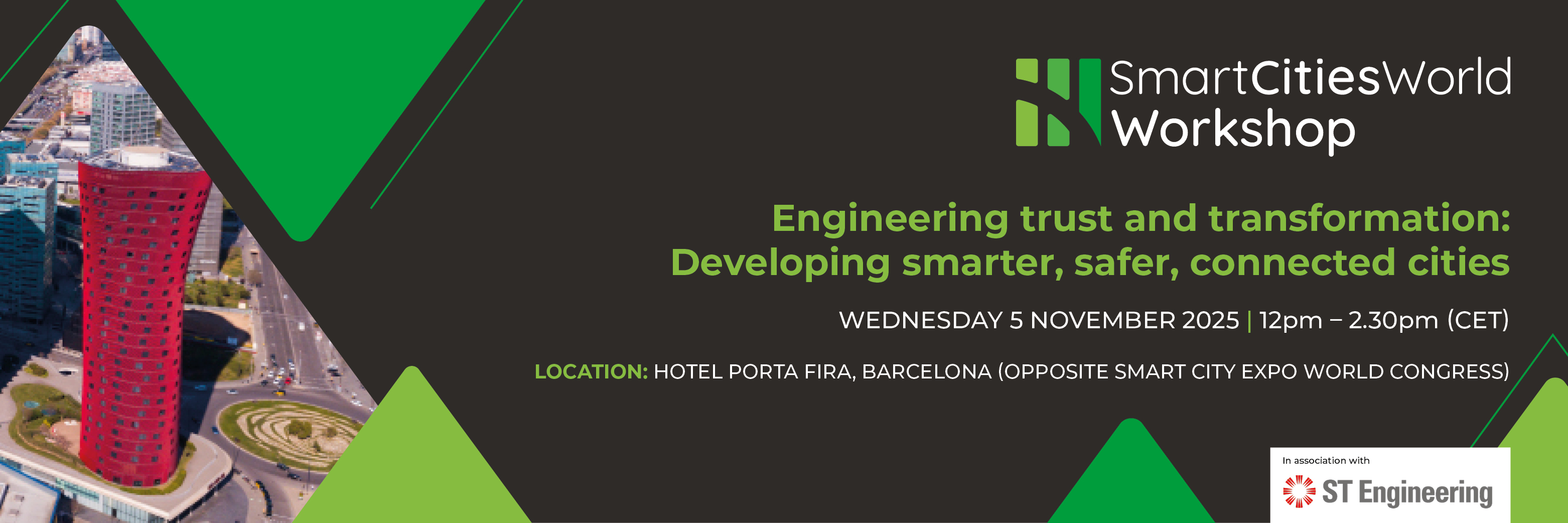
Engineering trust and transformation: developing smarter, safer, connected cities
Cities are under growing pressure to deliver services that are efficient, resilient, and responsive to the needs of residents. The technologies available to support them are evolving rapidly – from platforms that integrate city data and connectivity, to AI applications that turn information into actionable insight. Alongside these opportunities come new responsibilities, particularly in protecting critical infrastructure and maintaining public trust in digital systems.
This workshop brings together city leaders and practitioners to explore areas that are central to the future of urban development: how cities are using data, connectivity, and smart city platforms to build safer and more adaptive services; how cybersecurity and national-level security operation centres are evolving to protect vital infrastructure and strengthen sovereign resilience; and how advances in mobility across rail and road networks can help cities deliver safer, more sustainable, and more efficient transport systems.
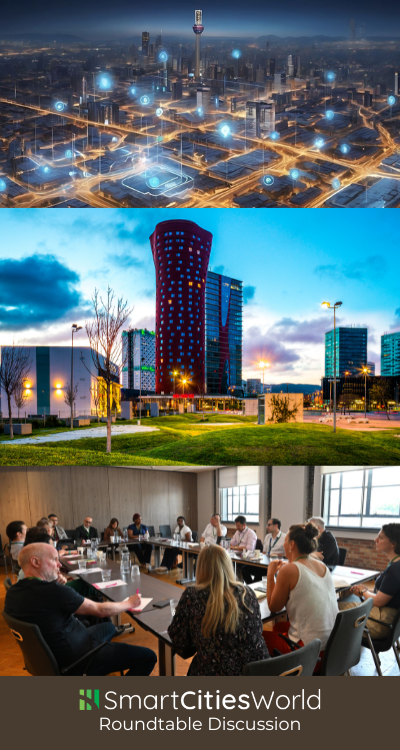
The roundtables will run concurrently during the workshop, with a mix of real-world examples from scene-setting presenters and in conversation, with a workshop approach to ensure participants can get foundational questions answered.
As a closed-room event, cities in attendance can feel free to be open and transparent about their challenges, what’s working for them, what’s not, and where they need further support. The roundtable will encourage sharing of best practice and will help cities toward finding solutions to their most pressing challenges.
The workshop is an invitation only event for delegates working for cities, local or regional authorities. All registrations are reviewed by our team to ensure relevance and we’ll advise if your seat at the event is approved or not.
Registration closed
Thank you to our sponsors, ST Engineering, for supporting this event.
Key roundtable themes
1. City Data & Connectivity
How cities are using data, connectivity, and smart city platforms to improve coordination, strengthen public safety, and lay the groundwork for AI-enabled services.
2. Cybersecurity & National SOC
The imperative of protecting critical information infrastructure, and how AI-powered national security operation centres strengthen sovereign resilience and trust.
3. Smart Mobility for Rail & Road
How AI and advanced engineering are optimising urban mobility, integrating rail and road systems, and shaping the next generation of safe, efficient, and sustainable transport.
(More details below)
Agenda: Wednesday 5 November 2025
12.00 – 12.10: Registration, drinks, buffet lunch and networking
12.15 – 12.25: Introductions, welcome address by Tan Lee Chew and scene setting
12.25 – 12.55: Panel discussion hosted by SmartCitiesWorld Senior Editor with panellists from across the world
12.55 – 13.50: Roundtable Discussions
13.50 – 14.10: Summary and key takeaways
.
14.10 – 14.30: Drinks and networking, return to SCEWC
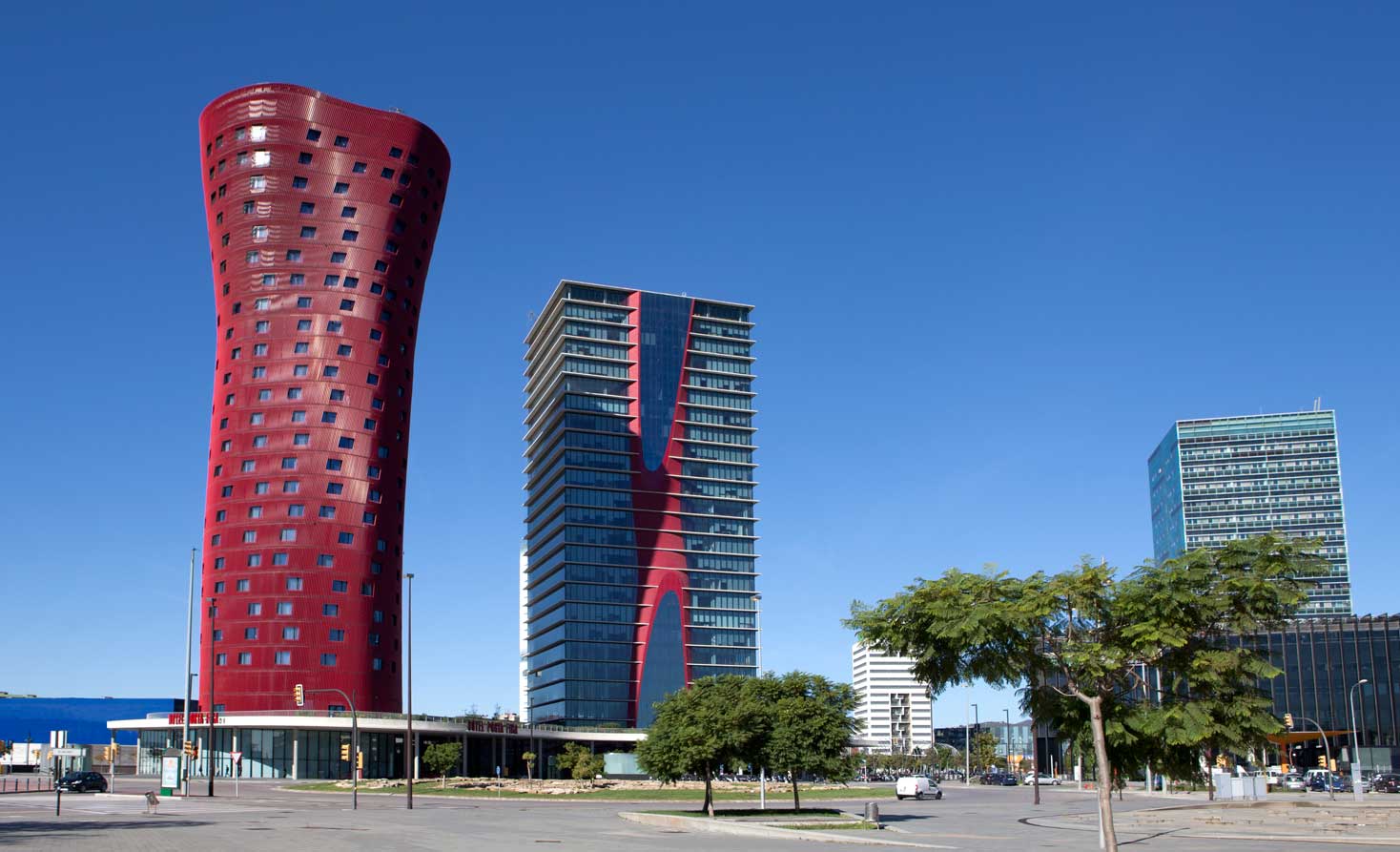
Venue: Hotel Porta Fira (opposite Smart City Expo World Congress), Plaza Europa, 45 – 08908 – Hospitalet de Llobregat, Barcelona
Roundtable 1: Advanced connectivity for the AI-driven smart cities of tomorrow
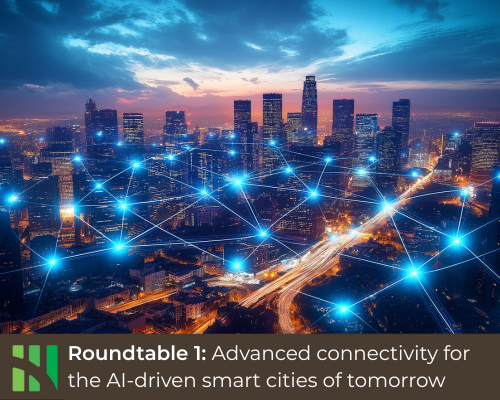
As cities evolve into smart, sustainable, and connected hubs, advanced connectivity technologies like 5G play a vital role in enabling innovative AI applications and services. This discussion will explore the opportunities, challenges, and future directions for leveraging advanced connectivity in smart city development.
Topics for conversation:
- Smart city platforms as enablers of integrated data sharing
- Connectivity infrastructure supporting real-time decision-making
- Advanced connectivity to strengthen public safety, intelligent transportation and large infrastructure such as smart ports and smart airports
- Emerging connectivity trends for AI-driven smart city applications
Roundtable 2: Cybersecurity strategies for sovereign resilience and trust
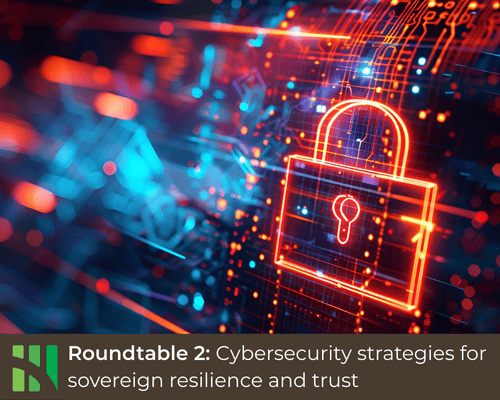
As cities and nations digitise their operations, critical information infrastructure becomes an attractive target for cyberattacks. The stakes are particularly high when it comes to energy grids, water systems, transportation networks, and healthcare services.
National-level security operation centres, strengthened with AI, can become a critical layer of defence to monitor, predict, and respond to cyber threats at scale. This roundtable will examine how governments are building cyber resilience, the role of cross-agency collaboration, and the importance of balancing national sovereignty with international cooperation.
Topics for conversation:
- Protecting critical information infrastructure from evolving threats
- The role of AI in detection, prediction, and rapid response
- Building national-level SOC capabilities and frameworks
- Sovereignty and control of data in an interconnected world
- Public trust and transparency in cybersecurity strategies
Roundtable 3: Smart mobility for rail and road – creating the next generation of urban transport
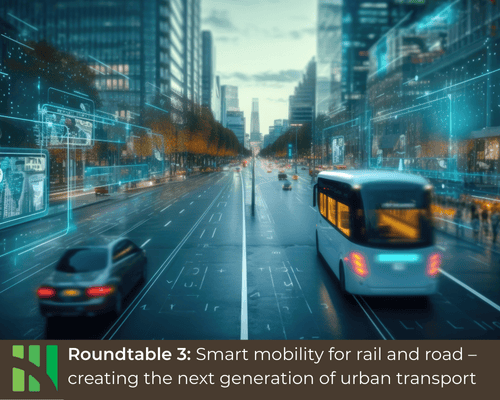
Urban mobility is at a crossroads, with rising demand, sustainability imperatives, and shifting citizen expectations. AI and advanced engineering are transforming how rail and road networks are managed, from predictive maintenance and traffic optimisation to integrated multimodal systems that improve efficiency and safety.
Cities are seeking to balance long-term infrastructure investment with near-term operational improvements, while also navigating funding constraints and complex stakeholder ecosystems. This discussion will bring together perspectives on how technology can help cities deliver safer, more sustainable, and more connected transport systems.
Topics for conversation:
- AI for predictive maintenance and real-time traffic management
- Integrating rail and road systems into seamless networks
- Safety, efficiency, and sustainability in transport planning
- Funding models and public-private collaboration
- Preparing for the future of mobility (e.g. autonomy, electrification)
Panel Discussion - Scene Setter

Name: Zeina Nazer
Title: Co-Founder
Organisation: Cities Forum
Biography:
Zeina is Co-Founder of Cities Forum, External Expert for UK Department for Transport, and Chair of ITS-UK Road User Charging Forum. Zeina has over 25 years of global experience in strategy, consulting and innovation at KPMG, Parsons, Jacobs and AECOM in the Middle East, Europe, S.E. Asia and USA.
A leading advisor for governments around the world in Smart & Sustainable Cities, Intelligent Mobility, Road User Charging, Connected Autonomous Vehicles, and Road Safety standards. Zeina specialises in Entrepreneurship, Innovation, Growth Strategy and Policy.
Panel Discussion Scene Setter

Name: Mike Lake Company: Leading Cities
Biography:
|
As President and CEO, Michael develops and establishes relationships with municipal governments, businesses and universities internationally, creating a global network of partner cities dedicated to implementing Smart City solutions that improve the quality of life in cities.
Leading Cities builds bridges between academia and action, between business and government, and between urban problems and solutions. Among its signature programs are AcceliCITY- among the largest, most prestigious smart and resilient city solutions focused competitions- and AcceliGOV—a competition of cities vying for globally sourced, expert-vetted, pre-paid pilot projects.
Michael’s career in public service spans from serving three United States Presidents as Special Assistant for White House Operations and Presidential Advance to serving the former Prime Minister of Ireland as a policy research analyst.
He is the only American nominated for the inaugural UK Smart Cities Awards 2017 in the category “Smart City Leader & Promoter and has been recognized globally as a pioneer in the space of Smart Cities for his leadership in networking cities across internationally.
Panel Discussion Scene Setter

Name: Tan Lee Chew
Title: Group Chief Commercial Officer (Market Development) and President Smart City & Digital Solutions
Organisation: ST Engineering
Biography:
As President of Smart City & Digital Solutions at ST Engineering, Tan Lee Chew drives international growth and market expansion across the Group’s Smart City and Digital businesses. She leads efforts to help governments and enterprises harness advanced technologies—including cloud, artificial intelligence, data analytics, the Internet of Things, and next-generation connectivity—to transform urban services and operational efficiency.
Under her leadership, ST Engineering is shaping the future of digitally enabled, resilient, and connected cities by delivering integrated platforms for data and connectivity, national-level cybersecurity capabilities, and AI-powered mobility solutions across rail and road networks. Her experience positions her at the forefront of guiding city leaders and policymakers in building safer, more sustainable, and more adaptive urban environments.
Panel Discussion Scene Setter

Name: Gareth Tang
Title: President, Urban Solutions
Organisation: ST Engineering
Biography:
Gareth is President, Urban Solutions of ST Engineering, a global technology, defence and engineering group with a diverse portfolio across smart city, defence, aerospace, and public security segments.
With deep expertise in product development, technology innovation and market expansion, he leads Urban Solutions in integrating large-scale smart mobility, infrastructure and digital systems into comprehensive turnkey solutions that deliver true operational value to customers.
Having held several leadership positions in driving growth across smart city verticals, Gareth brings fresh perspectives to the challenges of complex integration for city-scale smart initiatives. Partnership, collaboration and reinforcing customer confidence underpin his approach to solutioning and executing complex solutions at scale - whether it is turnkey rail services for smart metro systems, an AI-powered traffic management system, or mission-critical digital systems that safeguard a city’s key infrastructure.
Organisations registered to attend included
- Dublin City Council
- Government of Goias
- CCI Budapest
- Ministry of Digital Development and Information, Singapore
- Comune di Ferrara
- City of Dortmund
- West Midlands Combined Authority
- International Telecommunication Union (ITU) - United Nations
- City of Reykjavík
- Alcaldía Mayor de Bogotá
- Transport for Greater Manchester
- Glasgow City Council
- City of Torino
- Forum Virium Helsinki
- City of Stockholm
- Instituto Metropolitano de Planeación de Tijuana
- City of Amsterdam
- Digitaal Vlaanderen
- Cardiff Capital Region
- City of Copenhagen / Copenhagen Capacity
- Liverpool City Region
- London Borough of Hammersmith & Fulham Council
- Gdynia IT Center
- Kyiv City Administration
- JETRO - The Japan External Trade Organization
- South Dublin County Council
- Transport & Mobility Leuven
- Ministry of Regional Development, Czechia
- Greater Manchester Combined Authority
- Invest Bristol and Bath, West of England Combined Authority
- City of Cape Town
- City of Geneva
- Bristol and Bath, West of England Combined Authority
- Virginia Beach Department of Economic Development
- IZULAS (Izmir Municipal Government)
- World Smart Sustainable Cities Organization (WeGO)
- City of Tallinn
- Commune di Firenze
- London Legacy Development Corporation
- VTT Technical Research Centre of Finland Ltd.
- Centre for Regional Development, the Capital Region of Denmark
- Gdyskie Centrum Informatyki
- Dún Laoghaire-Rathdown County Council
Job titles of registered attendees included
- CIO
- Advisor to the Mayor and Chair of the Board
- Chief Commercial Officer
- Business Development Executive
- Assistant Director, Infrastructure & Environment
- Deputy Mayor
- Head of Innovation
- Director for Digital
- Smart City Director
- Head of Innovation
- IS Director
- CEO/Founder
- Executive Director - Strategic Affairs Sector
- Former Mayor
- Chief Innovation Officer
- Director Smart Cities Consulting
- President & CEO
- Lead, Data Economy and Foresight
- Director
- Head of EU R&I Collaboration
- CIO Advisor
- Chamber Counsellor
- Head of Urban Policy and Strategies Unit
- Business Development Manager
- Connected Places Lead
- Vice Director
- Smart City Manager
- Director of Facilities Management
- Councillor
- Deputy Director
- Digital Innovation Coordinator
- Strategic Digital Manager
- Head of Administration and Communication
- Regional Manager
- Commercial Lead
- Next Gen Wireless Projects Manager
- Intelligent Transport Systems (ITS) Development Manager
- Project Leader
- Strategic Transport Planner
- Innovation Senior Manager
- Trade & Invest Manager
- Senior Digital Strategy Officer
- Senior (Gen)AI/Data Scientist
Don't just take our word for it...
Why not try these links to see what our SmartCitiesWorld AI can tell you.
(Please note this is an experimental service)
How can cities develop sovereign AI capabilities to reduce external dependencies?What infrastructure upgrades enable real-time digital twin simulations in urban areas?How do local AI governance frameworks enhance citizen trust and data security?Which strategies effectively build long-term urban AI talent pipelines?What role do high-performance platforms play in scaling smart city intelligence?BECOME A MEMBER
© 2026 SmartCitiesWorld
Smart Cities World Ltd, 27 Clements Lane, London, EC4N 7AE