













BUILD YOUR OWN
RESOURCE LIBRARY



Opinions

Beyond video: how cameras as IoT sensors are changing city safety operationsSponsored by Axis Communications

Building smarter cities: scaling sustainability and efficiency with smart city platformsSponsored by ST Engineering
How AI cities shape Malaysia’s digital future – and the role of the region’s first Smart City Expo
Special Reports04 Sep 2025
Sponsored by Smart City Expo Kuala Lumpur
Discover how Malaysia is leading the way in AI-powered urban innovation at the first Southeast Asian Smart City Expo, where attendees can explore the transformative impact of AI on city planning, management, and citizen engagement.


Artificial intelligence is rapidly reshaping the possibilities of urban life. Across the world, city leaders are turning to AI-powered solutions to improve how cities are planned, managed, and experienced. From predictive traffic systems that cut congestion, to AI-assisted environmental monitoring that identifies pollution hotspots in real time – and even to digital twins that model the impacts of new developments before a single brick is laid – the integration of AI into city systems is moving from concept to daily reality.
For municipalities, this evolution represents a step change in how public services are delivered. AI enables cities to process vast streams of data from sensors, cameras, and citizen inputs, translating them into actionable insights. This allows for more responsive decision-making, better resource allocation, and services that adapt to the needs of residents rather than operating on fixed schedules or assumptions. For citizens, it promises more reliable public transport, safer streets, cleaner environments, and a stronger voice in how their cities evolve.
In Southeast Asia, the urgency to adopt these technologies is heightened by the region’s rapid urbanisation. Cities are growing fast – both in population and complexity – and governments face the dual challenge of expanding infrastructure while meeting rising expectations for quality of life. AI, combined with high-speed connectivity, offers a way to leapfrog older, less efficient systems and move straight to agile, data-driven governance.
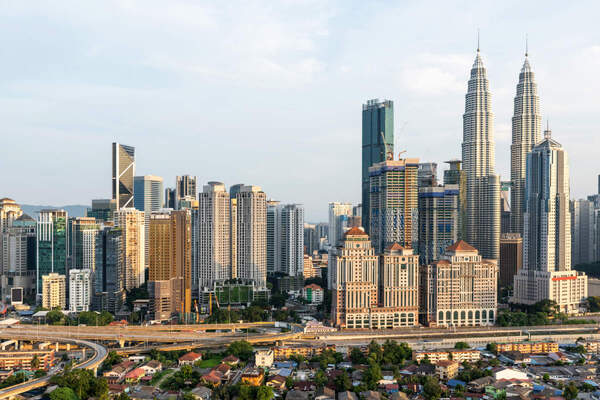
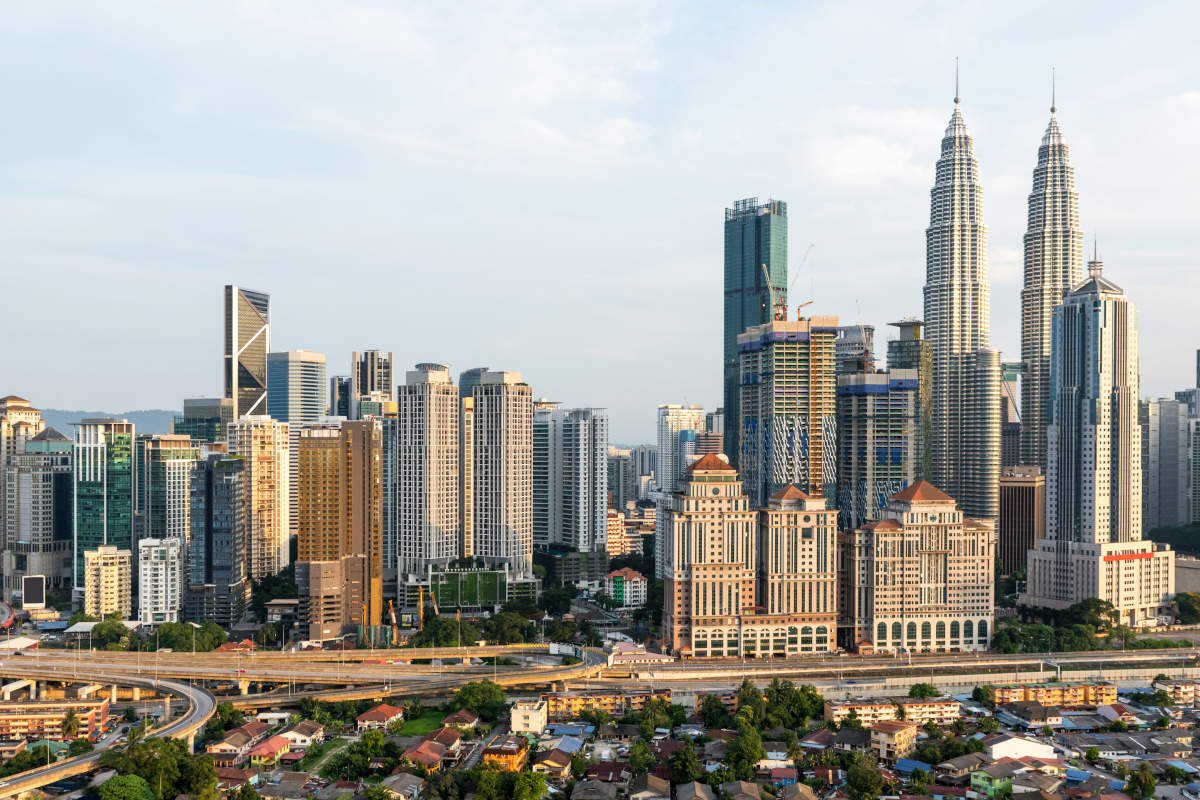
This is the backdrop against which Malaysia will host the first Southeast Asian edition of the globally renowned Smart City Expo World Congress. Smart City Expo Kuala Lumpur 2025 (SCEKL25), running from 17-19 September at the Kuala Lumpur Convention Centre, will put AI front and centre under the theme “AI cities: shaping our digital future”.
Co-organised by the Malaysia Digital Economy Corporation (MDEC) and Digital Nasional Berhad (DNB) for the Ministry of Digital, SCEKL25 will convene over 2,000 delegates and more than 10,000 visitors from across ASEAN and beyond. It will be a platform where global leaders, policymakers, investors, and innovators gather to discuss how AI can drive sustainable, inclusive, and competitive cities in the region.
Malaysia, which holds the ASEAN Chairmanship in 2025, is aiming to position itself as the region’s leading hub for digital transformation and urban innovation
Positioning Malaysia at the heart of ASEAN’s smart city journey
The decision to host SCEKL25 in Kuala Lumpur is a statement of intent. Malaysia, which holds the ASEAN Chairmanship in 2025, is aiming to position itself as the region’s leading hub for digital transformation and urban innovation. The Expo will directly support the Master Plan on ASEAN Connectivity 2025, which seeks to strengthen physical, institutional, and peer-to-peer networking across the region.
Malaysia’s Minister of Digital, YB Gobind Singh Deo, has described the event as “a bold step forward in Malaysia’s ambition to become a leading regional digital hub”, and an opportunity to have “transformative conversations about the future of urban innovation”. With ASEAN’s digital economy on the brink of exponential growth, the timing is critical.
The Expo is built around four strategic pillars that reflect both Malaysia’s national priorities and broader regional needs:
- AI cities
- Sustainable and resilient cities
- Digital entrepreneurship and economic development
- Community empowerment through digital solutions.
This framing signals that the focus is not just on technology, but on how AI can be integrated into the full spectrum of city functions – from sustainability and planning to business growth and community engagement.
AI cities – from pilots to platforms
The Expo’s “AI cities” pillar will spotlight the technologies, policies, and case studies driving AI adoption in urban contexts. For Malaysia, this is not just a theoretical exercise – AI is already being applied in several high-impact projects.
In Penang, predictive traffic systems are helping to anticipate and reduce congestion. In Kuala Lumpur, AI-driven traffic signal optimisation is cutting journey times and improving road safety. In Sabah, geospatial intelligence is being used to monitor land use and environmental changes. Putrajaya, Malaysia’s administrative capital, is piloting parametric modelling to simulate urban scenarios and optimise service delivery, supported by data from its Urban Observatory.
One of the most promising tools for AI-driven cities is the digital twin – a dynamic, virtual replica of a city that can be used to model everything from traffic flow to flood risks. By integrating real-time data, cities can test policy decisions in a virtual environment before implementing them in the real world. At SCEKL25, expect to see global and local examples of digital twins in action, alongside demonstrations of AI systems for energy efficiency, waste management, and emergency response.
Sustainable and resilient cities – beyond climate
Southeast Asia is one of the regions most exposed to climate risks, including both rising sea levels and extreme heat. Cities must therefore plan not only for growth, but also resilience. The “Sustainable and resilient cities” pillar at SCEKL will explore how urban areas adapt to environmental challenges while reducing their ecological footprint, as well as the role of AI in doing so.
Across the world, real-time environmental monitoring, AI-enhanced flood prediction models, and energy grid optimisation systems are already demonstrating how data can inform faster, better-targeted interventions. By integrating these tools, cities can balance development with sustainability, reducing emissions and preserving resources.
Malaysia’s Fourth National Physical Plan (NPP4) calls for cities that are both smart and climate-resilient, and SCEKL25 offers a venue to align this national agenda with cutting-edge global practices.
Growing Malaysia’s innovation economy
The Expo is also designed to boost Malaysia’s standing as a regional technology and innovation hub. The “Digital entrepreneurship and economic development” pillar will focus on how AI and digital infrastructure can drive business growth at different scales, from startups to multinational corporations.
With robust 5G infrastructure now in place nationwide, Malaysian cities have the connectivity backbone needed to support high-bandwidth, low-latency applications – foundations for many AI solutions. For local entrepreneurs, this opens up new opportunities in AI software, smart devices, and data services.
By bringing together investors, tech providers, and municipal leaders, SCEKL25 aims to catalyse partnerships that will scale homegrown innovations across ASEAN. Core to this pillar is goal to boost Malaysia’s profile as a smart city innovator, while also creating avenues for trade and foreign direct investment.
Community centric innovation
A central theme of SCEKL25 is that smart cities must be people-centric. The “Community empowerment through digital solutions” pillar will examine how AI can improve citizens’ daily lives while ensuring equitable access to technology.
This includes AI-powered community engagement platforms that make it easier for residents to participate in urban planning, as well as assistive technologies that support elderly or disabled residents in navigating the city. Malaysia’s vision for AI cities emphasises trust, transparency, and ethics – values that will be explored through discussions on AI governance and public trust-building.
MDEC is working with the National Artificial Intelligence Office (NAIO) to ensure that AI adoption in Malaysia is underpinned by responsible use policies, balancing innovation with accountability.
SCEKL25 is expected to generate long-term benefits, from strengthening Malaysia’s innovation ecosystem to fostering cross-border knowledge exchange
A global platform with regional impact
As the first Southeast Asian edition of the Barcelona-affiliated Smart City Expo, SCEKL25 will be part of a global network of knowledge-sharing and collaboration. The event’s international reach will be reinforced by keynote speakers such as Dr David Hanson, creator of Sophia the Robot; urban strategist Dr Alfonso Vegara; and futurist Penny Wong, alongside many other experts in AI, urbanism, and sustainability.
Malaysia’s role as host is also symbolic; by leading the conversation on AI-powered urban transformation in ASEAN, the country is positioning itself as a model for other nations in the region. The aim is not just to adopt global best practice, but to adapt and scale them for Southeast Asia’s unique urban challenges and opportunities.
SCEKL25 is expected to generate long-term benefits, from strengthening Malaysia’s innovation ecosystem to fostering cross-border knowledge exchange. It will also offer smaller municipalities – which may lack the budgets or capacity of major cities – the chance to explore affordable, scalable AI solutions.
SCEKL25 marks the beginning of what organisers hope will be a sustained movement toward smarter, more inclusive cities across the region. By September, Kuala Lumpur will become the focal point for discussions that could shape ASEAN’s urban future for years to come.
The combination of Malaysia’s national ambitions, its ASEAN Chairmanship, and the global expertise converging at the Expo creates a unique moment for the country to influence how AI is applied to urban life. For city leaders, technology providers, and community advocates alike, SCEKL25 is an opportunity to align vision with action, and ambition with implementation.
When the doors open on 17 September 2025, the conversations, demonstrations, and partnerships forged in Kuala Lumpur will be steps toward that goal. And for the citizens of Malaysia and Southeast Asia, the benefits could be felt long after the Expo’s closing day.
Find out more and discover how you can be involved in this year’s SCEKL here.
Why not try these links to see what our SmartCitiesWorld AI can tell you.
(Please note this is an experimental service)
How can AI-driven digital twins improve urban planning and disaster management?What role does AI play in enhancing citizen engagement and community empowerment?How does Malaysia’s 5G infrastructure support scalable AI smart city solutions?In what ways can AI optimize sustainability and resilience in Southeast Asian cities?How will Smart City Expo Kuala Lumpur 2025 foster regional digital innovation partnerships?AI and Machine LearningAI CityXchange - Industry Insightscitizen engagementConnectivity & Datadigital inclusionGovernance and Citizen
Latest City Profile
SmartCitiesWorld Newsletters (Daily/Weekly)
You may also like these related articles...
BECOME A MEMBER
© 2026 SmartCitiesWorld
Smart Cities World Ltd, 27 Clements Lane, London, EC4N 7AE