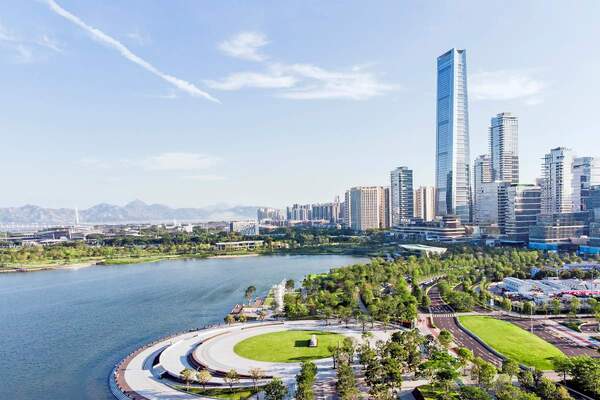
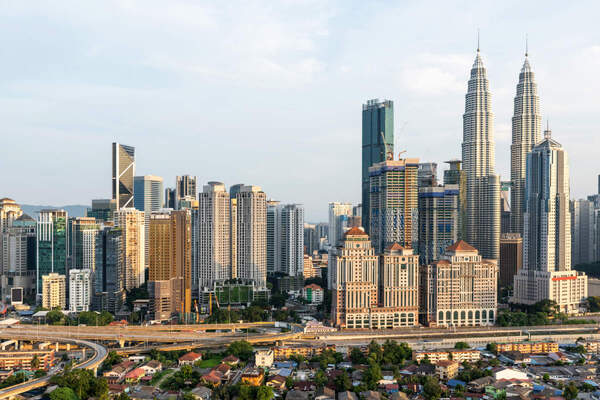




Shenzhen was recognised for its Smarter City, Better Life initiative focused on transforming the city through digitalisation, advanced urban management, and sustainable development.

The Chinese city of Shenzhen has been named smart city of 2024 at the World Smart City Awards gala held at Smart City Expo World Congress (SCEWC) in Barcelona.
This year’s edition gave the special leadership award in recognition to the continuing efforts to drive urban innovation internationally to Giuseppe Sala, mayor of Milan in Italy.
Shenzhen was recognised for its Smarter City, Better Life initiative focused on transforming the city through digitalisation, advanced urban management, and sustainable development to tackle challenges like dense population, resource limitations, and environmental concerns.
Aiming to establish a new smart city model, Shenzhen’s project integrates high-speed broadband, digital twins, AI, and data-driven governance.
The Tomorrow.Mobility award went to the Dublin (Ireland) City Council for its Active Travel Dashboard, a one-stop shop for active travel that census commuting data, Google EIE trips data and EcoCounter cycle and pedestrian counter data to accurately build a picture of active travel in the Irish capital.
Aramco (Saudi Arabia) and the aProCh initiative in Ahmenabad (India) won the Innovation Award of 2024. Aramco’s myCommunity platform, developed within the Dhahram Smart City framework (Saudi Arabia), is a connected ecosystem that enriches and empowers over 100 different ethnicities across 14 communities, placing the power of community engagement directly into the hands of residents.
The second Innovation Award went to the Riverside Education Foundation for a groundbreaking initiative transforming cities into child-friendly spaces. By reclaiming and reimaging public spaces, they empower children to be active participants in the creation of more inclusive and sustainable future.
In the Enabling Tech category, the winner was Madrid in Spain, for its Madrid Capital Digital initiative to accelerate the digitalisation of public services, improve the wellbeing of Madrid’s residents, and maintain the city as a digital benchmark.
In the Energy & Environment category, the award went to FCC Environment (Spain) for the development of the urban-service H2-cell chassis, a self-supporting modular hydrogen-fuelcell lorry chassis with permanent electric traction, plug-in function, high- power batteries, advanced low-entry cab that is suitable for all urban service purposes.
London’s GOL project was chosen as the winner in the Governance category. The Get Online London (GOL) is the first pan-city sustainable digital inclusion service, created to improve access to digital devices, connectivity and digital skills for London residents, addressing the deepening inequalities resulting from an increasing digital society.
Aiming to establish a new smart city model, Shenzhen’s project integrates high-speed broadband, digital twins, AI, and data-driven governance
The Infrastructure & Building award went to Envision Charlotte (US) for its Glass to Concrete project to process glass recovered in bars and restaurants to be used in place of sand in the making of concrete for local projects.
The last award, Living & Inclusion, was for the Compas project in Korea. The Korea Land & Housing Corporation developed the Compas data analysis platform to create a predictive model for visualising public safety big data that solves urban problems through crowdsourcing by engaging citizen participation and data analysis.
Under the theme Live Better, the 2024 Expo gathered more than 1,100 exhibitors, representatives of 850 cities, and over 600 experts to outline a more ethical urban future together.
Why not try these links to see what our SmartCitiesWorld AI can tell you.
(Please note this is an experimental service)
How does Shenzhen integrate AI and digital twins for urban management?What role does data-driven governance play in Shenzhen's smart city model?How does the H2-cell chassis improve urban environmental sustainability?In what ways does the GOL project enhance digital inclusion in London?How does the Compas platform use crowdsourcing to improve public safety?