






















Discover how AI-powered digital twins are transforming urban infrastructure and how these innovations can improve efficiency, resilience, and sustainability.
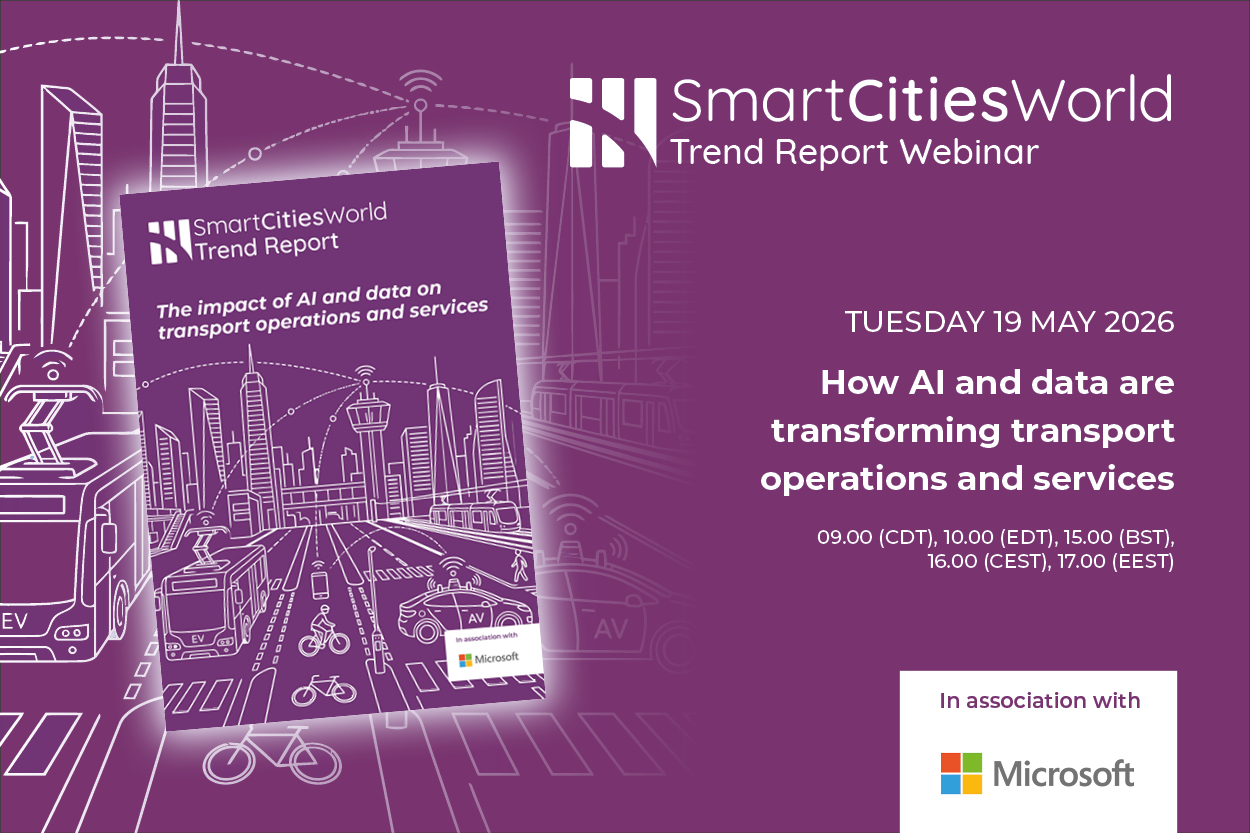
Explore how data and AI are being used in urban transport networks to support planning, day-to-day operations, and improve outcomes for communities and passengers.
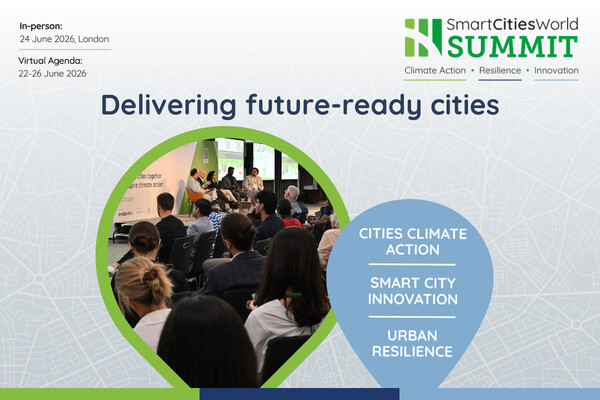
As cities confront the combined pressures of climate change, infrastructure resilience and digital transformation, the SmartCitiesWorld Summit 2026 will bring together urban leaders and partners during London Climate Action Week to explore how these agendas intersect – and how cities can translate strategy into practical action.
Find out how Sunderland is repositioning itself as a leading smart city – using digital infrastructure and low-carbon innovation to build a resilient, future-focused economy in the latest SmartCitiesWorld City Profile.
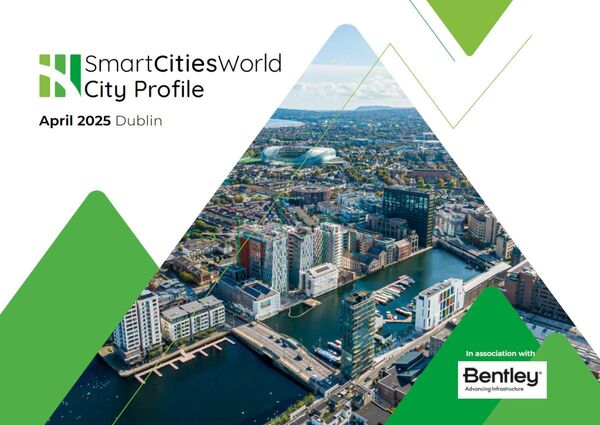
Find out how Dublin is innovating to improve experiences and services for its communities in the latest SmartCitiesWorld City Profile, including digital twin projects, traffic reduction, and economic growth.
Tune into the SmartCitiesWorld podcast to understand the world of sovereign AI for cities, featuring PNY Technologies’ Youssef Nadiri as our expert guest.
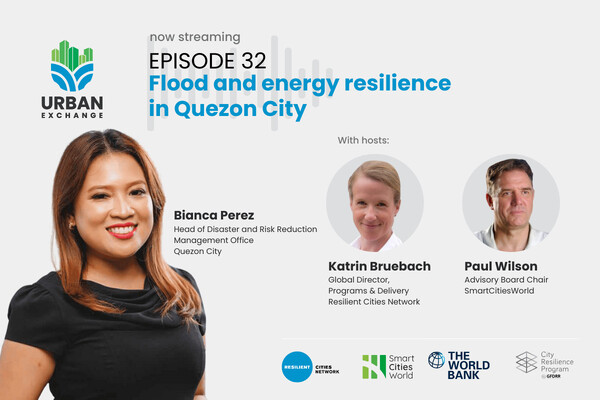
Tune in for the latest Urban Exchange where we get a first-hand account of city resilience measures from Quezon City following unexpected extreme rainfall.
How smart sensor networks can help improve indoor safety by detecting risks early, improving situational awareness and supporting healthier, more secure and sustainable buildings.
Gareth Tang, President of Urban Solutions at ST Engineering, explains how urban AI applications are set to evolve, detailing projects where AI is already making significant impact.
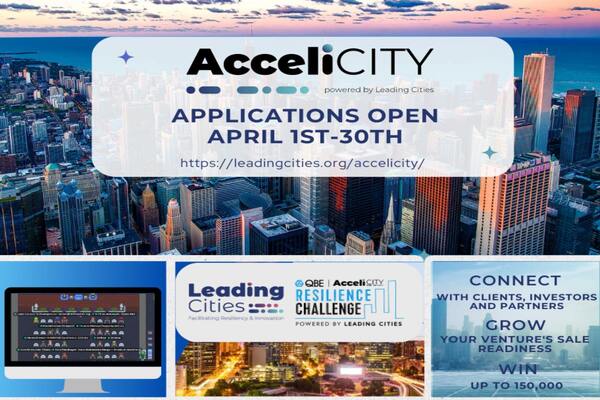
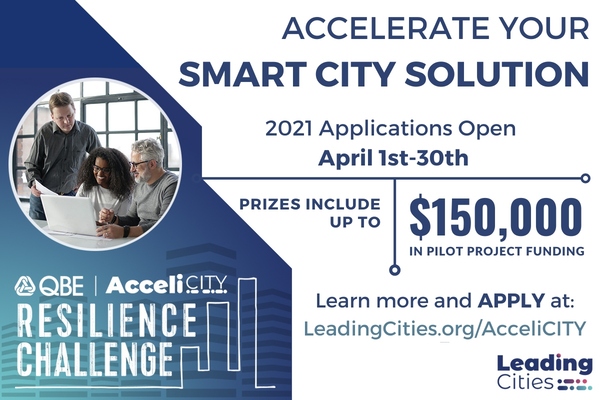
The Smart City Track winners in the AcceliCITY Resilience Challenge, organised by Leading Cities, will receive up to $150,000 to fund a city pilot project.
Challenge, organised by Leading Cities, aims to connect global entrepreneurial ideas with local projects that foster innovation and positively impact communities.
Leading Cities, Australian Red Cross, and QBE Foundation are joining forces to pilot data-driven technology solutions to help tackle humanitarian crises.
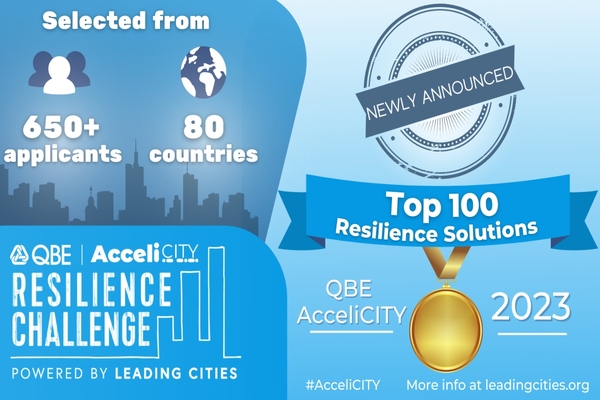
Itselectric was selected as City Solution of the Year from a pool of more than 650 entrepreneurs from 80 countries who competed in the QBE AcceliCITY challenge.
Leading Cities has announced the finalists for the QBE AcceliCITY Resilience Challenge, who will compete for a total of $100,000 in pilot project funding.
Resilience challenge has curated what it describes as a collection of highly promising solutions to future-proof cities, protect residents, and promote equity.
Leading Cities is inviting local governments and private organisations to apply for a free plastic waste recycling pilot that will also reduce waste collection costs.
Common city challenges tackled by the finalists in this year’s QBE AcceliCITY Resilience Challenge span areas such as digital infrastructure and comms tech, public transportation, renewable energy and fresh food shortage.
Through this pilot project, the pharmaceutical company’s largest manufacturing site will partner with Pharem Biotech’s Zymatic solution to more effectively treat wastewater by removing organic pollutants.
We have seen great gains in terms of building resilience and tackling critical challenges by investing in smart city solutions but, as Michael Lake of Leading Cities highlights, we need to build the ecosystem to achieve so much more.
Leading Cities has launched the 2022 QBE AcceliCITY Resilience Challenge, a global competition that aims to accelerate the growth of start-up companies transforming cities worldwide.
Local governments can compete for use of the QBE AcceliCITY Resilience Challenge grand prize winner’s solution to properly treat water and remove relevant organic pollutants.
Michael Lake and Zoe Selman of Leading Cities say the key to resiliency is innovative thinking and technology and urge cities to engage and empower the changemakers, such as start-ups.
Leading Cities’ CEO, Michael Lake, and Andrew McCue, an economy consultant at Metabolic, urge leadership in two key areas that provide hope in cities’ battle against climate change and their shift towards sustainability.
Pharem Biotech’s solution removes hazardous organic pollutants from water and its implementation is reportedly relatively simple, leveraging existing water treatment equipment.
The finalists in this year’s QBE AcceliCITY Resilience Challenge have been announced and will participate in a boot camp later this month to compete for $150,000 in pilot project funding.
Green electricity start-up Bioo will provide education kits to 10 high schools in the German city to educate students on its technology, which generates electricity from soil and plants.
The global competition offers total prize money of $150,000 in funding for the winning entrepreneurs or ventures to further develop their ideas and help to transform cities.
Barcelona-based start-up Bioo has developed a unique way of generating electricity from plants’ photosynthesis that doesn’t damage them and is 100 per cent renewable.
The 11 start-ups chosen are committed to tackling common urban challenges in areas such as air quality, carbon emissions, digital inclusion and congestion.
The company, which converts CO2 gas into solid products, has been working since the start of the pandemic to develop a novel filtration material using CO2-embedded additives.
QBE AcceliCity programme will recognise and support innovators which leverage smart city solutions that help cities manage and respond to physical, economic and social risk.