













BUILD YOUR OWN
RESOURCE LIBRARY



Opinions
Beyond video: how cameras as IoT sensors are changing city safety operationsSponsored by Axis Communications

Building smarter cities: scaling sustainability and efficiency with smart city platformsSponsored by ST Engineering
Buildings are getting smarter: are they also getting healthier?
How human-centric design is improving the health and well-being of workers in commercial buildings.


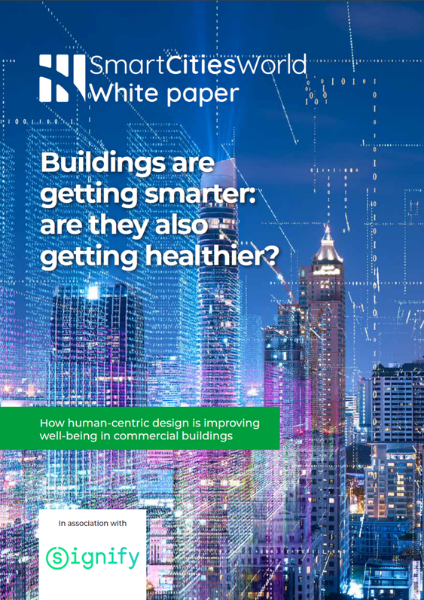
When buildings get smarter, cities get smarter. Smart building design renders buildings more intelligent and more sustainable. But what about the well-being of a building’s occupants? Does a smarter building automatically deliver a higher level of well-being?
Employee well-being is a key factor in promoting job performance, personal health, productivity and creative thinking while alleviating absenteeism and presenteeism.
How to ensure a building contributes to well-being is a challenge for architects, designers, real estate developers and building owners – and for smart city leaders striving to improve the quality of urban life and health.
In this paper, we explore trends in smart buildings, how a sick building affects well-being, and how innovative lighting solutions open windows of opportunity to improve employee health. It features case studies from an Atea project in Noray and TU Eindhoven ATLAS.
In association with:

.
Why not try these links to see what our SmartCitiesWorld AI can tell you.
(Please note this is an experimental service)
How does human-centric design improve employee well-being in commercial buildings?What role does innovative lighting play in enhancing worker health indoors?How can smart building data analytics optimize indoor air quality effectively?In what ways does 5G connectivity support smarter, healthier building environments?How do smart buildings contribute to resilience in ageing urban populations? Previous: Trend Report: Creating truly open cities
5Gageing societyAI and Machine Learningair qualityAnalyticsAnalyticsBuildingsBuildings - CommercialBuildings - PublicBuildings - Residentialcitizen engagementClimate change/ResilienceCommercial buildingsConnectivityCovid EffectCovid-EffectDataData CentresData marketplace/Platformdata privacyDevicesEditor's pickEnergyEnergy - LightingFeature highlightsGovernancehealthLightingLightingMunicipal buildingsNetworkOpen DataPlanningPublic-private partnershipsresilienceSecuritySecuritySensorssmart gridsTransportwastewaterwater
Latest City Profile
SmartCitiesWorld Newsletters (Daily/Weekly)
You may also like these related articles...
BECOME A MEMBER
© 2026 SmartCitiesWorld
Smart Cities World Ltd, 27 Clements Lane, London, EC4N 7AE