
Paseo Park reimagines streets for people, tackling climate change and pilots solutions to ease the conflict between pedestrians, mopeds and micromobility.
A community-led volunteer organisation has released a report advocating that New York City’s “gold standard” open street should be transformed into a permanent linear park.
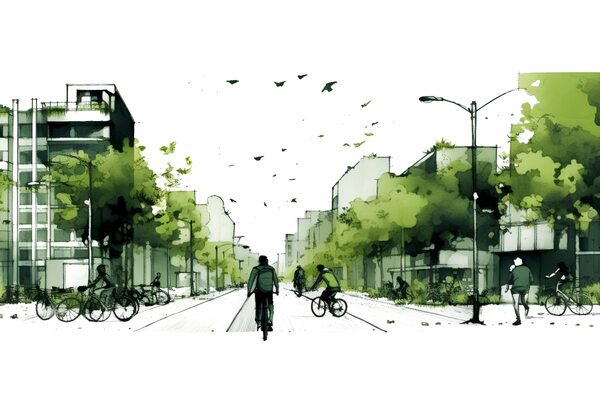
The Alliance for Paseo Park has unveiled a set of community priorities, along with conceptual renderings and a holistic plan in the report for Paseo Park, which includes making it permanent pedestrian-first space.
Jackson Heights, Queens, is home to New York City’s largest and most successful open street, Paseo Park (formerly 34th Avenue Open Street). Yet Jackson Heights, one of the City’s most diverse and densely populated districts, ranks last in park space and lacks a community centre.
The City has allocated $90m in capital funding for improvements to the 26-block long (1.3 mile) stretch, which runs along 34th Avenue from 69th Street to Junction Boulevard. The open street was created in 2020 during the pandemic.
The creation of a linear park along 34th Avenue Open Street would give the community up to 7.5 acres of park space, quadrupling the amount of public green space.
The Alliance for Paseo Park’s report is the result of nearly a year of multi-lingual, multi-faceted community outreach and engagement conducted by volunteers from the alliance, including: eight tabling sessions; two community visioning workshops; 12 “outreach ambassadors” holding smaller kitchen table conversations; several dozen in-person and virtual meetings with neighbours, local leaders, organisations, and businesses – and even a survey designed by local Girl Scouts specifically for children.
“We must work together to make it better and push the City to seize this once-in-a-lifetime opportunity to create green space from street space that could serve as a replicable model across New York City”
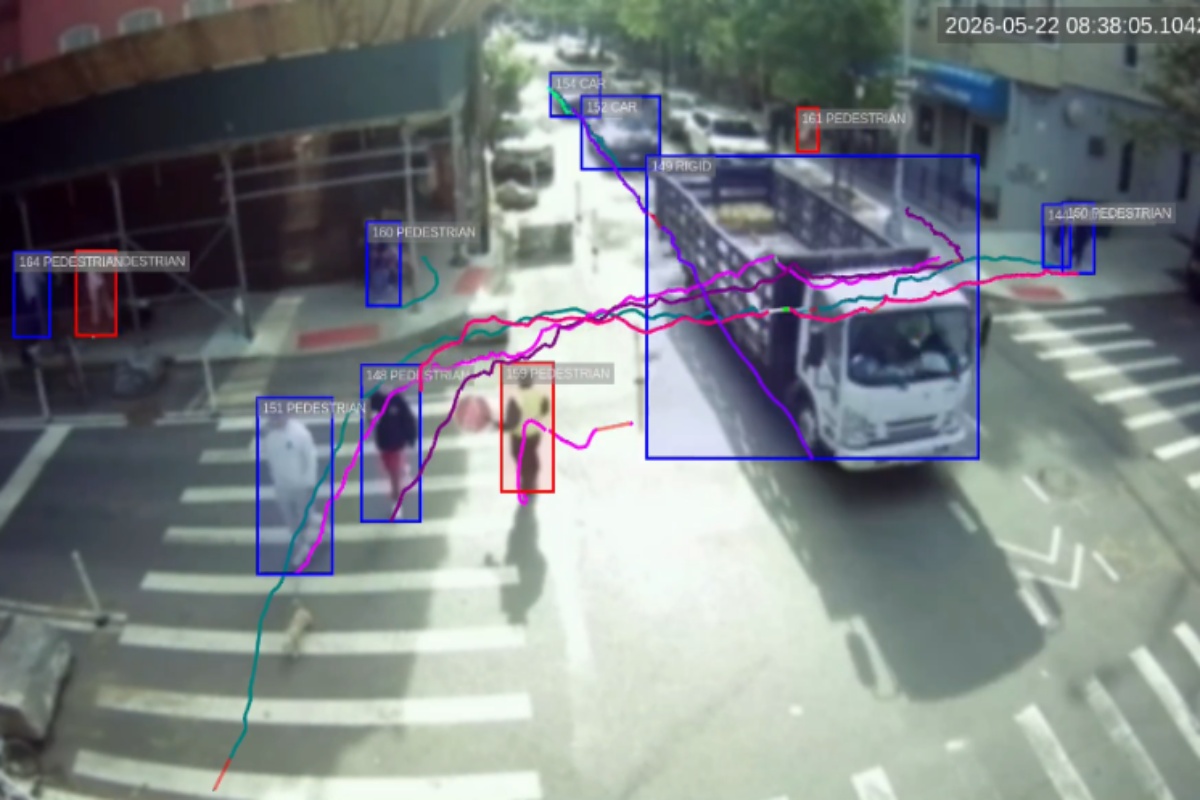
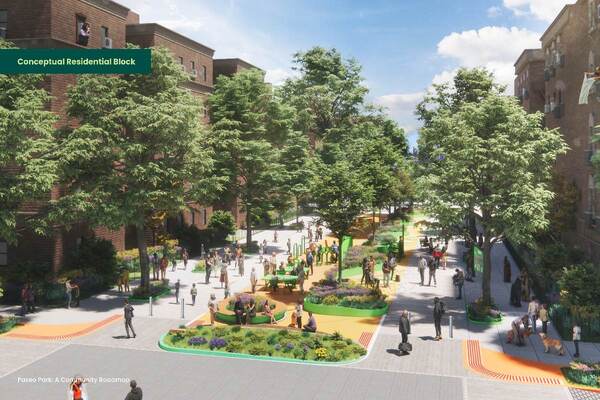
The Paseo Park Community Roadmap includes conceptual renderings, a before and after of how the open street could be transformed to a public space for the community. The report recommends the New York City Department of Transportation (NYC DoT) address the city-wide problem of speeding mopeds and e-bikes by creating space for higher speed working and commuting cyclists and vehicles on an adjacent avenue.
“Our community is clearly calling for a pedestrian-first space, where children and our elders can be safe from speeding vehicles. With this redesign we have a chance to address flooding, rising heat, and other effects of climate change.” said Dawn Siff, executive director of Alliance for Paseo Park.
“Our open street is still evolving. We must work together to make it better and push the City to seize this once-in-a-lifetime opportunity to create green space from street space that could serve as a replicable model across New York City.”

Recommended design improvements to Paseo Park include: widening the median to provide space for play, rest and exercise; raising the street bed so it is level with the sidewalk; and raising the crosswalks for pedestrian safety.
The top priorities identified from community engagement are:
The report also calls on NYC DoT to pilot new street designs to begin to address the global problem of street infrastructure that has not kept pace with modern transportation.
“What’s happening in Jackson Heights is a model not just for Queens, but for cities everywhere seeking to rebalance their streets to serve people first”
The alliance worked with WXY architecture + urban design – a design firm dedicated to community driven processes and meaningful engagement – to design the outreach methods, materials, and analyse the feedback. WXY’s past Queens-based community engagement projects include: the Corona Plaza Street vendor redesign; the Long Island City Neighbourhood Plan; and the Queensway.
“Paseo Park is a reimagining of how our streets can serve the full spectrum of urban life,” said Claire Weisz, founding partner of WXY. ”Working closely with the Jackson Heights community, we’ve helped articulate a vision that meets both hyperlocal needs and a growing global demand for equitable, climate-resilient public space. That means designing for all generations but also confronting the realities of a changing transportation landscape.”
Weisz added: “We see Paseo Park as part of a holistic corridor plan that accommodates pedestrians while creating alternate, safe routes for high-speed e-bikes and mopeds. What’s happening in Jackson Heights is a model not just for Queens, but for cities everywhere seeking to rebalance their streets to serve people first.”
Why not try these links to see what our SmartCitiesWorld AI can tell you.
(Please note this is an experimental service)
How can Paseo Park's design reduce urban heat and flooding effectively?What strategies ensure pedestrian safety amid increased micromobility traffic?How does widening medians enhance community recreational and exercise spaces?In what ways can linear parks improve access to outdoor learning for schools?How might reallocating street space support climate resilience in dense urban areas?