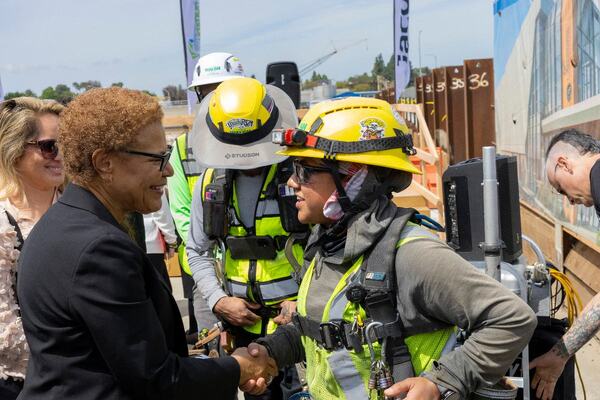
The role of cities has been brought into the spotlight at the UN Cop28 climate event this week, with the first-ever formal Local Climate Action Summit.
The UN’s Cop28 climate summit in Dubai has this week brought forth promising developments that signal a positive shift in global efforts toward climate action within cities. Leaders from around the world have unveiled initiatives that highlight a growing commitment to sustainable practices and environmental responsibility.
Earlier this week, Cop28 hosted the unveiling of the Net-Zero Data Public Utility (NZDPU), a proof-of-concept that aims to revolutionise the availability of private sector climate transition-related data. French President Emmanuel Macron and the UN Secretary-General’s special envoy on climate ambition and solutions Michael Bloomberg introduced the NZDPU, which will serve as the world’s first global, centralised, open repository for such data. The platform is designed to enhance transparency by making critical private sector climate data freely accessible to all, a move that is crucial for facilitating the net-zero transition.
Another significant step forward came with the expansion of the Breathe Cities clean air initiative. Several new cities, including Accra, Brussels, Jakarta, Johannesburg, Milan, Nairobi, Paris, Rio de Janeiro, and Sofia, have joined forces to tackle air pollution, reduce carbon emissions, and improve public health. The initiative, supported by Bloomberg Philanthropies, Clean Air Fund, and C40 Cities, aims to create a collective impact by fostering collaboration among cities worldwide.
The beginning of Cop28 saw the first Local Climate Action Summit (LCAS) take place, bringing together over 500 mayors, governors, and local leaders from 63 countries. During the summit, the Cop28 presidency launched the Coalition for High Ambition Multi-Level Partnerships (Champ), a collaborative initiative designed to involve local and regional leaders in the development of updated and ambitious Nationally Determined Contributions (NDCs).
Champ, endorsed by more than 60 national governments, provides a platform for collaboration between national and subnational levels to ensure the next round of national climate targets is as ambitious and inclusive as possible. This approach aims to gather innovative ideas for climate action from the local level, creating a more robust and comprehensive framework for NDCs.
With its greater focus on cities and local government, Cop28 indicates a growing sense of optimism for cities’ climate action. The commitment to transparency through initiatives like the NZDPU, the expansion of the Breathe Cities initiative, and the inclusive approach of Champ demonstrate a global willingness to address climate challenges collaboratively.
As cities join forces and share data, strategies, and commitments, there is hope that the momentum generated by and for cities at Cop28 will lead to meaningful progress in the collective fight against climate change.
Why not try these links to see what our SmartCitiesWorld AI can tell you.
(Please note this is an experimental service)
How does the Net-Zero Data Public Utility improve climate data transparency?What mechanisms enable Breathe Cities to reduce urban air pollution effectively?How can local leaders influence Nationally Determined Contributions through Champ?What role do multi-level partnerships play in enhancing climate action ambition?How does sharing climate data among cities accelerate net-zero transitions?