


Watch this SmartCitiesWorld and BizzTech panel discussion where industry leaders and experts will delve into the transformative potential of metaverse and digital twin technologies for urban development.
The SmartCitiesWorld Summit, which takes place 26-27 June, will act as a call to action for cities to make the transformation of the built environment a central part of their climate action strategies.
Benson Tam of Venturous Group and Michael Kwok of Arup explain how innovative public and private partnerships are pushing the envelope for the future of cities.
John Fitzgerald, Project Director, Linesight, explains why major reskilling, outreach work by government and the right messaging will be key to realising benefits.
Scott Shepard, Chief Commercial Officer, Free2Move, highlights lessons learned in Europe and North America about how to succeed with shared mobility so that cities can leverage the best from mobility innovations and investments.
Our editor, gives his take on how smart cities are evolving. If you would like to receive these direct to your inbox as part of our weekly newsletter, make sure you sign up as a member (free!).

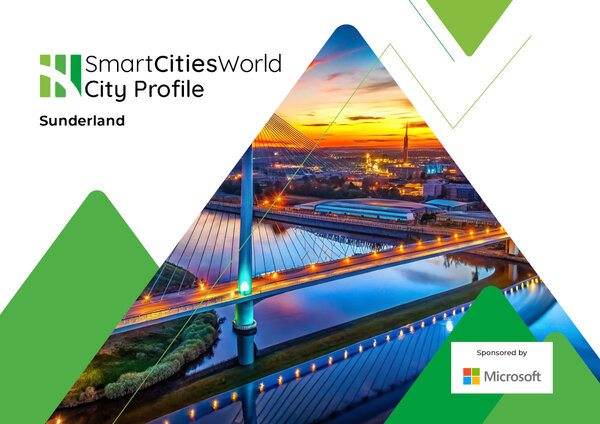
Find out how Sunderland is repositioning itself as a leading smart city – using digital infrastructure and low-carbon innovation to build a resilient, future-focused economy in the latest SmartCitiesWorld City Profile.
Download our latest report to uncover how artificial intelligence is being used to support cities in how they plan and operate city services to ensure they are vibrant, sustainable and economically thriving modern spaces.
Discover how AI-powered digital twins are transforming urban infrastructure and how these innovations can improve efficiency, resilience, and sustainability.
Discover the technology and considerations behind how cities can turn existing streetlight networks into secure, interoperable, and future‑proof infrastructure in the second episode of Cities Thriving on Lighting.
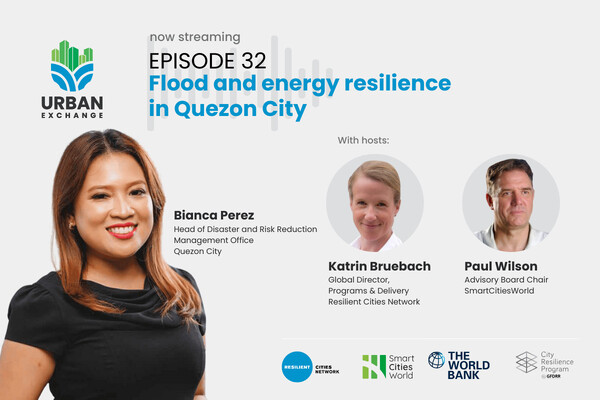
Tune in for the latest Urban Exchange where we get a first-hand account of city resilience measures from Quezon City following unexpected extreme rainfall.
Our editorial newsletter pulls together our latest news items into one email, direct to your inbox. We also feature our latest city interviews, Special Reports and Guest Opinions.
The push towards greater carbon transparency and enhancing emissions reporting underscores the collective commitment to sustainability in the built environment.
Members and regular visitors to our site won’t need to be told that SmartCitiesWorld has undergone a major redesign. Much like the cities and the technology featured on the site, we recognise that we ourselves must also evolve and react to changing times.
Michael Lewis, the forensic chronicler of the 2008 financial crash in The Big Short (among many, many other incredible books), made a headspinning comment this week: "There are six times more people over the age of 60 than under the age of 30 working in computer systems."
What’s important to you where you live? Waste is one area that is overlooked all too often, perhaps understandable given what it literally is, but you quickly realise when your city isn’t getting things right
You wait for stories on electric buses and then two come along at once. This week saw Gothenburg in Sweden and Charlotte in the United States announce plans to electrify their public transport networks.
There’s no place like home. And up until recently there has been no place that has built via a 3D printer. This week Elize Lutz and Harriet Dekkers got a digital key to their two bedroom bungalow in the Beatrix canal in the Eindhoven suburb of Bosrijk.
What happens when we get back to normal? The heartbreaking news of continued deaths from Covid-19 thanks to botched government policies in some countries, least of all the UK, is being tempered by the increasing speed of rolling out vaccines. One hopes the latter quickly overshadows the former but once it does, the question of ’what next?’ becomes unavoidable.
The incremental benefits that smart cities programmes can bring over large-scale vanity infrastructure projects might be more subtle but are ultimately more substantial.
Many towns and smaller cities are down on their luck. Will technology help them get back up or see them falling further behind? Sarah Wray takes a look