















 22 - 26 June 2026: Find out more









BUILD YOUR OWN
RESOURCE LIBRARY



Podcasts

Cities Thriving on Lighting, Episode 2 – Simplicity by design in smart lightingSponsored by Paradox Engineering
Cities Thriving on Lighting, Episode 1 – Lighting as the backbone of the smart citySponsored by Paradox Engineering
Liverpool City Council expands EV charging network
More than 130 residential streets will benefit, with installations almost doubling the size of the city council’s network to more than 670 charge points.


 At a glance
Who: Liverpool City Council; Otaski Energy Solutions (OtaskiES); J McCann & Co.
What: The council has worked with OtaskiES and J McCann to install 300 on-street electric vehicle charging points. The new charge points have been installed directly into existing street lampposts.
Why: To make sustainable travel easier and more accessible, removing one of the key barriers of moving to an electric vehicle.
When: The charge points have been installed at more than 130 residential streets across Liverpool.
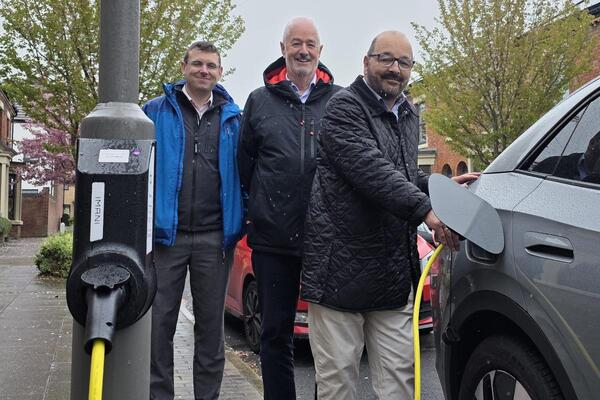
Electric vehicle (EV) charging points have been installed at more than 130 residential streets across Liverpool as part of Liverpool City Council’s ongoing work to make sustainable travel easier and more accessible.
An additional 300 on-street charging points have been installed in partnership with EV charging and energy solutions specialist Otaski Energy Solutions (OtaskiES) and infrastructure company J McCann & Co, almost doubling the size of the council’s network to more than 670 charge points.
On-street EV charging
The project has been funded through the Government’s On-Street Residential Chargepoint Scheme, which supports EV infrastructure for people without access to off-street parking. Approximately 40 per cent of UK households fall into this category, meaning on-street charging is essential for enabling more people to make the switch to cleaner transport.
The new charge points have been installed directly into existing street lampposts and offer charging speeds of up to 5kW. All are powered by 100 per cent renewable energy, backed by Renewable Energy Guarantees of Origin (Regos).
Read More
“Many residents are keen to move to electric vehicles, but a lack of accessible charging points can be a real barrier, especially if they don’t have a driveway or garage,” said councillor Dan Barrington, cabinet member for transport and connectivity. “By installing hundreds of new charging points and almost doubling our on-street network, we’re removing that obstacle and ensuring EVs are a practical, accessible option for everyone who wants to reduce their environmental impact.”
Residents and businesses have helped shape the rollout by suggesting locations, each of which was assessed for suitability and accessibility before installation.
The council aims to expand its network to 2,000 on-street charging points by May 2027.
“Many residents are keen to move to electric vehicles, but a lack of accessible charging points can be a real barrier, especially if they don’t have a driveway or garage”
For those considering switching from petrol or diesel to an EV, a public showcase featuring a range of manufacturers and dealers will take place on 8 May on Church Street and Lord Street. The free event will give people the chance to explore the latest models and get expert advice on making the transition to sustainable travel.
“Otaski Energy Solutions is proud to support Liverpool City Council’s drive toward a cleaner, smarter, and more connected future,” said Stephen Lawrence, head of business development at Otaski Energy Solutions.
“The installation of 300 lamppost chargers will make EV charging more accessible to residents and visitors alike, helping the city take meaningful steps toward reducing emissions and achieving its sustainability goals.”
Why not try these links to see what our SmartCitiesWorld AI can tell you.
(Please note this is an experimental service)
How are lamppost chargers installed and connected to existing street infrastructure?What eligibility criteria qualify streets for the government chargepoint scheme?How does supplying 100% renewable energy via REGOs work for chargers?How will expanded on-street charging influence local EV adoption rates?What deployment schedule and resource estimates support reaching 2,000 chargers by 2027?
Latest City Profile
Latest Urban Exchange Podcast
Latest Special Report
SmartCitiesWorld Newsletters (Daily/Weekly)
You may also like these related articles...
BECOME A MEMBER
© 2026 SmartCitiesWorld
Smart Cities World Ltd, 37 Lombard Street, London, EC3V 9BQ