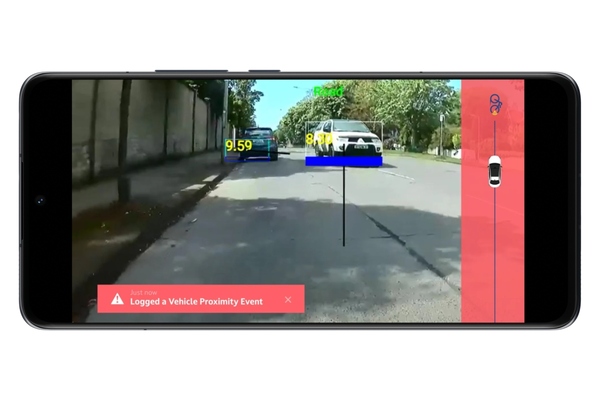








The Luna Oculus system functions as an artificial intelligence-powered “rear view mirror”, alerting bike riders when rear vehicles approach too closely.
Luna Systems, a specialist in AI-powered safety solutions for micromobility, has announced a crowdfunding campaign for what it claims is a groundbreaking product.
Launching on 5 June, Luna Oculus consists of a compact, rear-mounted camera that seamlessly connects to a smartphone app. The system functions as an AI-powered “rear view mirror”, alerting riders when rear vehicles approach too closely.
Functioning on both electric, as well as traditional bikes, the camera connects to a smartphone via wifi and provides an app interface with a rear-view livestream with a simple and non-distracting visual warning overlay. The app also triggers audio warnings, which intensify the closer a vehicle approaches. The visual warning interface, as well as the warning distance can be adjusted based on user preference.
Critical features of Luna Oculus:
Luna Oculus has been developed to date as a business-to-business (B2B) solution, with testing conducted in collaboration with the cycling industry. This Indiegogo fundraiser campaign marks a shift towards direct-to-consumer sales, Luna Systems reports. It is seeking community support to fund the production of a consumer-friendly camera and further development of the existing smartphone app.
Despite growing investments in cycling infrastructure, more than half (52 per cent) of cyclists globally report feeling unsafe on the road, according to an Ipsos survey. Luna Oculus aims to tackle this challenge, leveraging computer vision to provide not only individual safety with real-time rear vehicle proximity awareness, but also an opt-in city data share functionality. The recently announced EU Directive on Cycling, emphasises the importance of improved cycling data collection.
“We see the cycling community as a real champion in the push for safer infrastructure for all and as they embark on their rides, we also want to put AI behind their immense efforts to communicate their needs to cities”
“Through our work in the shared e-scooter industry, our vision data analyses of cities on key safety issues such as sidewalk-riding, has provided enormous insight for city planners, tasked with the huge responsibility of making infrastructure more accommodative for micromobility,” said Andrew Fleury, CEO, Luna Systems.
“We see the cycling community as a real champion in the push for safer infrastructure for all and as they embark on their rides, we also want to put AI behind their immense efforts to communicate their needs to cities,” he added.
In 2020, the Dublin-based company pioneered the use of computer vision cameras to help address some of the key challenges of shared scooter use: sidewalk riding; pedestrian collision; and disorderly parking. Its work continues in this space, while it has also expanded its solutions to other vehicle segments.
In 2023, it announced a partnership with Qualcomm Technologies for the development of advanced rider assistance systems (Aras) for powered two-wheelers.
Why not try these links to see what our SmartCitiesWorld AI can tell you.
(Please note this is an experimental service)
How does Luna Oculus use AI to detect approaching rear vehicles?What customization options are available for Luna Oculus warning alerts?How can Luna Oculus data help city planners improve cycling infrastructure?In what ways does Luna Oculus record and provide near-miss evidence?How does Luna Oculus integrate with smartphones for real-time livestream?