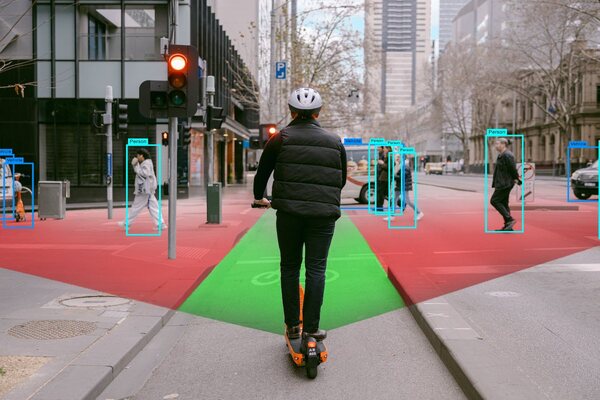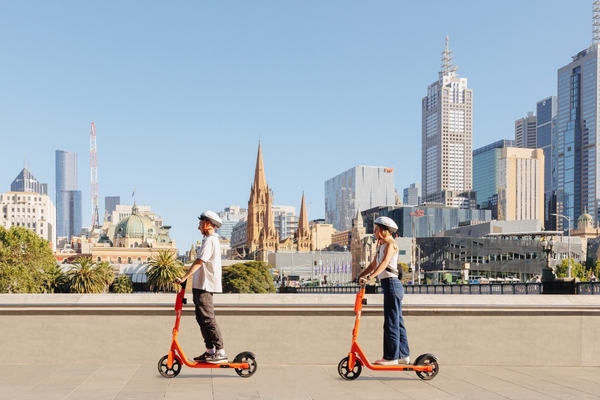








E-scooters will use real-time footpath detection, audio alerts and other technology to crack down on illegal footpath and tandem riding in the Australian city.
The City of Melbourne is working with e-scooter operators to improve safety for all road users by preventing riders from using footpaths and cluttering city spaces.
A fleet of 25 Lime e-scooters equipped with advanced camera capabilities has been rolled out in the Australian city, as part of the State Government’s shared e-scooter trial.
The scooters use real-time footpath detection and audio alerts to crack down on illegal footpath and tandem riding. Trial providers, Lime and Neuron Mobility, are also exploring technology to create designated e-scooter parking areas.
A pilot using in-app communication to direct riders to designated parking zones is underway on Swanston and Elizabeth Streets and in Jolimont, which has already reduced complaints by 55 per cent.
The council is also investigating on-street parking stations and physical line markings on footpaths to create clearly marked zones to hire and return e-scooters.
Other technology in development includes:
Councillors are considering a range of measures to ensure the delivery of a safe, effective and well-integrated shared e-scooter scheme into the future. If endorsed, they will advocate to the State Government to ensure higher standards of parking and rider behaviour can be delivered and for the legal power to manage an e-scooter scheme via an agreement with operators.
The council has also begun discussions with other inner-Melbourne municipalities in preparation for the possible expansion of the shared e-scooter scheme.
Melburnians have surpassed five million rides since February 2022, an average of almost 6,000 trips a day, which is reportedly one of the highest rates in the world.
The trial has also cut the city’s carbon emissions by more than 400 tonnes, and encouraged more people to use public transport, with up to 40 per cent of riders using e-scooters to connect with trains, trams and buses.
“With the help of e-scooters, we’re delivering a brighter, more sustainable future for Melbourne – keeping the city moving while dialling back transport emissions”
The shared e-scooter trial is part of a State Government programme to understand how the vehicles can be safely incorporated into the community for the long term.
“Melburnians have scooted their way past five million rides since the beginning of the e-scooter trial last year – cementing the city as a global hotspot for e-scooters and creating more ways to access thousands of businesses and activities across Melbourne,” said acting lord mayor Nicholas Reece.
“We also recognise that there has been frustration felt by members of the community about people breaking the rules and causing nuisance around the city. We have listened and we have acted.”
“These improvements will help us fill the gaps in our comprehensive transport network – boosting the local economy by attracting more visitors with a fun way to get around the city swiftly and safely.”
“With the help of e-scooters, we’re delivering a brighter, more sustainable future for Melbourne – keeping the city moving while dialling back transport emissions.”
City transport, infrastructure and operations deputy portfolio lead councillor, Davydd Griffiths, added: “We hope to see the new technology reduce footpath and tandem riding, and we look forward to working with our partners to find new and improved ways of managing e-scooter parking to keep our footpaths safe for pedestrians.”
Why not try these links to see what our SmartCitiesWorld AI can tell you.
(Please note this is an experimental service)
How does real-time footpath detection improve e-scooter safety?What technologies prevent illegal tandem riding on e-scooters?How effective are in-app alerts in reducing parking complaints?What role does AI play in ensuring correct e-scooter parking?How does the e-scooter trial contribute to reducing carbon emissions?