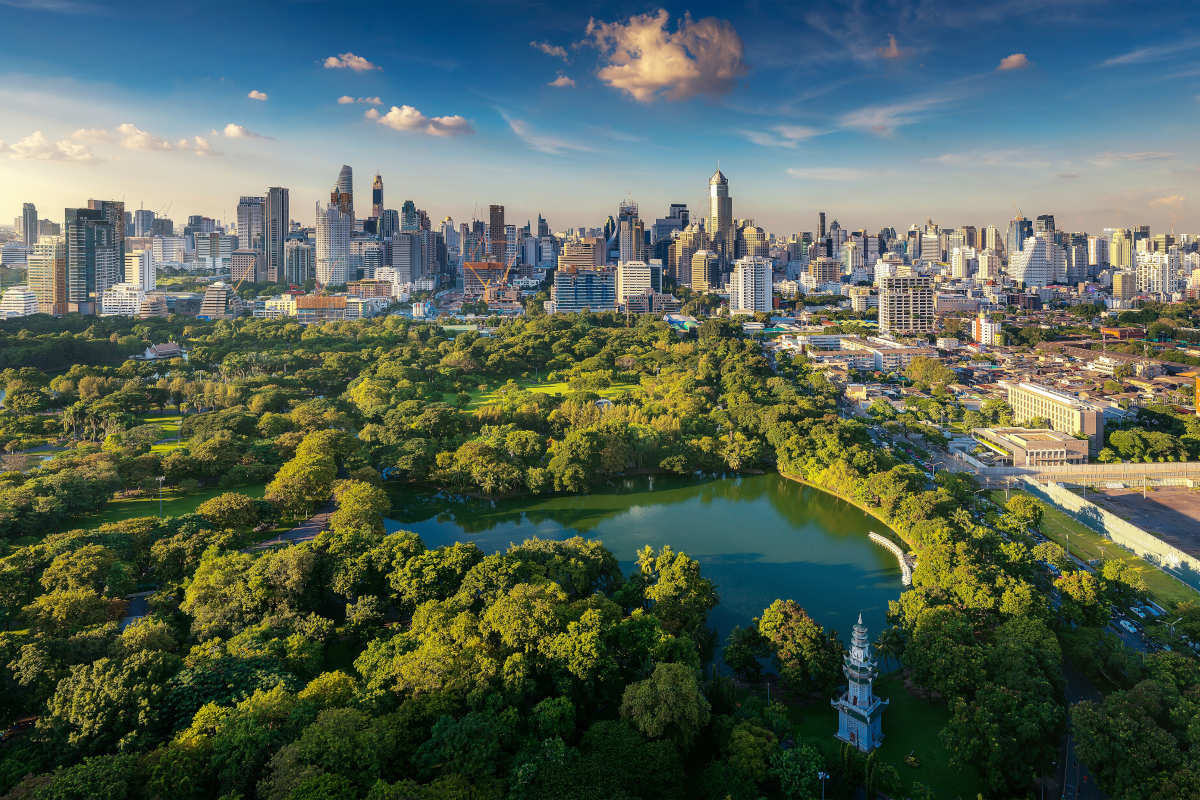














In 2023, 10 million people in Thailand sought treatment for pollution-related illnesses with Bangkok fielding some of the worst impacts of poor air quality in the country.
The City of Bangkok has officially joined the Breathe Cities initiative, a global network of cities dedicated to reducing air pollution, lowering carbon emissions, and improving public health.
As the twelfth City in the cohort, Bangkok joins Accra, Ghana; Brussels, Belgium; Jakarta, Indonesia; Johannesburg, South Africa; London, United Kingdom; Milan, Italy; Nairobi, Kenya; Paris, France; Rio de Janeiro, Brazil; Sofia, Bulgaria and Warsaw, Poland, all of which are working to reduce air pollution by up to 30 per cent by 2030. For Bangkok, this means avoiding thousands of premature deaths and cases of childhood asthma, as well as lowering healthcare costs by the end of the decade.
Since 2010, Bangkok has been progressing air quality improvement through a number of measures such as enhancing air quality monitoring, mapping air pollution sources and carrying out preventive inspection (such as emission testing). It has also focused on expanding the public metro system, electrifying public buses, managing traffic congestion, upgrading emissions standards, controlling burning in the open air, and increasing green spaces to limit air pollutants and reduce harmful emissions. A mobile screening service for air pollution-related illness for local communities to help mitigate health impacts has also been deployed.
These actions are part of the reason why Bangkok was selected to join the Breathe Cities programme. It will now receive support with gathering air quality data, capacity-building and community engagement, and join an international network of city leaders to share knowledge.
"Improving air quality is critical to curbing the effects of the climate crisis"
Currently, 41 per cent of cities around the world have air pollution over seven times higher than the World Health Organisation’s recommendation, contributing to 8.1 million premature deaths each year. In 2023 alone, 10 million people in Thailand sought treatment for pollution-related illnesses and Bangkok endured some of the worst impacts of poor air quality in the country, with over 5,000 premature deaths a year and significant economic losses.
Breathe Cities is delivered by Bloomberg Philanthropies, the Clean Air Fund, and C40 Cities. It brings together air quality data, communities, and local government to equip cities to develop tailored policies and initiatives at the local level, and to collaborate globally.
"As our twelfth Breathe City, Bangkok joins a growing network of ambitious cities taking action to save lives and address the climate crisis," said Jaime Pumarejo, Executive Director of Breathe Cities. "By working with the Governor, city officials and local communities, we aim to clean the city’s air and ensure a healthier, fairer and more prosperous future for the millions of people who call Bangkok home."
“Improving air quality is critical to curbing the effects of the climate crisis,” said Antha Williams, who leads the environment programme at Bloomberg Philanthropies. “Bangkok has made great strides in improving air quality with robust data collection, upgraded public transportation, and the expansion of green spaces. We’re looking forward to working closely with Bangkok’s communities to further the development of air pollution solutions that work and enhance public health.”
Why not try these links to see what our SmartCitiesWorld AI can tell you.
(Please note this is an experimental service)
How can Bangkok's public metro expansion reduce air pollution effectively?What role does electrifying public buses play in lowering emissions?How does increasing green spaces contribute to improved urban air quality?What data methods support Bangkok's air quality monitoring and management?How can community engagement enhance the success of air pollution policies?